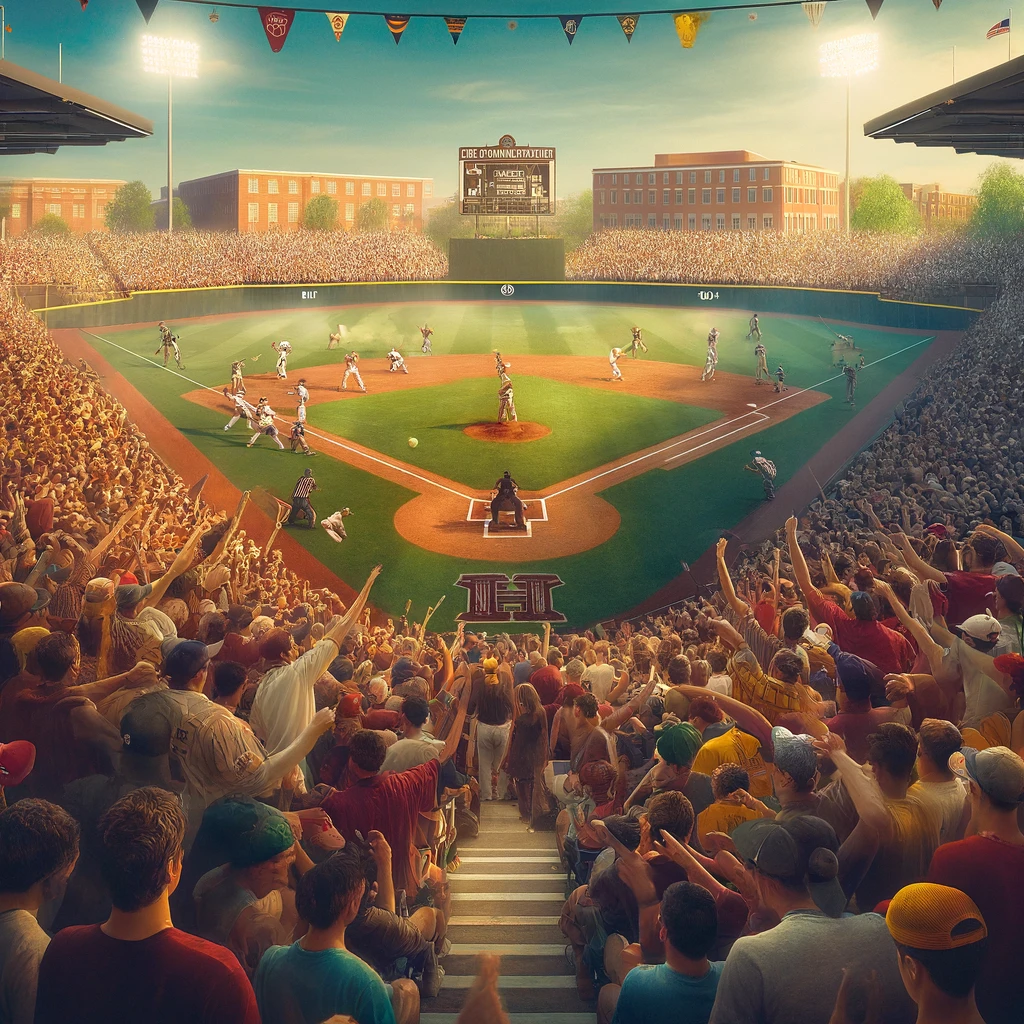
College baseball, a sport interwoven with American history and culture, has evolved significantly since its inception. This journey through time reveals the profound impact of rivalries and traditions in shaping the landscape of college baseball.
Early Beginnings
The roots of college baseball date back to the 19th century. The first intercollegiate baseball game, a match between Amherst College and Williams College in 1859, marked the dawn of a new era in the sport. However, it wasn’t until after the Civil War that the game gained widespread popularity, particularly in the Northeast. By the late 1870s, several northeastern schools played regular home and home series, and the team with the best record would claim a “National Championship” (Wikipedia).
Growth and Expansion
Post-Civil War, college baseball saw a significant expansion. The formation of the American College Base Ball Association in 1879, comprising six northeastern schools, sought to govern the game and organize competitions. This expansion continued with the establishment of multi-sport conferences like the Western Conference and Southern Intercollegiate Athletic Association in the 1890s. The first national championship tournament was held at the 1893 World’s Fair in Chicago, where Yale emerged as champions (Wikipedia).
The Rise in Popularity
A pivotal moment in the history of college baseball came with the inception of the NCAA College World Series in 1950. This event marked the beginning of a new era, bringing heightened attention and prestige to the sport. The College World Series, held annually in Omaha, Nebraska, became a centerpiece of college baseball, showcasing the nation’s top talent and fiercest rivalries (Best All Time).
The Influence of Weather and Geography
The development of college baseball was significantly influenced by weather and geography. With most early colleges located in colder northeastern and midwestern regions, the sport’s growth was initially slow. However, as the population and the number of colleges in the sunbelt states grew, so did the popularity of college baseball. This shift was particularly evident in the 1980s, as the sport began to gain traction in the South and Southwest, traditional baseball strongholds (Best All Time).
The Role of Rivalries
Rivalries have always been a cornerstone of college baseball, fueling competitive spirit and fan engagement. Historic rivalries, often transcending the sport, have contributed to the rich tapestry of college baseball’s history. These rivalries not only highlight the competitive nature of the sport but also foster a sense of community and tradition among students, alumni, and fans alike.
Tradition and Culture
The traditions of college baseball, from historic ballparks to time-honored pre-game rituals, play a pivotal role in defining the sport’s identity. These traditions create a unique atmosphere that differentiates college baseball from professional leagues, making it a cherished part of collegiate life.
The Future of College Baseball
The future of college baseball looks bright, with increasing media coverage and a growing fan base. The sport continues to evolve, embracing new technologies and adapting to changing dynamics while staying true to its rich history and traditions.

The Role of Minor Leagues and Drafts
As college baseball progressed, its relationship with minor league baseball and the Major League Baseball (MLB) draft process became increasingly significant. This intersection has provided college players with avenues to professional careers, shaping the landscape of college baseball.
Minor Leagues’ Influence
The minor leagues serve as a crucial bridge between college baseball and the major leagues. For many players, the minor leagues offer a pathway to professional play, honing their skills and gaining experience before reaching the majors. This dynamic has also influenced college baseball, as players often have to choose between pursuing a college degree and embarking on a professional career immediately after high school.
The Draft Process
The MLB draft process plays a pivotal role in the trajectory of college baseball players. High school players in the U.S., Canada, and its territories are eligible for the MLB draft, but once they enroll in a four-year college, they must wait until completing three years of school or reaching age 21 before being eligible for the draft again. This rule significantly impacts the decisions of young athletes and the composition of college baseball teams (Wikipedia).
Modern Evolution and Challenges
In recent years, college baseball has undergone several changes, reflecting the sport’s continuous evolution and adaptation to modern challenges.
Technological Advances
Advancements in technology have significantly influenced college baseball. From instant replay in televised games to the use of metal bats, technological innovations have altered how the game is played and experienced. The introduction of metal bats in 1975, for instance, sparked debates over player safety and the authenticity of the game experience (Wikipedia).
Scholarship and Recruitment
The recruitment and scholarship processes in college baseball are highly competitive. NCAA limitations on scholarships and the recruitment process ensure a level playing field but also create a challenging environment for both players and coaches. These rules, which vary slightly between NCAA divisions, impact team compositions and the strategies colleges use to attract top talent (Wikipedia).
The Cultural Impact of College Baseball
College baseball’s cultural significance cannot be overstated. It has become a staple of American collegiate sports, fostering a sense of community and pride among students, alumni, and fans.
The College World Series
The College World Series, the culmination of the NCAA baseball season, stands as a testament to the sport’s cultural and athletic significance. This event not only showcases top collegiate talent but also serves as a gathering point for baseball enthusiasts, highlighting the communal aspect of the sport.
Legacy and Alumni
The legacy of college baseball is also evident in the lasting bonds it creates among players, coaches, and fans. The alumni of college baseball programs often maintain a deep connection with their teams, reflecting the enduring impact of their collegiate baseball experiences.
Conclusion: A Sport Steeped in History and Tradition
In summary, college baseball is a sport steeped in history, tradition, and rivalry. Its journey from humble beginnings to a prominent place in American sports culture reflects its adaptability and the enduring appeal of baseball. As college baseball continues to evolve, it remains a vital part of the collegiate experience, rich in rivalries and traditions that resonate with players and fans alike. The heart of college baseball lies in these elements, making it much more than a game – it’s a celebration of athletic prowess, community, and American culture.
Frequently Asked Questions
1. What is the history of college baseball and how did it begin?
The history of college baseball dates back to the 19th century. The sport’s origins are rooted deeply in American tradition, providing a window into the past of collegiate sports. The first recorded intercollegiate baseball game was played between Amherst College and Williams College in 1859, introducing a new competitive arena for students on campuses across America. However, it wasn’t until the late 1800s that the sport began to gain more structured recognition and broader acceptance, with more colleges fielding teams and governing bodies forming to standardize play. Today, college baseball continues to evolve, thrilling fans and fostering aspiring athletes to pursue their dreams on the diamond.
2. What are some of the most intense rivalries in college baseball, and how did they develop?
College baseball is renowned for its intense rivalries, many of which have historical significance and contribute to the passionate fanbase seen at games today. One of the most storied rivalries is between the University of Texas at Austin and Texas A&M University, often referred to as the “Lone Star Showdown.” This rivalry dates back over a century, fueled by geographical proximity and competitive intensity. Another notable rivalry is between Louisiana State University and the University of South Carolina, a competition steeped in tradition and championship contention. These rivalries develop not just from competition on the field, but from a rich tapestry of cultural, educational, and athletic interchange that define their respective institutions.
3. What traditions are unique to college baseball and how have they shaped the sport?
Traditions in college baseball help define the character and spirit of the sport. One of the most unique and celebrated traditions is the ‘Omaha’ pilgrimage, as teams and fans dream of reaching the College World Series hosted annually in Omaha, Nebraska. This marks the pinnacle of college baseball, where dreams are made and legacies are forged. Another tradition is the seventh-inning stretch, where fans join in singing “Take Me Out to the Ballgame,” creating a unifying moment amidst fierce competition. Additionally, individual schools have their own rituals, like the sunflower seed-spitting championships or themed dress days, all contributing to the rich texture and camaraderie that’s unique to college baseball.
4. How has college baseball evolved over the years?
College baseball has undergone considerable evolution since its infancy. Initially, the sport mirrored local community games, but as it gained popularity, more universities invested in better facilities and coaching, contributing to the enhancement of player skills and game strategy. Over the decades, advances in technology have also revolutionized training regimens and scouting processes. Additionally, the introduction of the aluminum bat in the late 1970s drastically changed gameplay, increasing the excitement and scoring potential of the sport. NCAA regulations and practices have similarly evolved, promoting fairness and safety in collegiate sports. Today, college baseball not only serves as a launching pad for future Major League players but also as a standalone showcase of talent and tradition.
5. What impact have college baseball rivalries and traditions had on the sport at large?
The impact of college baseball rivalries and traditions extends far beyond individual games or seasons. They contribute significantly to the culture and identity of college sports at large, fostering school spirit and communal pride. Rivalries often bring out the best in teams, driving athletes to elevate their performance on a national stage while providing fans with unforgettable moments of suspense and exhilaration. Traditions, meanwhile, preserve the history and narrative of the sport, offering continuity and shared experiences for generations of players and supporters. Collectively, these elements strengthen the fabric of college baseball, making it a vital and vibrant part of American sports heritage.