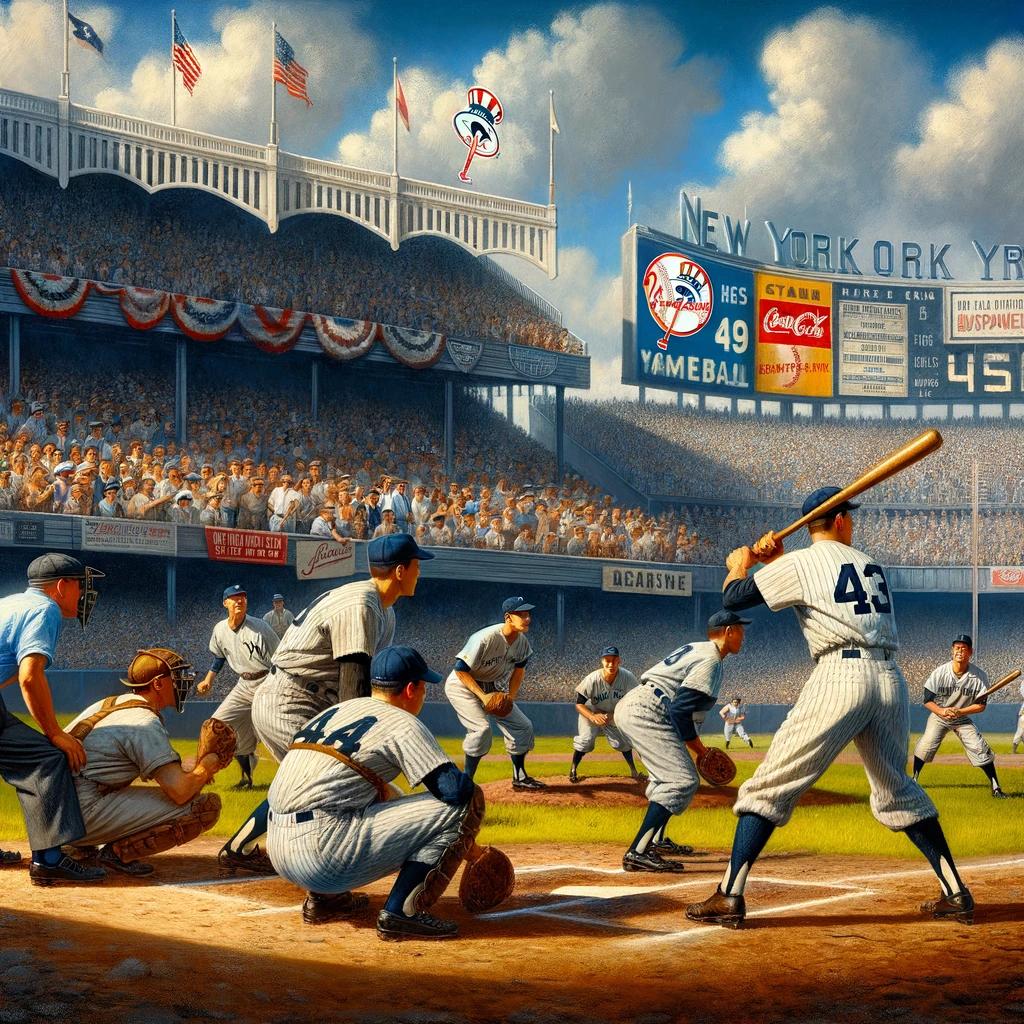
The Making of a Dynasty
The New York Yankees, a name synonymous with baseball excellence, reached the pinnacle of their storied history in the 1950s. This decade saw the Yankees not just playing baseball, but redefining it, transforming into a dynasty that dominated the sport like no other.
The Early 1950s: Foundations of Greatness
The decade began with the Yankees already established as a powerhouse in Major League Baseball. Under the leadership of manager Casey Stengel, a master tactician and a charismatic leader, the team was poised for unprecedented success. The early 1950s were marked by the emergence of star players like Mickey Mantle, Yogi Berra, and Whitey Ford. Mantle, with his exceptional power and speed, became a symbol of the Yankees’ dominance.
1950-1953: A String of World Series Triumphs
From 1950 to 1953, the Yankees won an astonishing five consecutive World Series titles, a feat unrivaled in baseball history. This period highlighted the team’s depth and versatility, with contributions coming from every corner of the roster. The 1953 season, in particular, was a showcase of their resilience and ability to perform under pressure, as they battled through a tough series to clinch their fifth straight championship.
The Role of Management and Scouting
Behind the scenes, the Yankees’ success was as much a product of astute management and scouting as it was of the talent on the field. General Manager George Weiss was instrumental in building the team’s depth, ensuring a steady influx of talent through savvy trades and farm system development. This period saw the Yankees perfecting a system that would become a blueprint for future sports franchises.
The Middle Years: Transition and Triumph
Changing Faces, Consistent Excellence
As the decade progressed, the Yankees saw some of their stars from the early ’50s begin to fade, but they were quickly replaced by new talents. Players like Elston Howard, the first African American to don the Yankees uniform, and Roger Maris, a future home run king, kept the team at the forefront of the league.
1955-1957: Challenges and Resilience
The mid-1950s presented new challenges for the Yankees. The Brooklyn Dodgers and the Milwaukee Braves emerged as formidable adversaries, ending the Yankees’ streak of World Series victories. However, the Yankees’ resilience shone through as they continued to be a dominant force in the American League, consistently reaching the World Series even when they didn’t win.
The 1958 Comeback
The 1958 World Series was a testament to the Yankees’ enduring spirit. Facing the Milwaukee Braves again, the Yankees were down 3-1 in the series. However, they staged a remarkable comeback to win the next three games, showcasing their never-say-die attitude and cementing their legacy as a team of champions.
The Late 1950s: A Dynasty’s Twilight
The 1959 Season: A Rare Miss
The 1959 season was a notable one for the Yankees, as it was the only year in the decade they failed to reach the World Series. This was a reminder of the competitiveness of the sport and the challenges of sustaining excellence.
The 1960 World Series: An Epic Conclusion
The 1960 World Series against the Pittsburgh Pirates was a fittingly dramatic end to the Yankees’ decade of dominance. Despite outscoring the Pirates by a considerable margin over the series and showcasing their offensive prowess, the Yankees were stunned by Bill Mazeroski’s famous walk-off home run in Game 7. This loss, however, did little to diminish the Yankees’ achievements throughout the decade.
Legacy of the 1950s Yankees
Influence on Baseball and Sports
The New York Yankees of the 1950s set a new standard in professional sports. Their blend of talent, management acumen, and competitive spirit left an indelible mark on baseball. They influenced how teams were built and managed, and their success made baseball more popular than ever, earning them legions of fans across the globe.
Cultural Impact
The Yankees’ dominance in the 1950s also had a significant cultural impact. They became a symbol of American excellence and competitiveness during a time of post-war prosperity and optimism. The stars of the team, like Mickey Mantle and Yogi Berra, became household names, transcending the sport and becoming cultural icons.
A Lasting Legacy
The legacy of the 1950s Yankees continues to influence the game of baseball and the broader world of sports. Their commitment to excellence, resilience in the face of adversity, and the ability to consistently perform at the highest level set a benchmark for future generations. The Yankees of the 1950s were not just a team; they were, and remain, a symbol of sports excellence and a dynasty that stands tall in the annals of baseball history.

Iconic Players and their Contributions
Mickey Mantle: The Heart of the Dynasty
Mickey Mantle, arguably the most iconic Yankee of the 1950s, was a figure of awe for baseball fans. His combination of power hitting and speed made him a threat at the plate and in the field. Mantle’s triple crown win in 1956, where he led the American League in batting average, home runs, and RBIs, is a testament to his prowess as a player. His performance in the World Series was particularly remarkable, solidifying his status as one of the greatest in baseball history.
Yogi Berra: The Sage of the Yankees
Yogi Berra, known for his humorous “Yogi-isms,” was much more than a cultural figure. He was a cornerstone of the Yankees’ success in the 1950s. As a catcher, Berra was the team’s field general, known for his game-calling skills and ability to manage pitchers. His offensive contributions were equally impressive, with clutch hitting that often turned the tide in crucial games.
Whitey Ford: The Ace of the Staff
Whitey Ford, nicknamed “The Chairman of the Board,” was the Yankees’ ace pitcher throughout the decade. His precision and poise on the mound made him one of the most dependable starters in baseball. Ford’s performances in the World Series were particularly notable, often pitching critical games and leading the Yankees to victory.
Notable Games and Moments
Don Larsen’s Perfect Game
One of the most iconic moments in World Series history came in 1956 when Don Larsen pitched a perfect game against the Brooklyn Dodgers in Game 5. This remains the only perfect game in World Series history and is a testament to the high level of play and historical significance of the Yankees’ games during this era.
The Rivalry with the Brooklyn Dodgers
The Yankees’ rivalry with the Brooklyn Dodgers, particularly in the early part of the decade, was a highlight of the era. The Subway Series, as it was known, captured the imagination of New York City and the nation. The intense competition and contrasting styles of the two teams made for compelling baseball and further elevated the status of the World Series.
Cultural and Social Impact
Breaking Barriers
The Yankees in the 1950s were also significant for their role in integrating baseball. Elston Howard, who joined the team in 1955, was the first African American player in Yankees history. His presence and success helped break down racial barriers in the sport and reflected the changing social landscape of America.
Baseball in the American Psyche
The Yankees’ success in the 1950s paralleled the rise of America as a global power in the post-World War II era. The team’s dominance and star power contributed to the growth of baseball as America’s pastime, intertwining the sport with the national identity. The Yankees, with their larger-than-life personas and championship pedigree, became a symbol of American excellence and ambition.
Conclusion: The Yankees’ Enduring Legacy
The New York Yankees of the 1950s were more than just a baseball team; they were a phenomenon. Their impact on the sport and American culture was profound, setting standards that are still revered and aspired to in the world of sports. The players, the games, and the moments from this era have become legendary, etched into the fabric of baseball and American history. The legacy of the Yankees in the 1950s is not just about the trophies and records; it’s about the indomitable spirit, the pursuit of excellence, and the joy they brought to millions of fans. They were, in every sense, a dynasty that dominated not just the sport but the hearts of those who watched them play.
Frequently Asked Questions
1. What made the New York Yankees so dominant in the 1950s?
The 1950s New York Yankees were a force to be reckoned with primarily due to their outstanding roster, strategic management, and strong organizational foundation. The team’s success was spearheaded by manager Casey Stengel, whose keen baseball intellect and innovative strategies revolutionized how the game was managed. Stengel was masterful in utilizing platooning — alternating players based on matchups — allowing him to maximize the performance of his roster in a way that other teams of the era were simply not equipped to handle.
The Yankees were also blessed with a lineup studded with Hall of Famers and remarkable talent, including stars like Mickey Mantle, Yogi Berra, and Whitey Ford. Mantle, known for his phenomenal power and switch-hitting abilities, became one of the defining players of the era. Berra, an exceptional catcher, combined an excellent batting eye with defensive prowess, while Ford’s pitching prowess anchored their rotation, making a crucial impact in pivotal games.
Off the field, the Yankees operated with surgical precision, scouting promising talent relentlessly and ensuring their team’s continuity by replenishing their roster with young stars. Their front office, led by general managers like George Weiss, was adept at both recognizing talent and constructing trades that bolstered their success. This blend of on-field talent and off-field strategy cemented the Yankees’ dominance, leading them to win seven American League pennants and capture five World Series titles during the decade.
2. How did the Yankees’ management contribute to their success in the 1950s?
The management of the New York Yankees in the 1950s was critical in crafting one of the most dominant teams in baseball history. Casey Stengel, the manager, was renowned not only for his baseball acumen but also for his unique and sometimes eccentric management style. Stengel’s strength lay in his ability to adapt and make strategic decisions, such as leveraging his bullpen and effectively using the talent on his bench, which was an innovative concept at the time.
The highly skilled front office, led by general managers like George Weiss, played an instrumental role by keenly scouting and acquiring talent. They had a deep farm system that continually developed Major League-ready players who could step up as stars when needed. The Yankees had an extraordinary ability to spot young talent amidst the minor leagues, nurturing players who would eventually leave indelible marks on the sport.
The blend of Stengel’s tactics and the front office’s strategic player acquisitions and developments contributed hugely to the sustained success of the Yankees in the 1950s, ensuring they stayed ahead of the competition in every facet of the game.
3. What role did Mickey Mantle play in the Yankees’ success during this decade?
Mickey Mantle was undeniably one of the most iconic figures in the Yankees’ dominance throughout the 1950s. As a rookie in 1951, Mantle stepped into the substantial cleats of the legendary Joe DiMaggio, and he did not disappoint. His offensive prowess became legendary as he quickly established himself as one of the most feared hitters in baseball.
Mantle’s power was unparalleled; he was capable of hitting tape-measure home runs from either side of the plate, a rare feat that gave the Yankees a distinct edge. His combination of speed, power, and batting prowess made him the face of the Yankees’ offense, leading them to multiple World Series victories. Mantle was more than just a power hitter, though; his versatility and adaptability made him a leader in the clubhouse, someone whom teammates and fans admired and emulated.
Off the field, he became a symbol of the Yankees’ era of greatness, his personality and charisma encapsulating the spirit of the team and the decade. Mantle’s influence extended beyond his statistics; through his sheer talent and dynamic playing style, he inspired a generation and helped cement the Yankees’ place in baseball history.
4. How did World Series victories define the Yankees’ legacy in the 1950s?
The Yankees’ World Series victories were the benchmarks of their legacy throughout the 1950s. These victories not only solidified their standing as the preeminent baseball dynasty of the time but also showcased their clutch performances under pressure. During the 1950s, the Yankees won the World Series five times, in 1950, 1951, 1952, 1953, and 1956, marking their dominance across the decade.
Each victory added to the Yankees’ lore, with landmark moments etched into the memories of baseball enthusiasts. The 1956 series was particularly memorable for featuring Don Larsen’s perfect game in Game 5, a first in World Series history and a testament to the extraordinary talent and composure the Yankees possessed.
By consistently prevailing on the biggest stage, the Yankees established and reinforced a culture of winning. Their achievements set the standard for excellence in baseball, influencing future generations of players and fans alike. The World Series victories underscored not only their dominance in terms of skill and tactics but also their ability to seize opportunities and thrive under the intense pressures of postseason baseball.
5. Who were some other key players besides Mickey Mantle that contributed to the Yankees’ success in the 1950s?
Aside from Mickey Mantle, several other players were essentially contributing to the Yankees’ overwhelming success in the 1950s. One such player was Yogi Berra, the catcher whose leadership and defensive skills behind the plate were unmatched. Known for his knack for clutch hits, Berra was a quintessential Yankee, his play on the field and his personality off of it endearing him to fans and teammates alike.
Whitey Ford was another critical figure, emerging as the team’s ace pitcher. Ford was known for his exceptional control and ability to deliver consistently excellent performances, particularly in high-stakes situations, which was pivotal during the Yankees’ deep postseason runs.
Phil Rizzuto, although nearing the end of his career during the decade, remained a central figure in the Yankees’ infield, providing stability and experience. Additionally, players like Elston Howard, Gil McDougald, and Enos Slaughter all offered invaluable contributions throughout the decade, whether through timely hitting, defensive prowess, or veteran leadership.
This assembly of talent, from young rising stars to seasoned veterans, created a versatile and formidable team that consistently outperformed opponents. Their diverse skills and collective spirit exemplified the depth of talent and camaraderie that characterized the Yankees during this historic era.