
Baseball and the Space Race — at first glance, these seem like two entirely separate spheres. One revolves around the earthy clay of sports fields and the other around the cosmic realm of space exploration. Yet, the mid-20th century was a time when these two worlds, surprisingly, intersected, with each exerting influence over the other in ways that resonated through American culture and beyond.
The Space Race, a hallmark of the Cold War, symbolized the intense rivalry between the United States and the Soviet Union as both superpowers strove to assert technological and ideological superiority. This period from the late 1950s to 1970s spurred rapid advancements in technology and had far-reaching impacts on many aspects of life, including pop culture, education, and even sports.
Baseball, “America’s Pastime,” wasn’t immune to these shifts. As society watched in awe at the accomplishments of space missions, baseball players and managers found themselves in a unique position to tap into the public’s fascination with outer space. The period saw a cross-pollination of ideas, themes, and narratives between the two seemingly disparate worlds of baseball and the cosmos.
This unlikely intersection between the ballfield and the moon captured the imaginations of millions and offers a compelling exploration of how societal phenomena can converge in unexpected ways. Through examining these connections, we can gain deeper insight into American culture during one of its most transformative periods — a time when grounders and ground control found common ground.
The American Psyche: From Ballparks to Outer Space
During the height of the Space Race, the sense of wonder and adventure that permeated baseball was mirrored in American society’s fascination with space exploration. Baseball’s narrative of hope, dreams, and reaching for the stars often paralleled the mystique of outer space and the exploratory nature of the NASA missions. The two shared a common theme: pushing boundaries and transcending limits.
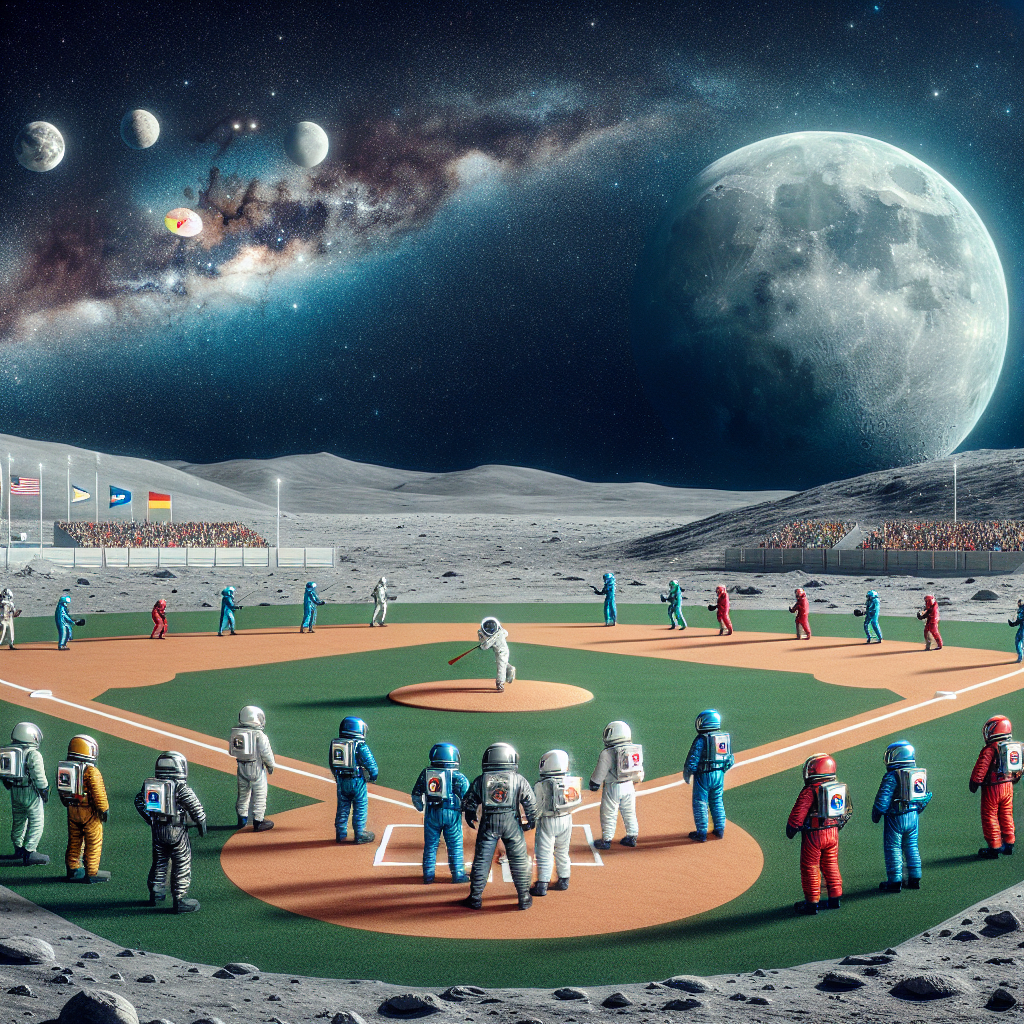
As Americans marveled at the launching of satellites and human spaceflight, baseball found itself claiming a slice of the metaphorical interstellar pie. The sport’s promotional materials began to feature cosmic imagery, while popular baseball trading cards from this era included players portrayed in space-themed artwork. This fusion created a new aura that merged traditional baseball heroics with the modern adventurer spirit associated with astronauts.
Furthermore, the competitive nature of the Space Race resonated with baseball, a sport rooted in the spirit of competition. Every game was like a mini space race, carefully strategized and executed, with players and fans experiencing the thrill and anticipation that mirrored the launch and mission phases of NASA’s endeavors. The day John Glenn orbited Earth, for instance, saw many MLB games pay tribute to his achievement, with some even being briefly paused to watch the event unfold live.
The linking of baseball with the Space Race during this period was not merely superficial but reflective of a deeper, shared cultural momentum toward progress and innovation. This peculiar intersection was emblematic of a society learning to embrace a future-oriented mindset while longing to maintain traditional roots, much like baseball itself.
Media and Pop Culture: The Space Base
The media landscape in the 1960s played a pivotal role in intertwining baseball with the Space Race. Television, in particular, emerging as a dominant cultural force, broadcasted both baseball games and space missions into American homes, creating a unified viewing experience. Networks cleverly juxtaposed the excitement of space exploration with the nostalgia and entertainment of baseball, each enhancing viewers’ appreciation of the other.
On television, series like “The Jetsons” and “Star Trek” were also influencing societal perceptions of space, while print media capitalized on the public’s growing appetite for space-themed stories. Sports magazines often featured articles that compared baseball stars to astronauts, highlighting the shared attributes of courage and pioneering spirit. The cross-influence gave baseball an aura that reached beyond the terrestrial, inviting fans to see their sport in a whole new light.
Movies of the era, such as “From the Earth to the Moon,” reflected similar thematic elements. Directors used the motifs of both baseball and space to craft narratives that spoke to aspirations, dreams, and the limitless possibilities of human endeavor. This shared narrative became a source of collective inspiration for audiences, who thrilled at the potential inherent in both spheres.
The space-themed angles adopted by media and pop culture resonated with audiences, reinforcing baseball’s place in this new, future-focused society. Thus, media transformed baseball’s public image, portraying it as both a bridge to nostalgia and a vehicle propelling society forward into the space age.
Scientific Progress and Baseball Innovation
The technological advancements spurred by the Space Race found a natural application in the field of baseball. Aerodynamics, materials engineering, and data analysis improved significantly due to the rigorous demands of space exploration. These advancements unwittingly trickled into the sports world, enhancing both equipment and strategies deployed during baseball games.
One of the direct impacts was in the realm of equipment. The same materials research that made spacecraft more efficient and robust also contributed to the development of superior baseball bats and gear. Innovations in materials such as aluminum and composites resulted in equipment that was lighter and more durable, allowing players to achieve greater performance on the field.
Beyond equipment, the analytical tools initially designed for space missions began to be applied to baseball. Statistical analysis and data-driven strategies, common in today’s sabermetrics, found their roots in computational models initially developed for space programs. This reliance on data provided teams with new insights into player performance and game strategy, fundamentally altering the approach to the game.
Enhanced video tracking systems and player monitoring technologies, much like those developed for space technology, eventually made their way into baseball practices, offering insights into everything from pitch velocity to player fatigue. Thus, the technological innovations of the Space Race inadvertently pioneered the modernization of baseball, pushing the sport to adopt a more scientific and analytical approach that would shape its future.
Astropolitical Charity and Baseball’s Contribution
The humanitarian and educational waves set in motion by the Space Race and its symbiotic relationship with baseball were significant. Inspired by the sense of global cooperation during this period, baseball teams and organizations increasingly participated in charitable initiatives aimed at fostering educational growth and creating opportunities in space-related fields.
Baseball charity games and events dedicated to funding science education exploded during this period, with proceeds funneled into scholarships for aspiring scientists and engineers. Teams across the country recognized the importance of sustaining the pipeline of talent needed for continued exploration and progress, matching the spirit of space exploration with tangible support.
Many baseball personalities lent their clout to philanthropic causes, participating in educational forums and events promoting STEM fields. Hall of Famers and team mascots alike became spacesuit-clad ambassadors, advocating for the importance of education and the continued pursuit of knowledge both off the Earth and the ballfield.
The spirit of collaboration and learning extended beyond American borders. Exhibition games played internationally during this time often incorporated space themes to promote goodwill and shared cultural appreciation, where baseball became a form of soft diplomacy, uniting different cultures under common values of exploration and achievement.
From Tang to Hot Dogs: A Cultural Exchange
While baseball connected with space exploration at a conceptual level, the exchange was also quite literal in terms of daily life and culture. One of the most iconic overlaps involved the introduction of new foods, inspired by the era’s technological drives, to baseball stadiums — the most famous being Tang, the preferred drink of astronauts.
Similarly, the fascination with newness and technological breakthroughs saw hot dogs and other classic baseball concession fare being reimagined. Space-age cooking techniques from freeze-drying to furlike wrappers for quicker casual dining experiences became trendy in stadiums. Fans could now enjoy a futuristic meal as they witnessed a timeless game.
The marketing and commercial tie-ins didn’t end with food. Merchandise featuring baseball logos paired with space themes, oversaturated with imagery of rockets and stars, became popular collectors’ items. Thus, cultural commodities from both fields contributed to economic symbiosis where sales of such goods funded further developments in related industries.
This cultural exchange between baseball and space exploration emphasized the unique power of both entities to not just offer entertainment and technologic heroics, but to shape public consumption trends. Such exchanges created lasting impacts on consumer habits and added layers of engagement for fans and the public, promoting a futuristic mindset while keeping baseball’s traditions alive.
Conclusion
The unexpected intersection of baseball and the Space Race in the mid-20th century exemplifies how different cultural symbols can interact in surprising and impactful ways. By connecting America’s most beloved sport with one of its most ambitious scientific endeavors, the narrative celebrated technological achievement while harnessing the comforting familiarity of the game.
Both fields, in essence, serve as platforms for storytelling. Baseball’s narrative of hope, suspense, and overcoming the odds aligns perfectly with the Space Race’s theme of daring exploration and the human spirit’s relentless pursuit of the unknown. Their convergence during this era demonstrated how professional sports and technological advancements are not mutually exclusive, but intertwined through their cultural narratives and shared values.
As we reflect on this period, it becomes evident that the bridge between baseball and space exploration was more than just temporal; it was symbolic of a society united by its aspirations. This fusion played a part in shaping new realms of possibility in fields ranging from education to technology, seeding ideas that would continue to flourish long after the first footprints were pressed into the powdery moon’s surface.
Ultimately, the relationship between baseball and the Space Race in this transformative period is a testament to the robustness of cultural icons and their ability to adapt and thrive amidst changing times. It is a story that continues to capture our imaginations, reminding us that the sky — or baseball’s case, the stadium lights — isn’t the limit; it’s just the beginning.
Frequently Asked Questions
1. How did baseball and the Space Race influence each other during the mid-20th century?
At first glance, it might be puzzling to imagine a relationship between baseball and the Space Race. Yet, during the mid-20th century, these two seemingly unrelated worlds collided. Baseball, deeply entrenched in American culture, provided a kind of metaphorical backdrop to the aspirations and competitive spirit of the Space Race. This period was marked by an intense rivalry, particularly between the United States and the Soviet Union, as both nations sought to assert dominance not only on Earth but in the cosmic arena as well. Sports, especially baseball, often mirrored this competitive spirit, symbolizing national pride and technological advancement. Baseball stars were sometimes roped into space-related promotions and narratives, serving as cultural icons of American success and resilience. Conversely, space achievements would find their way into baseball—think of the term “moonshot” to describe a home run hit with incredible power and trajectory.
2. Why was the Space Race a significant cultural moment for baseball fans?
The Space Race captured the imagination of millions and became a profound cultural event that went beyond geopolitical concerns. For baseball fans, the excitement of space exploration paralleled the excitement of a baseball game. Both invoked a sense of unpredictability and discovery. The nationalistic fervor that accompanied space achievements translated across American culture, including sports. Baseball games sometimes featured tributes to astronauts, and players were seen as American heroes, much like the astronauts venturing into space. The technological advancements made possible by the Space Race also paved the way for new broadcasting and imaging techniques for sports coverage, offering baseball fans a richer, more immersive experience.
3. Were there any famous baseball-related events or promotions that highlighted the connection to the Space Race?
Yes, there were memorable moments where baseball and the Space Race were highlighted together, mostly through symbolic gestures or promotional events. One iconic example was when some baseball games would have ceremonial first pitches involving astronauts, blending the worlds of sports and space in a captivating way. In 1965, the Houston Astros, a team whose very name is inspired by the space theme, opened their new Astrodome, famously dubbed the “Eighth Wonder of the World.” The Astrodome itself was a marvel of engineering, embodying the pioneering spirit of the space era and illustrating how space race themes were being harnessed to amplify the cultural landscape of baseball.
4. How did the public perception of space exploration impact the viewership and culture of baseball?
During the height of the Space Race, the American public was captivated by the idea of conquering space. This era of exploration and innovation resonated with the ethos of baseball, America’s pastime. The shared spirit of competition and discovery linked these two spheres in the collective consciousness. Media coverage of both space missions and baseball games soared, driven by public demand for engaging narratives of triumph and challenge. As television became a primary medium in American households, broadcasting became more sophisticated and aimed to capitalize on this synergy by offering specialized, visually dynamic coverage of both space events and baseball games.
5. How did the competition of the Space Race reflect the competitive nature of sports like baseball?
The competitive nature of the Space Race mirrored the very essence of sports such as baseball, fostering a nationalistic fervor akin to that displayed in World Series games. Just as teams vie for a championship title, the United States and the Soviet Union vied for superiority in space exploration. This quest for excellence motivated innovation and inspired both scientists and athletes alike to push the boundaries of what was possible. Success in the Space Race was seen not just as a technological win, but as a cultural victory, much like winning a major sports championship. It galvanized people’s imagination, spurred technological innovation, and highlighted the spirit of human endeavor, much akin to the triumphs experienced on the baseball diamond.