
Baseball has deep roots in American culture, a pastime that evolved into a significant part of the fabric of the nation. Yet, as with many other aspects of life in the early 20th century, the advent of World War I in 1914 brought significant changes to the sport. The war, which saw the involvement of countries across the globe including the United States in 1917, left its imprint on baseball in numerous ways. The sport’s players, fans, and even the infrastructural elements were directly affected by the widespread conflict.
Prior to the war, baseball was flourishing in the United States, becoming increasingly popular among Americans of all ages. Major League Baseball (MLB) was on a trajectory of growth, with notable figures like Babe Ruth beginning their rise to stardom. But the reality of a world at war meant that baseball, like many other aspects of American life, had to adjust. The nature of how it adjusted, the sacrifices made, and the spirit with which players and fans continued to champion the sport is a testimony to its enduring allure and its place in American history.
This article will navigate through the historical context of baseball during World War I, exploring how the sport adapted during these turbulent times and looking at the various ways it influenced and was influenced by the conflict. From the shifting priorities of the country to the individual stories of the players who served, we’ll uncover a compelling chapter of baseball history during a period of global strife.
The Drafting of Players for War
When the United States officially entered World War I in 1917, young men across the country found themselves called to serve, and this included baseball players. The Selective Service Act required all men aged 21 to 30 to register for the draft. This act saw several prominent baseball stars swap their baseball gloves for military uniforms.
Among the most notable players drafted was Ty Cobb, whose baseball prowess was almost legendary. Cobb served in the Chemical Corps, a unit tasked with launching gas attacks and other chemical warfare operations. Another famous name, Christy Mathewson, served in the same unit. The draft and voluntary enlistments thrust around 1,250 baseball players, including many from minor leagues, into the military, significantly impacting team rosters and the overall structure of the sport during the war years.
The enlistment of so many players also meant that younger, less-experienced athletes had the chance to step up to the major leagues. These changes shuffled team dynamics and provided a unique opportunity for emerging talent to make its mark. Despite the ravages of war, baseball continued to be played, albeit with different faces and varying levels of experience on the field.
Baseball as a Morale Booster
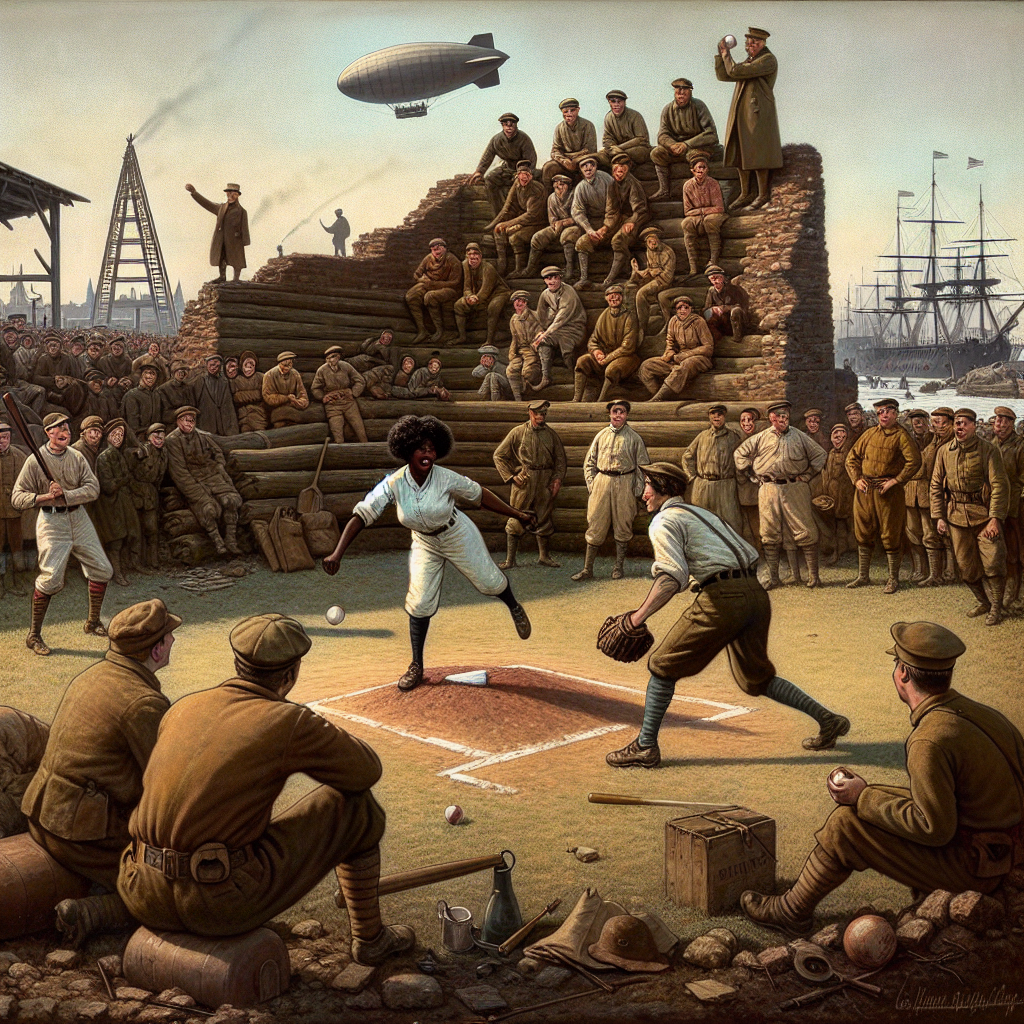
During the grim days of World War I, baseball played a significant role in lifting the spirits of both soldiers and civilians. The U.S. military establishments recognized the need to maintain morale among the troops and turned to baseball games as one solution. Organized baseball games in training camps and even in Europe became a common sight.
The War Department established the “Liberty League,” a baseball league comprising servicemen and aimed at providing entertainment and distraction from the brutal realities of war. For the soldiers, these games offered moments of normalcy and a connection to their lives back home. The joy and camaraderie experienced during these games were invaluable, making baseball not just a sport but a therapeutic outlet.
The use of baseball extended beyond the playing fields. The War Department and organizations like the National Commission (predecessor of the modern-day MLB) used baseball games and related events to drive war bonds’ sales and support wartime causes. Major games were staged as fundraiser events, attracting large crowds and substantial donations towards the war effort.
Government Involvement in Baseball
The involvement of the U.S. government in baseball during World War I wasn’t limited to morale-boosting activities. As the war effort ramped up, the government had to address public sentiment and resource allocation, leading to the “Work or Fight” order in 1918 by then-Secretary of War Newton Baker.
The “Work or Fight” order mandated that all men of draft age must engage in activities deemed beneficial to the war effort, which included industrial or agricultural work. Professional baseball players initially fell into a gray area, as their sport was classified more as entertainment than essential work. This designation generated considerable debate and divided opinions among the public, players, and government officials.
Ultimately, it was decided that only baseball players directly contributing to the war effort or working in essential industries would be exempt from military service. This ruling led to many players joining the armed forces or taking up war work, further depleting the ranks of professional teams and accelerating the use of replacement and amateur players in high-level baseball games.
Impact on Major and Minor Leagues
The departure of so many key players to military service or war work deeply affected both Major and Minor League Baseball. The rosters of many teams were depleted, leading to a significant decline in the quality of play. Attendance figures also dropped, as many fans were directly involved in the war effort or affected by wartime austerity measures.
The Major Leagues responded by shortening the 1918 regular season. This decision was both a practical measure to accommodate the lack of players and an attempt to align baseball’s schedule more closely with the nation’s wartime exigencies. Despite a regular season truncated by nearly a month, the Boston Red Sox, powered by Babe Ruth’s pitching and hitting prowess, claimed the World Series, part of a storied franchise history.
Minor League Baseball faced even sharper difficulties. Many minor leagues suspended operations entirely due to the scarcity of players and financial instability. Several minor leagues disbanded and never reformed after the war, reshaping the landscape of professional baseball in the subsequent decades.
Post-War Adjustments and Legacy
With the end of World War I in November 1918, baseball, like the rest of the world, began to return to a peacetime footing. The return of players from military service was gradual, as many remained overseas in the weeks and months following the armistice. Teams had to adjust and readjust their rosters as veterans resumed their baseball careers.
The post-war period also brought about a renewed appreciation for baseball as a national pastime. The sacrifices and contributions of baseball players during the war years cemented the sport’s place in American culture. Heroes like Christy Mathewson, who unfortunately developed health issues from his wartime service, were immortalized not just for their on-field exploits but for their service to the nation.
The war also left a legacy of increased interactions between baseball and the military, a relationship that would be seen again in World War II. The experiences and initiatives of World War I laid the groundwork for similar morale-boosting endeavors in the future, demonstrating the lasting impact of this period on both the sport and its societal role.
Conclusion
World War I was a transformative period in the history of baseball, reflecting broader societal changes and the challenges brought about by global conflict. The sport’s ability to sustain itself, adapt, and contribute positively to the war effort illustrates its deep connection to American life. The stories of individual players who served and the collective efforts to keep the game alive during these trying times provide a potent reminder of baseball’s resilience and cultural significance.
The disruptions caused by the war led to tangible changes in how the sport was played and organized, with long-term impacts on both Major and Minor League structures. Moreover, baseball’s role as a unifying force and a morale booster during the war bolstered its standing within the American cultural landscape.
Reflecting on baseball during World War I, we see more than just a game affected by external events. We see a microcosm of a nation at war, where the familiar rhythms of the diamond provided solace, joy, and continuity amidst the upheaval. This era underscores how baseball, as America’s pastime, is interwoven with the nation’s history, embodying its trials, tribulations, and enduring spirit.