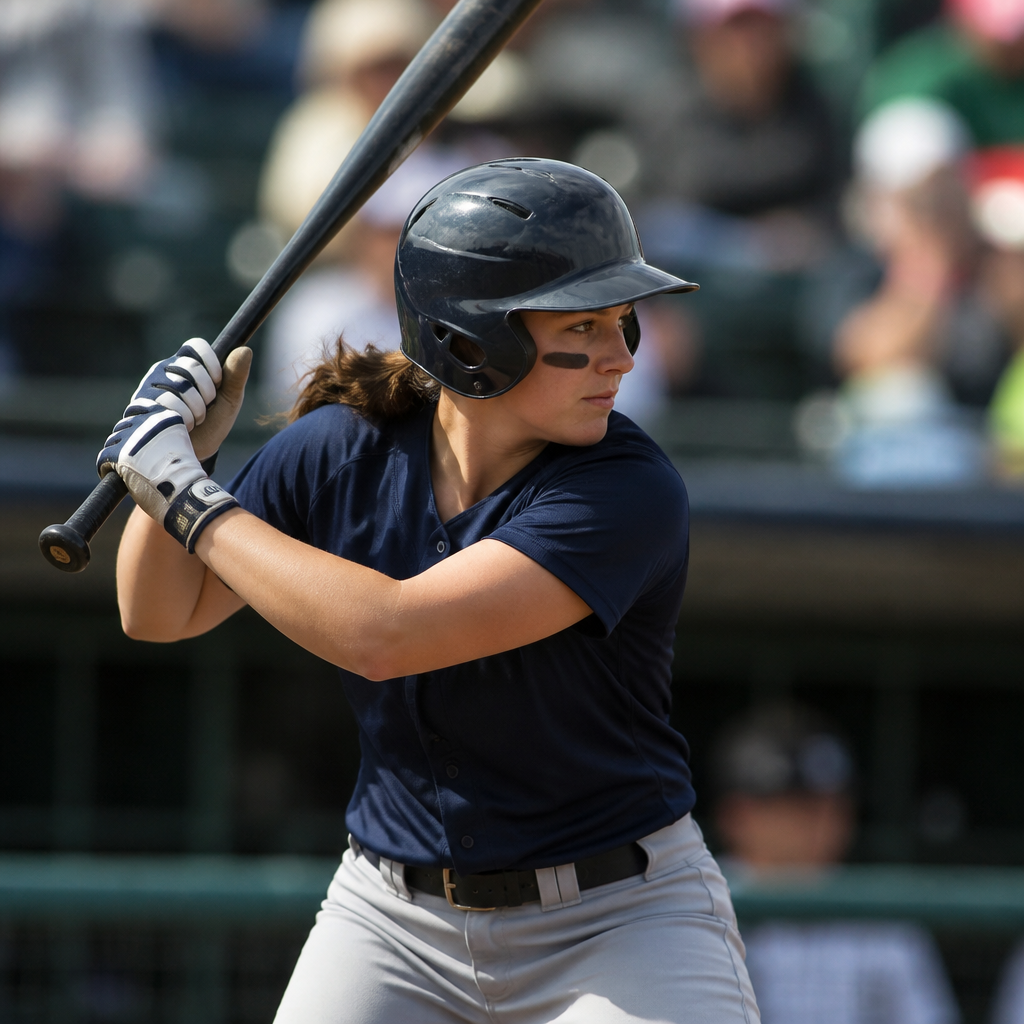
Baseball history is often told through a narrow lens, yet the game has always included extraordinary women whose skill, resilience, and competitive impact deserve equal billing. “Home Run Heroines: The Top Female Baseball Players of All Time” is more than a celebratory list; it is a practical guide to the women in baseball story, from barnstorming stars and wartime professionals to modern power hitters, elite pitchers, and multisport athletes who changed public expectations. In this context, female baseball players refers to women and girls who competed in organized baseball rather than softball, whether in Negro league exhibitions, industrial leagues, international tournaments, professional circuits, or boys’ and men’s leagues where opportunities for women were rare. That distinction matters because baseball and softball developed different cultures, equipment standards, tactics, and talent pathways, and many pioneering women had to cross those boundaries simply to keep playing.
I have worked on women in baseball content long enough to see one pattern repeated constantly: casual fans know a few names, but they rarely understand how broad the talent pool has been or how many barriers these players faced. Some women were marketed as novelties while quietly posting elite numbers. Others built careers outside the United States because domestic opportunities were inconsistent. Many were denied access to scouting, travel teams, and coaching that male peers received automatically. Even so, top female baseball players repeatedly proved that skill translates across eras. They threw complete games, hit for power, stole bases, sold tickets, and inspired rule changes, documentaries, museum exhibits, and youth programs. For readers exploring women in baseball, this hub matters because it connects the biggest names to the wider themes that define the subject: visibility, legitimacy, development pipelines, and historical recovery. If you want to understand the best female baseball players of all time, you need both the icons and the overlooked contributors who made the next generation possible.
Pioneers Who Forced Baseball to Make Room
No discussion starts anywhere but Toni Stone, Mamie “Peanut” Johnson, and Connie Morgan, three women who played in the Negro leagues at a time when race and gender barriers were both severe. Stone is the essential first stop. In 1953 she joined the Indianapolis Clowns, taking over second base duties previously handled by Hank Aaron. That fact alone explains her importance: this was not ceremonial inclusion, but placement in a serious professional setting. Stone had played extensively before reaching the Clowns, developing the defensive instincts and toughness needed to survive a hostile environment. She endured taunts, clubhouse isolation, and deliberate attempts to injure her, yet she stayed in the lineup and proved a woman could handle middle infield responsibilities against male competition.
Mamie Johnson’s case is just as compelling. A right-handed pitcher for the Clowns, Johnson reportedly compiled a 33–8 record, built on command, movement, and fearlessness rather than overpowering size. In every archive I have reviewed, the same qualities recur: poise, intelligence, and a refusal to be intimidated. Connie Morgan, another second baseman for the Clowns, brought smooth defense and consistency while balancing the pressure of being publicly scrutinized as a woman athlete in a male preserve. These pioneers mattered not simply because they were firsts, but because they held baseball roles requiring daily competence. They were judged through the most unforgiving standard in sports: can you play? Their answer was yes.
The All-American Girls Professional Baseball League and Its Lasting Standard
The All-American Girls Professional Baseball League, founded in 1943, remains the most visible women’s professional baseball circuit in American history, but its significance goes far beyond nostalgia. The league operated for more than a decade, drew strong attendance in several Midwestern cities, and offered women a structured environment with salaries, travel, coaching, and statistical records. It evolved from a hybrid ruleset toward something closer to conventional baseball, with overhand pitching eventually replacing the original underhand style. For historians and modern players alike, the league provides the clearest body of evidence that women’s professional baseball can sustain fan interest when backed by organization, promotion, and local support.
Dottie Kamenshek stands out as one of the league’s definitive stars. A first baseman with the Rockford Peaches, she was praised for extraordinary reflexes, reach, and left-handed hitting. Opponents and managers consistently described her as one of the smartest players in the game. Sophie Kurys became famous for disruptive speed, setting stolen base marks that still command attention. Jean Faut dominated as a pitcher and hitter, a genuine two-way force whose statistical profile would draw national analytics attention today. Dorothy Schroeder, one of the longest-serving league players, brought durability and power at shortstop, while Joanne Winter became known for strikeout stuff and postseason excellence. These players were not symbolic placeholders. They were high-level baseball performers carrying pennant races, filling ballparks, and laying down technical standards for women’s pro play.
Greatest Female Baseball Players at a Glance
Any list of the top female baseball players of all time has to weigh context carefully. Peak dominance, historical significance, level of competition, versatility, and influence on future participation all matter. Some players built their legacy through professional leagues, others through international tournaments, barnstorming schedules, or pathbreaking moments against male competition. The table below offers a concise framework for understanding why certain names recur in every serious conversation.
| Player | Primary Role | Era | Why She Matters |
|---|---|---|---|
| Toni Stone | Second baseman | 1950s | First woman to play regularly in the Negro leagues; replaced Hank Aaron on the Indianapolis Clowns. |
| Mamie Johnson | Pitcher | 1950s | Star Clowns pitcher with a reported 33–8 record against male competition. |
| Connie Morgan | Second baseman | 1950s | Black female infield pioneer who sustained serious professional play under intense scrutiny. |
| Dottie Kamenshek | First baseman | 1940s–1950s | AAGPBL superstar renowned for defense, instincts, and offensive production. |
| Jean Faut | Pitcher/utility | 1940s–1950s | One of women’s baseball’s best two-way players and a dominant league ace. |
| Ila Borders | Pitcher | 1990s–2000s | Won in men’s independent baseball and college baseball, proving modern viability. |
| Ayami Sato | Pitcher | 2010s–present | Widely regarded as the best female pitcher of her era; multiple Women’s Baseball World Cup MVP honors. |
| Kelsie Whitmore | Pitcher/outfielder | 2020s | Broke through in partner-league professional baseball in the United States. |
Modern Trailblazers Who Proved Women Could Compete in Men’s Baseball
In the modern era, Ila Borders became the clearest answer to a question many executives and fans had asked skeptically for decades: could a woman win games in men’s baseball beyond a publicity stunt? Borders did exactly that. A left-handed pitcher, she first gained national attention at Southern California College, then moved into independent professional baseball with the St. Paul Saints and later other clubs. She was not a token roster add. She logged real innings, handled media glare, and earned respect through mound presence and pitchability. Her career mattered because it occurred in an era of video footage, national sports television, and broader statistical verification. Every outing carried symbolic weight, and she still had to execute the ordinary tasks of a working pitcher: hold runners, get ahead in counts, and induce weak contact.
Kelsie Whitmore represents the next stage of that progression. As a two-way player and later a pitcher in U.S. partner-league professional baseball, she broke new ground while also serving as a visible ambassador for girls who want baseball rather than softball. I have seen firsthand how often her name comes up in youth baseball conversations, especially among parents searching for credible examples to show daughters. Whitmore’s importance is developmental as much as historical. She demonstrates that modern training, strength work, data analysis, and access to elite competition can produce women ready for higher levels of baseball. Her story also shows the remaining gap: breakthrough appearances are powerful, but sustainable pathways require more teams, scouting, and roster spots.
International Stars and the Global Growth of Women’s Baseball
If American coverage sometimes makes women’s baseball seem sporadic, the international game tells a fuller story. Since the Women’s Baseball World Cup began under the sport’s global governing structure, countries such as Japan, the United States, Canada, Australia, Venezuela, Taiwan, Hong Kong, and Cuba have helped create a real competitive ecosystem. The standout figure of this era is Japan’s Ayami Sato, an overpowering right-handed pitcher whose dominance has made her the most decorated woman in modern international baseball. Sato has earned repeated World Cup MVP recognition, and evaluators consistently point to her velocity, command, splitter, and competitive composure. She does not matter only because she wins awards. She matters because she gives women’s baseball a modern benchmark of elite pitching excellence that can be studied on film and measured against international competition.
Other international players deserve recognition as well. Australia’s representatives have often combined strong fundamentals with aggressive baserunning and adaptable pitching staffs. Canada has produced technically polished players through a national team system that values repetition and tournament readiness. The United States, despite inconsistent domestic structures for women after youth levels, has fielded accomplished national teams featuring athletes with baseball-specific backgrounds rather than converted softball résumés. This global spread is critical for the “top female baseball players” conversation because greatness is no longer judged only by American nostalgia. It can be assessed through world tournaments, scouting reports, and direct head-to-head play. As more federations invest in girls baseball academies and age-group national teams, the overall level is rising, and future all-time lists will become even more competitive.
How to Judge Greatness Across Eras
Ranking the best female baseball players ever is difficult because opportunity has never been distributed evenly. AAGPBL stars played within a women’s league that had structure and statistics, Negro league pioneers faced male competition but fewer surviving records, and modern international players perform in tournaments rather than full domestic seasons. The fairest method is to use layered criteria. First is quality relative to peers: was the player clearly dominant in her environment? Second is level of competition: what caliber of opponents did she face? Third is skill portability: would her tools translate across formats and eras? Fourth is historical effect: did she expand access, alter scouting assumptions, or create durable visibility? Fifth is longevity: did excellence last beyond one celebrated moment?
Using those standards changes how readers see the conversation. Toni Stone’s legacy grows because she succeeded in perhaps the harshest social environment. Dottie Kamenshek’s profile strengthens because she combined sustained excellence with advanced positional play. Ayami Sato climbs quickly because international tournament dominance is highly credible and repeatable. Ila Borders gains value because her performances were tested within men’s professional systems under relentless scrutiny. This is why “greatest” cannot mean only “most famous.” In women in baseball history, fame often reflects which leagues were best documented by newspapers, films, or museums. Serious evaluation requires context, not mythology.
Why These Home Run Heroines Still Matter Today
The lasting value of these players is not confined to commemorative plaques or anniversary features. Their influence shows up in girls asking to join travel baseball instead of being redirected automatically to softball, in MLB and USA Baseball initiatives that now recognize girls baseball explicitly, and in documentaries, biographies, and museum programming that restore missing chapters of the sport’s record. The Baseball Hall of Fame has acknowledged several women’s baseball pioneers and league contributors, while popular culture, especially A League of Their Own, helped pull the AAGPBL into mainstream memory. Still, cultural recognition is only the starting point. The practical question is whether the sport will build a durable pipeline from youth participation to elite competition.
That is why this miscellaneous women in baseball hub matters. It brings together the marquee names, the league history, the international growth story, and the evaluation tools readers need to go deeper into every branch of the topic. The top female baseball players of all time were not exceptions who appeared in a vacuum. They were products of determination meeting limited opportunity, and they proved the limits belonged to institutions, not talent. If you want to understand women in baseball, start with Stone, Johnson, Morgan, Kamenshek, Faut, Borders, Sato, and Whitmore, then keep going. Explore the leagues they played in, the barriers they confronted, and the systems current players need next. That is how baseball history becomes more accurate, and how the next generation of home run heroines gets a fairer chance to make history.
Frequently Asked Questions
Who are considered the top female baseball players of all time?
The answer depends on whether you are measuring all-around skill, historical influence, statistical dominance, or cultural impact, but a few names consistently rise to the top. Toni Stone is one of the most important figures in women in baseball history because she broke barriers by playing professional baseball in the Negro Leagues, proving that a woman could compete in a men’s professional environment at a high level. Mamie “Peanut” Johnson also stands out for her success in the Negro Leagues as a skilled pitcher known for control, poise, and competitiveness. Connie Morgan deserves equal recognition for stepping into the spotlight in the same era and helping challenge deeply rooted assumptions about who belonged on a baseball field.
From the All-American Girls Professional Baseball League, players like Dottie Kamenshek, Sophie Kurys, and Dorothy Harrell are often cited among the greatest. Kamenshek was one of the league’s most complete players, admired for defense, consistency, and baseball intelligence. Kurys became legendary for speed, base stealing, and offensive production, while Harrell’s athleticism and batting excellence made her one of the most dynamic stars of her time. In more recent decades, Ila Borders earned respect as one of the few women to pitch in men’s professional independent baseball, and Eri Yoshida gained international attention for competing professionally as a knuckleball pitcher. Modern stars such as Ayami Sato have further elevated the conversation, especially with dominant performances in international competition. Together, these players represent different eras and paths, but all belong in any serious discussion of the top female baseball players of all time.
Why is women’s baseball history so often overlooked compared to the men’s game?
Women’s baseball history has often been overlooked because the sport’s mainstream storytelling was shaped for generations by male-dominated institutions, media coverage, and recordkeeping. Many extraordinary female players competed in leagues, traveling teams, exhibitions, or international events that did not receive the same documentation, broadcasting, or commercial backing as Major League Baseball. As a result, even highly accomplished women were too often treated as novelties rather than elite athletes, and their achievements were not preserved with the same urgency or detail.
Another reason is that women’s baseball has frequently been overshadowed by softball in public discussion. In many countries, girls were steered toward softball rather than given equal access to baseball development systems, which affected visibility, resources, and long-term opportunity. Even when women excelled in baseball, their accomplishments were sometimes framed as exceptions instead of part of a rich and continuous tradition. That narrow framing reduced public awareness of stars from the Negro Leagues, the All-American Girls Professional Baseball League, barnstorming teams, and modern national programs.
Fortunately, that is changing. Historians, museums, filmmakers, journalists, and baseball fans have worked to restore these players to their rightful place in the game’s story. As more people learn about pioneers like Toni Stone, Mamie Johnson, and the standout stars of the AAGPBL, it becomes clear that women have never been peripheral to baseball history. They have always been part of it, and telling that story fully gives readers a more accurate understanding of the sport itself.
What made players like Toni Stone, Mamie Johnson, and Connie Morgan so groundbreaking?
Toni Stone, Mamie Johnson, and Connie Morgan were groundbreaking not simply because they were women playing baseball, but because they performed in one of the toughest competitive settings available to them: Negro League baseball. Their significance lies in both talent and courage. These women entered a world defined by intense travel, demanding schedules, physical competition, racial discrimination, and public scrutiny. To succeed there required far more than symbolic presence. It required baseball ability, mental strength, and a willingness to confront hostility head-on.
Toni Stone is especially celebrated because she became the first woman known to play regularly as a professional in the Negro Leagues, including with the Indianapolis Clowns. She was not just making appearances; she was competing. Her baseball instincts, defensive ability, and determination allowed her to hold her own despite constant pressure. Mamie Johnson, a gifted pitcher, became known for her confidence, command, and consistency on the mound. She reportedly used excellent control and movement to outthink hitters, showing that elite pitching is about intelligence and execution as much as velocity. Connie Morgan, who also played for the Indianapolis Clowns, further reinforced the point that women could contribute meaningfully in professional baseball roles traditionally reserved for men.
What makes their legacy endure is that they changed the imagination of the sport. They forced fans, teammates, and future generations to reconsider what baseball excellence looks like. They did not merely open doors in theory; they walked through them in real competition. For any article about the top female baseball players of all time, their stories are essential because they connect athletic achievement with social change in one of the clearest ways possible.
How did the All-American Girls Professional Baseball League shape the legacy of female baseball players?
The All-American Girls Professional Baseball League played a defining role in giving women baseball players a structured professional platform during a pivotal moment in the sport’s history. Founded during World War II, the league emerged at a time when many male players were serving in the military, but its significance goes far beyond filling a temporary gap. The AAGPBL showcased that women could draw crowds, sustain a league, and deliver an exciting style of play built on athleticism, strategy, speed, and skill. It created a visible stage where talented women could develop reputations, compile statistics, and build professional careers in baseball.
The league also produced some of the finest female players ever to step on a diamond. Dottie Kamenshek became one of its signature stars because of her complete game, including strong defense and dependable offensive production. Sophie Kurys turned speed into an art form and became famous for stolen bases and aggressive baserunning that could change games instantly. Dorothy Harrell and many others helped prove that the league was not a novelty act but a legitimate competitive environment filled with outstanding talent. These players built a standard of excellence that still informs how historians and fans evaluate women in baseball today.
Just as important, the AAGPBL preserved a visible chapter of women’s baseball for future generations. While the league eventually folded, its memory endured through archives, reunions, oral histories, and popular culture. That continuity matters because it gives modern readers and players tangible proof that women’s professional baseball has deep roots. The AAGPBL did not solve every barrier facing female players, but it established a lasting legacy of professionalism, star power, and competitive legitimacy that remains central to any discussion of the greatest women in baseball history.
Are there modern female baseball players who belong in the all-time conversation?
Yes, absolutely. While early pioneers often receive the most historical attention, several modern female baseball players deserve serious consideration in the all-time conversation because they have excelled in international play, independent professional settings, and elite national competition. Ayami Sato is one of the strongest examples. As a dominant pitcher for Japan’s women’s national team, she has built a reputation for command, effectiveness, and consistency at the highest levels of women’s international baseball. Her performances have helped demonstrate that modern women’s baseball includes players with elite technical ability and sustained excellence.
Ila Borders is another essential modern name because she reached a level of visibility and credibility in men’s professional independent baseball that very few women have matched. As a left-handed pitcher, she handled the pressures of competing in a male-dominated professional environment while showing that her presence was earned through performance, not publicity alone. Eri Yoshida also brought global attention to women’s baseball through her professional appearances and her distinctive knuckleball approach, which highlighted adaptability and baseball intelligence.
The modern era matters because it shows that women’s baseball is not frozen in the past. Today’s athletes benefit from broader international competition, better training methods, and growing media attention, yet they still face uneven support, limited pathways, and persistent misconceptions. Including modern stars alongside historical pioneers creates a fuller and more accurate list of the top female baseball players of all time. It recognizes that the story of women in baseball is still being written, and some of its most impressive chapters are happening right now.