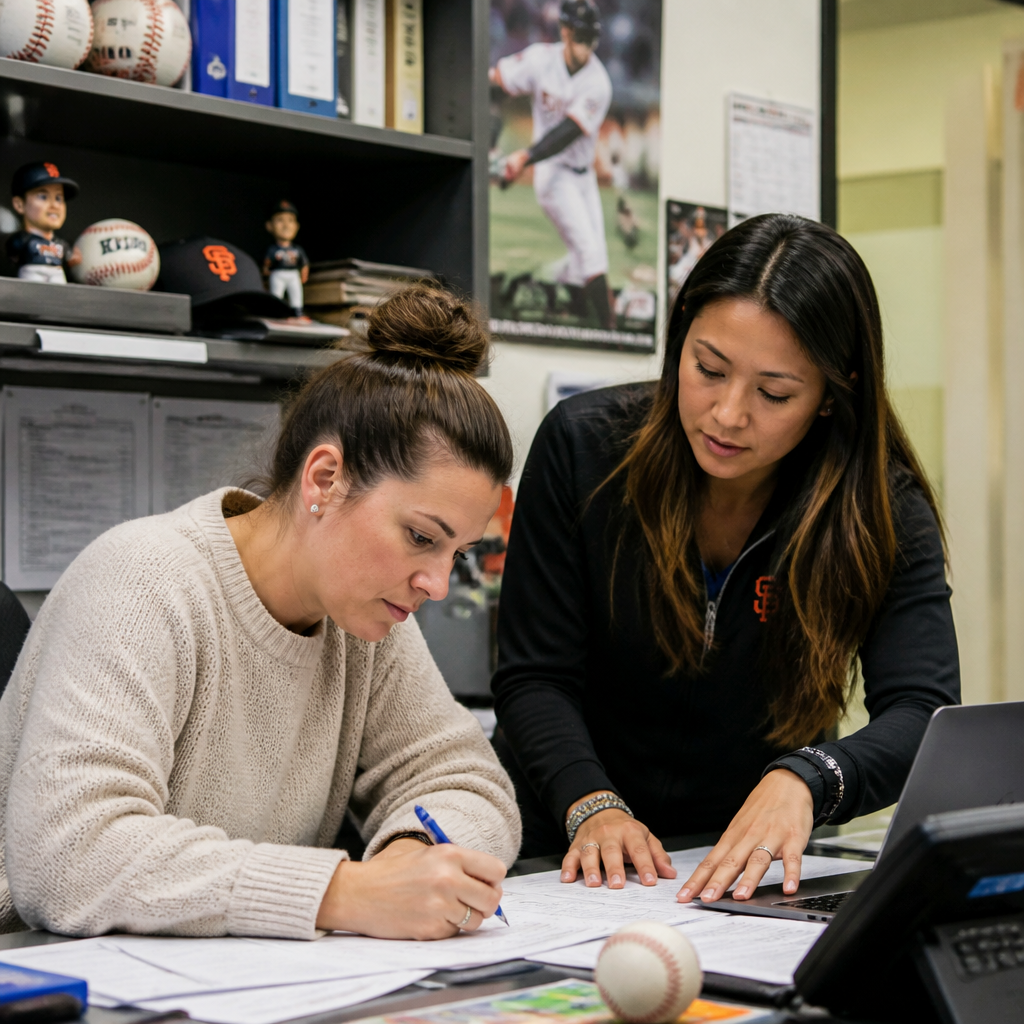
Baseball operations is the engine room of a club, and women in baseball operations are shaping everything from roster construction to player development, advance scouting, research, medical coordination, and international strategy. In team terms, baseball operations refers to the group that supports the general manager and farm director by turning information into decisions: who to draft, whom to trade, how to allocate bonus pools, when to promote a prospect, and which support systems help players perform. I have worked with front office workflows closely enough to see that the public usually notices the manager and star players, while the people building the underlying process remain almost invisible. That gap matters, because the story of women in baseball operations is not a side note. It is a practical story about how modern clubs identify talent, reduce risk, and improve decision quality.
This hub page covers the miscellaneous side of women in baseball operations because the field itself is broad. It includes coordinators who keep scouting reports organized, analysts who model pitch movement, directors who oversee amateur acquisition, player development staff who translate data into drills, and executives who set department priorities. Women have long worked in baseball administration, but their presence in decision-making baseball operations roles has accelerated over the last two decades as clubs adopted larger analytics groups, formalized player development systems, and expanded international operations. The topic matters to fans because smarter organizations win more consistently, and it matters to the sport because broadening the talent pipeline improves the quality of ideas inside every department. This article explains the structure of baseball operations, the roles women hold, the skills required, the barriers that still exist, and the trends that are changing the front office.
What baseball operations includes
Baseball operations is often used loosely, but inside a club it has a specific scope. It typically spans major league operations, amateur scouting, professional scouting, international scouting, research and development, baseball systems, player development, performance science, roster administration, and parts of medical and mental skills coordination. Some clubs place all of these groups under a president of baseball operations, while others split responsibilities between a general manager and several assistant general managers. In my experience, the common denominator is decision support. Every unit gathers information, assesses risk, and helps leaders decide how to deploy limited resources.
Women work across this entire map. Kim Ng became the first woman general manager in Major League Baseball history when the Miami Marlins hired her in 2020, after decades of work with the White Sox, Yankees, Dodgers, and MLB. Raquel Ferreira became one of the most visible club-side executives through senior operations work with the Boston Red Sox, including international and uniformed personnel administration. Sig Mejdal’s analytics departments are often discussed publicly, but the broader lesson is that successful baseball operations groups are interdisciplinary, which opens many entry points for women with backgrounds in economics, biomechanics, law, statistics, communication, software, medicine, and languages.
The daily work is less glamorous than outsiders assume. During the season, staff may update internal reports before noon, attend meetings on opposing pitchers, check medical restrictions for minor leaguers, prepare travel documents for international signees, and reconcile roster rules before a transaction deadline. In the offseason, the same office shifts toward arbitration prep, draft models, free-agent valuation, Rule 5 protection decisions, and player plans for winter development. Women in these roles are not symbolic participants. They influence outcomes by improving process, eliminating blind spots, and making sure information reaches the right decision-maker at the right time.
Core roles women hold in modern front offices
Women in baseball operations do not follow one path, and that diversity is one reason the field has expanded. Some start as interns in baseball operations or player development and move into coordinator roles. Others enter through legal, analytics, or sports science backgrounds. A coordinator position may sound junior, but it can sit at the center of information flow. Coordinators manage databases, collect reports from scouts, track player plans, and ensure consistency between departments. On a practical level, the person who keeps information clean often becomes the person leaders trust, because bad data hygiene leads directly to bad roster decisions.
Scouting is another major lane. Women have worked as amateur scouts, pro scouts, and crosscheckers, evaluating players in person and integrating subjective looks with objective performance markers. Professional scouting requires understanding role fit and transaction context: a swing change that raises chase rate might be fixable in one organization and unworkable in another. In player development, women serve as coordinators, mental skills staff, hitting and pitching support staff, and performance specialists who turn biomechanical findings into daily routines. These jobs demand communication skill as much as technical knowledge, because the best information fails if players cannot use it.
Research and development has also created visible opportunities. Analysts build projection models, evaluate defensive positioning, study pitch design, and support draft boards. Baseball systems teams maintain the software infrastructure linking TrackMan, Hawk-Eye, Rapsodo, biomechanics platforms, and internal databases. Women in these roles may code in Python, SQL, or R, but technical skill alone is not enough. The strongest analysts explain uncertainty clearly, know when sample size is misleading, and understand that coaches need actionable guidance, not abstract charts. That translator role has become one of the most important functions in a competitive front office.
| Area | Typical responsibilities | Common tools and methods | Why it matters |
|---|---|---|---|
| Amateur scouting | Evaluate draft talent, compare signability, build area reports | Video, radar data, scouting scales, background checks | Draft mistakes can affect a farm system for years |
| Professional scouting | Assess trade targets, waiver claims, depth options | Advance reports, internal valuations, role projection | Improves in-season roster flexibility |
| Research and development | Create models for projections, health risk, and game strategy | Python, R, SQL, machine learning, Statcast | Turns raw data into decision support |
| Player development | Build plans for skills, strength, nutrition, and mental performance | Biomechanics, bat sensors, pitch design, communication plans | Converts talent into major league value |
| Roster administration | Track options, service time, transactions, eligibility rules | CBA knowledge, deadline calendars, compliance systems | Prevents costly procedural errors |
How women entered and advanced in baseball operations
The pipeline into baseball operations is still narrower than it should be, but it is far more established than it was a generation ago. Earlier eras offered women limited access and often confined them to administrative work even when they had scouting or analytical capability. Change accelerated when clubs realized they needed wider expertise to compete. The growth of analytics after Moneyball was not just a statistics story. It was an organizational design story. Teams began hiring people from universities, consulting, engineering, medicine, and data science, and that reduced the old tendency to recruit only from former male players or existing front office networks.
Internships, fellowships, and league-backed programs have mattered because baseball hiring is still relationship-driven. MLB’s Take The Field initiative, the Society for American Baseball Research network, and sports business graduate programs have all helped candidates build credibility and contacts. Once inside, advancement usually depends on three things: handling unglamorous operational work reliably, developing a recognizable specialty, and earning trust across departments. I have seen careers move forward when someone becomes known as the person who can reconcile scouting disagreement, clean a chaotic player database, or produce a concise report a senior executive can act on in five minutes.
Mentorship is crucial, but sponsorship is even more important. A mentor offers advice; a sponsor puts your name forward for a stretch assignment or leadership opening. In baseball operations, the jump from support work to decision-facing work often comes when an executive invites someone into meetings where trades, draft strategy, or promotion decisions are discussed. Women who have advanced in the field typically combine technical competence with a reputation for discretion, clarity, and endurance under pressure. Front offices run on trust, especially near deadlines, and the people who remain composed when information is incomplete become central quickly.
Barriers women still face behind the scenes
Progress is real, but barriers remain structural and cultural. Baseball operations is famous for long hours, modest early-career pay, and a grind of travel and relocation. Those conditions affect everyone, yet they can disproportionately narrow the pipeline when organizations fail to provide predictable promotion paths, inclusive management, and basic workplace flexibility. Another persistent barrier is credibility bias. Women may still be tested more aggressively on technical details or assumed to be in support roles rather than baseball-facing jobs, especially in scouting environments that historically prized traditional playing backgrounds.
Isolation is another issue. Being the only woman in a scouting department or on a player development trip changes the daily experience of work. It affects networking, informal learning, and whether someone feels free to challenge consensus in a meeting. Clubs that improve retention usually do practical things well: transparent reporting lines, anti-harassment standards with real enforcement, travel policies that consider safety, and performance evaluations tied to outcomes instead of personality fit. Those are not cosmetic measures. They directly affect whether talented staff stay long enough to become directors, assistant general managers, and farm system leaders.
There is also a misconception that increased representation means the problem is solved. It is not. A few high-profile leaders do not automatically change entry-level conditions or middle-management bottlenecks. The better measure is distribution across functions and seniority. Are women only visible in communications-adjacent roles, or do they run pro scouting, baseball systems, and player development operations? Are they included in arbitration prep and trade meetings? Are they supervising budgets and staff? Real progress in women in baseball operations means influence over baseball decisions, not just visibility on an organizational chart.
Why diverse baseball operations staffs make teams better
The strongest reason to care about women in baseball operations is not symbolic fairness, though fairness matters. It is competitive advantage. Good front offices reduce error by testing assumptions from multiple angles. Groupthink is costly in baseball because decisions are probabilistic and the feedback loop is slow. A draft class may take five years to judge. A pitching model can look brilliant until hitters adjust. A room filled with similar backgrounds often overvalues the same signals and misses the same risks. Diverse staffs widen the range of questions asked before money and roster spots are committed.
That benefit shows up in ordinary decisions. A scouting director may love a player’s tools, an analyst may flag swing decisions, a performance specialist may note movement inefficiencies, and a development coordinator may explain how teachable the adjustment is. Better process emerges when each perspective is respected. I have watched clubs make smarter recommendations when operational staff with different training challenged vague language and forced precision. Instead of saying a prospect has “good feel,” they asked which observable markers support that belief, how stable those markers are, and what intervention would change the outcome if the bet failed.
Diverse staffs also improve communication with players from different backgrounds. International operations, language support, family transition planning, and education services are baseball operations issues because they affect performance and retention. When organizations understand players as people rather than assets, they make better long-term decisions. That does not mean every diverse office wins or every traditional office loses. Talent evaluation remains hard. But clubs with broader expertise are generally better equipped to interpret data, challenge stale assumptions, and build systems that convert information into player value over time.
The future of women in baseball operations
The next stage of change will come from normalization, not novelty. More women will lead baseball systems, R&D, player development operations, and roster strategy because those pipelines are already forming. The technology stack of the sport keeps expanding, and every new layer creates operational demand: integrated data architecture, biomechanics review, individualized pitching design, international compliance, and mental performance programming. Front offices need people who can manage complexity, communicate across disciplines, and decide under uncertainty. Those are learned professional skills, not traits restricted by gender.
Fans and aspiring professionals should also understand that the most important stories will not always be famous firsts. They will be durable careers. When a coordinator becomes a director, when a scouting assistant becomes a crosschecker, when an analyst leads a model that changes how a club handles promotions, that is how institutional change takes root. This hub exists to connect that broader picture across the women in baseball topic. If you follow front office hiring, read team media guides, study league initiatives, and pay attention to who is making baseball decisions, you will see the sport changing in real time. Keep exploring this subtopic, and use these examples as a guide to the people shaping baseball from behind the scenes.
Frequently Asked Questions
What does “baseball operations” actually include, and where do women fit into that structure?
Baseball operations is the decision-making and support framework that helps a club build, improve, and sustain its roster at every level of the organization. It typically includes the front office, amateur and professional scouting, player development, research and analytics, roster management, medical and performance coordination, advance scouting, international operations, contract administration, and often the systems that connect the major league club to the farm system. In practical terms, this is the group helping answer critical questions every day: which amateur players to draft, how to value trade targets, when a prospect is ready for promotion, how to use bonus pools efficiently, and what resources players need to develop.
Women work across all of these areas and are increasingly visible in both leadership and specialized roles. Some are involved in roster construction and strategic planning alongside the general manager and assistant GMs. Others lead or support departments focused on player development, sports science, biomechanics, advance preparation, or data analysis. Women also play important roles in international scouting and operations, where communication, organization, cultural fluency, and evaluation processes are essential. Rather than fitting into one narrow lane, women in baseball operations contribute throughout the ecosystem, helping teams turn information into better decisions. Their work is often collaborative, cross-departmental, and central to how a modern club operates.
How do women in baseball operations influence roster construction and player development?
Women in baseball operations influence roster construction by helping clubs assess talent, project future performance, manage risk, and align short-term needs with long-term organizational goals. That can mean building reports on trade candidates, comparing free-agent profiles, evaluating injury histories, studying defensive versatility, or modeling how a player’s skills may translate across levels. In draft rooms and trade discussions, strong baseball operations departments rely on a blend of scouting opinions, statistical analysis, medical input, and budget awareness. Women working in these settings may contribute to all of those layers, helping shape recommendations that affect the major league roster and the pipeline behind it.
On the player development side, their impact can be just as direct. Development is not only about fixing swings or refining pitches; it is about designing environments where players can improve consistently. Women in these roles may help coordinate individualized plans for strength and conditioning, nutrition, pitch design, mental skills, workload management, and performance review. They may connect coaches, analysts, trainers, and coordinators so that a prospect receives clear, unified instruction instead of mixed messages. This matters because player development is one of the most valuable competitive edges in baseball. A club that identifies what a player needs, communicates it well, and measures progress accurately can turn overlooked talent into meaningful contributors. Women in baseball operations help build those systems, and their influence often shows up in the quality of the organization’s decisions long before fans see the results on the field.
Why are research, analytics, and advance scouting such important areas for women in baseball operations?
Research, analytics, and advance scouting are vital because modern baseball depends on converting large amounts of information into actionable strategy. Teams collect data on everything from swing decisions and pitch movement to defensive positioning, recovery trends, and opponent tendencies. But raw information has limited value unless someone can interpret it clearly and apply it to baseball questions. Women in these departments help transform numbers, video, and observations into plans that coaches and executives can actually use.
In research and analytics, that might involve building forecasting models, creating reports for player acquisition meetings, identifying undervalued skills, or evaluating whether a certain pitch mix or defensive role gives a player a better chance to succeed. In advance scouting, it often means studying upcoming opponents in detail, identifying patterns, and helping shape game plans for hitters, pitchers, and defensive alignments. These roles require technical skill, baseball fluency, communication ability, and trust across departments. They also sit at the center of a modern front office, where the best outcomes usually come from balancing objective analysis with traditional evaluation. Women who thrive in these areas are not just “working with data”; they are helping teams decide how to prepare, compete, and allocate resources. Their work can influence everything from a single game’s strategy to a multi-year roster plan.
What challenges have women historically faced in baseball operations, and how is the industry changing?
Historically, women in baseball operations have faced barriers related to access, visibility, and outdated assumptions about who “belongs” in decision-making spaces. For many years, baseball’s front offices and player-facing departments were overwhelmingly male, which limited hiring pipelines, mentorship opportunities, and advancement paths for women. In some cases, women had to prove their baseball knowledge repeatedly in environments where their peers were given immediate credibility. Networking circles could also be difficult to enter, especially in a sport where relationships often shape hiring and promotion.
The industry is changing, though not evenly or instantly. More clubs now recognize that strong baseball operations departments benefit from broader perspectives, wider recruiting pipelines, and more intentional professional development. Women are increasingly being hired into roles in analytics, player development, scouting operations, medical coordination, and front office leadership. As teams become more interdisciplinary, skills in communication, process design, performance support, technology, and strategic analysis are valued more clearly, creating additional pathways for women to contribute and lead. Visibility also matters: when women hold meaningful baseball operations roles, it changes perceptions for future candidates and signals that expertise, not tradition, should determine opportunity. Progress is real, but the larger point is that inclusion strengthens the quality of decision-making. Clubs that widen the pool of thinkers and evaluators give themselves a better chance to compete.
What skills and qualifications are most valuable for someone who wants to work in baseball operations?
The most valuable qualifications depend on the specific department, but the strongest candidates usually combine baseball understanding with problem-solving ability, communication skills, and comfort working in a highly collaborative environment. For research and analytics roles, that may mean experience with statistics, coding, database work, visualization tools, and the ability to explain complex findings in plain language. For scouting and player development positions, deep knowledge of player evaluation, mechanics, projection, and competitive context is essential. In roster management or operations-heavy roles, organization, attention to detail, contract and rules knowledge, and the ability to manage deadlines are especially important.
Just as important is the ability to connect information across departments. Baseball operations is rarely about one isolated opinion; it is about synthesizing scouting reports, performance data, medical insight, budget considerations, and developmental goals into a coherent recommendation. That means clubs value people who ask smart questions, adapt quickly, and communicate with clarity and credibility. For women interested in entering the field, practical experience can come from internships, college baseball programs, independent leagues, data projects, video work, performance labs, or related roles in sports science and athlete support. The path is not always linear, but the standard is clear: teams want people who can help them make better decisions. Women who bring expertise, preparation, and a team-first mindset are increasingly finding opportunities to do exactly that across the baseball operations landscape.