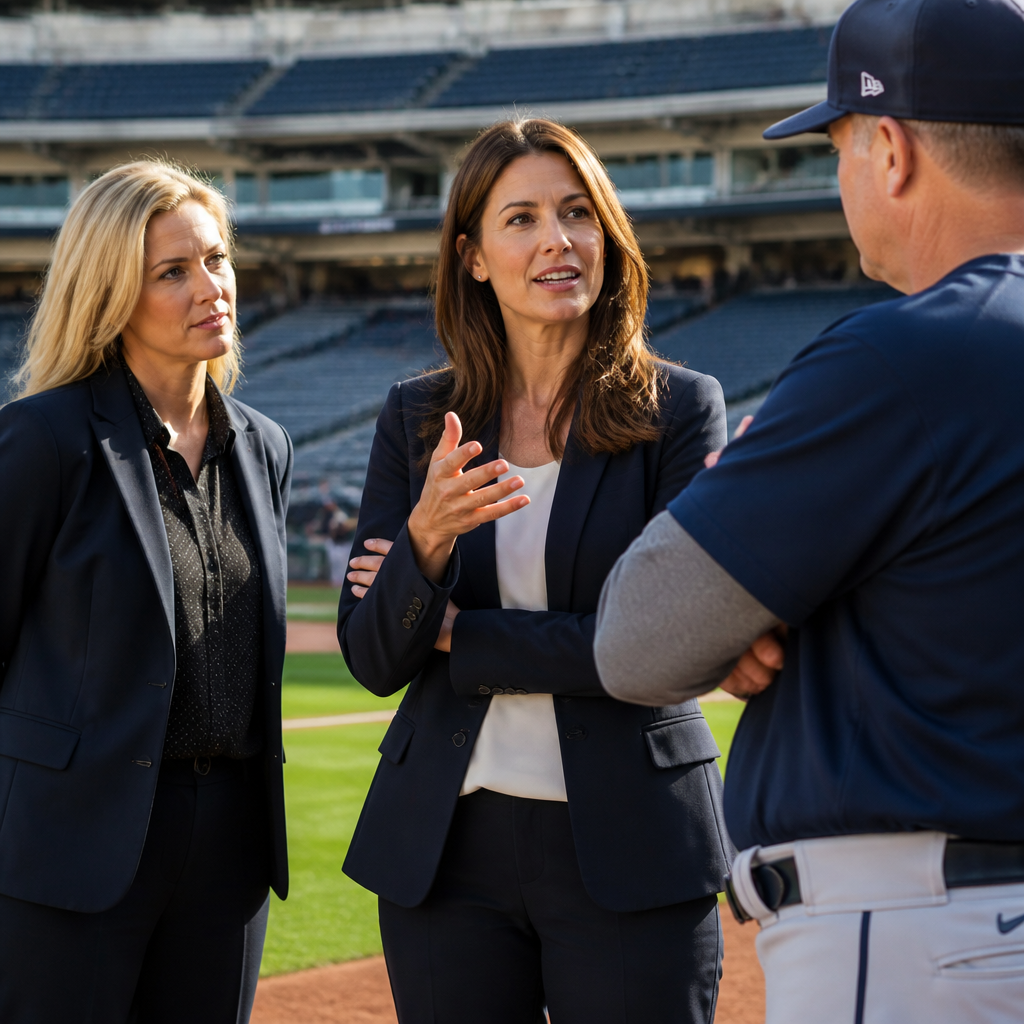
Women in baseball leadership roles are no longer a side story; they are reshaping how clubs scout talent, run player development, build analytics departments, negotiate partnerships, and define the culture of the sport. In this subtopic hub, leadership means the positions that influence strategy and operations beyond the foul lines: owners, team presidents, general managers, assistant GMs, farm directors, scouting supervisors, analytics heads, league executives, and business leaders who move baseball organizations forward. That distinction matters because public attention still gravitates toward players and on-field firsts, while many of the most durable breakthroughs happen in conference rooms, draft meetings, minor league complexes, and front-office planning sessions. I have worked with baseball content and organizational case studies long enough to see a pattern: when women gain meaningful authority rather than symbolic visibility, clubs tend to widen their information channels, professionalize communication, and make better decisions over time.
This matters for baseball because leadership determines who gets hired, which prospects are valued, how injuries are managed, how budgets are allocated, and what kind of workplace the next generation enters. It also matters for readers exploring women in baseball as a broader subject. A hub page on miscellaneous leadership topics should connect the big picture: historic barriers, breakthrough appointments, the pipeline into executive roles, the difference between baseball operations and business operations, and the questions fans, students, and professionals usually ask. The key idea is simple: representation in leadership is not only about fairness. It affects competitive advantage. Baseball is an industry obsessed with marginal gains. If organizations limit who contributes to decision-making, they shrink their own talent pool. The clubs and leagues that understand this are not engaging in charity. They are responding to the practical demands of modern baseball.
Historically, women were present in baseball administration far earlier than many fans realize, but their work was often obscured, under-credited, or confined to roles with limited authority. Ownership, finance, public relations, and community-facing jobs offered some entry points, while baseball operations remained tightly guarded. Over the last two decades, that wall has weakened. The growth of analytics, player development technology, international operations, and cross-functional management created new paths into leadership. At the same time, public accountability around hiring practices increased. Today, the conversation is less about whether women belong in baseball leadership and more about how organizations can build a sustainable pipeline, remove structural friction, and judge executives by the same performance standards applied to everyone else.
How women are changing baseball leadership
Women in baseball leadership roles are changing both the substance and process of decision-making. In practical terms, that means broader candidate searches, more rigorous communication between departments, and less reliance on inherited assumptions. In front offices I have studied, the strongest leaders are rarely the loudest evaluators in the room. They are the people who can synthesize scouting reports, biomechanical data, medical input, roster constraints, and financial realities into a coherent plan. Women who have reached senior positions in baseball have often done so by excelling in exactly that type of integrative leadership.
Kim Ng remains the most visible modern example. When the Miami Marlins hired her as general manager in 2020, she became the first woman to hold an MLB GM title. That appointment mattered not because it solved baseball’s gender imbalance, but because it removed the last excuse that no qualified woman had ever been “ready.” Ng had spent decades building a resume through the Chicago White Sox, New York Yankees, Los Angeles Dodgers, and the Commissioner’s Office, including work on labor issues, player personnel, and roster management. Her career showed that expertise in baseball operations is cumulative and portable. The barrier was never capability. It was access.
Other names are essential to this hub. Jean Afterman helped shape the Yankees’ baseball operations and contract strategy for years as assistant general manager. Farhan Zaidi’s front-office trees have included women in significant research and development and operations roles. Raquel Ferreira became one of the highest-ranking women in baseball operations with the Boston Red Sox. Sara Goodrum served as director of player development for the Houston Astros, one of the most demanding coordination jobs in the sport. Veronica Alvarez has influenced player development and national-team coaching pathways. Catie Griggs, while on the business side with the Seattle Mariners, demonstrated how revenue, fan experience, and organizational identity intersect with competitive goals. These examples show leadership is not one lane. It is an ecosystem.
Baseball operations versus business operations
A common source of confusion is the difference between baseball operations and business operations. Baseball operations covers roster construction, scouting, player development, performance science, medical coordination, international signings, draft strategy, and competitive planning. Business operations covers ticketing, sponsorship, marketing, communications, finance, legal work, venue operations, and community engagement. Both sides are leadership tracks, and both shape an organization’s success.
In my experience, readers often assume business roles are somehow less central to baseball power. That is incorrect. A team president who controls budgeting, staffing priorities, and organizational direction can influence baseball outcomes indirectly but decisively. Revenue affects payroll flexibility, facility investment, nutrition programs, technology spending, and staffing depth across the farm system. Meanwhile, leaders in baseball operations make choices that are more visible to fans but still depend on business-side support. The best modern organizations align these functions rather than treating them as separate kingdoms.
| Leadership area | Typical responsibilities | Why it matters |
|---|---|---|
| General manager or assistant GM | Roster moves, contracts, trades, player acquisition, departmental coordination | Directly shapes major league and farm system talent |
| Player development leadership | Minor league systems, coaching alignment, performance plans, promotions | Turns raw prospects into major league contributors |
| Scouting and analytics leadership | Amateur, pro, and international evaluation; modeling; draft boards | Improves talent identification and reduces costly mistakes |
| Team president or business executive | Budgeting, partnerships, fan growth, staffing, long-range strategy | Funds baseball operations and sets organizational priorities |
For women entering the sport, understanding this distinction is useful because the skills, credentials, and career ladders differ. Baseball operations may reward experience in scouting, data analysis, coaching support, or CBA-related roster rules. Business operations may value finance, sponsorship sales, digital media, legal training, or venue management. The hub value here is breadth: women are influencing baseball through both channels, and a complete view of leadership should account for each.
Why progress has been uneven
Progress has been real, but it has not been linear. Baseball remains a relationship-driven industry with a long memory and a strong preference for trusted networks. That can stabilize decision-making, but it can also reproduce exclusion. Historically, many hiring pipelines relied on former players, interns with insider access, or referrals from existing executives. Women were less likely to be present in those networks, particularly on the baseball-operations side. Even when they entered, they often faced role compression: broad workloads, limited title authority, and slower promotion despite visible contributions.
Another issue is the myth of the singular breakthrough. One headline appointment can create the impression that the system has already changed. In practice, durable progress requires depth at the coordinator, manager, director, and assistant GM levels. It also requires retention. I have seen organizations celebrate diverse hiring publicly while failing to build mentorship, transparent evaluation criteria, or pathways to authority. That produces churn rather than leadership continuity. The lesson is straightforward: a first is important, but a bench of experienced decision-makers matters more.
There are also practical constraints. Baseball’s calendar is demanding. The industry often expects long hours, geographic mobility, and constant availability across the draft, trade deadline, winter meetings, spring training, and season. Those demands affect everyone, but they can interact with workplace culture and caregiving expectations in ways that make advancement harder. Serious organizations address this with clear processes, professional travel standards, and performance metrics tied to outcomes rather than performative overwork.
Key pathways into leadership roles
Most women who reach baseball leadership roles do not follow one standard route. Some begin in internships and rise through operations. Others come through law, finance, data science, athletic training, communications, or video analysis. The modern game has multiplied entry points because organizations need expertise in labor regulations, biomechanics, machine learning, nutrition, mental skills, and international markets. That diversification has opened doors, but only for clubs willing to hire for competence rather than stereotype.
Analytics has been especially important. As teams built research and development departments, they recruited candidates with quantitative training from outside traditional baseball channels. That helped some women enter front offices through modeling, database management, and decision-support work. Yet analytics alone is not a shortcut to power. To become a leader, an analyst must translate findings into baseball language, influence coaches and scouts, and understand uncertainty. Successful executives connect evidence to action. They do not simply generate reports.
Player development is another significant route. Leaders in this area coordinate hitting, pitching, strength, medical, and mental performance plans across multiple affiliates. It is operationally complex and demands credibility, organization, and communication. Women who succeed here demonstrate that authority in baseball is earned through clarity and outcomes. Meanwhile, the business side often rewards cross-functional operators who can connect fan behavior, sponsorship value, media strategy, and venue economics. In both domains, the strongest candidates are measurable problem-solvers.
What effective organizations do differently
Organizations that advance women into leadership roles usually share several habits. First, they standardize hiring. Structured interviews, defined competencies, and diverse candidate slates reduce the role of instinctive gatekeeping. Second, they create visible stretch assignments. Running an amateur draft process, coordinating a player development initiative, or leading a sponsorship portfolio gives emerging leaders proof of authority. Third, they make mentorship practical. Informal advice helps, but sponsorship matters more: senior leaders must advocate for promotions and put people in rooms where major decisions happen.
Training also matters. Clubs increasingly use project management systems, player information platforms, video tools, and performance dashboards. Familiarity with systems such as TrackMan, Hawk-Eye, Rapsodo, Synergy, and internal data warehouses can strengthen credibility, but tools are only part of the equation. The real differentiator is judgment. Can a leader prioritize conflicting inputs? Can they communicate bad news clearly? Can they challenge consensus without becoming isolated? In baseball, leadership is tested under uncertainty, and good process often matters before results become visible.
Finally, effective organizations treat inclusion as an operating principle, not a branding exercise. They establish reporting lines, document expectations, and evaluate managers on team development. That is how culture becomes durable. If a club wants more women in baseball leadership roles, it must remove ambiguity from advancement and define excellence in observable terms.
The broader impact on the game
The impact of women in baseball leadership extends beyond symbolic representation. It changes who imagines a future in the sport, how departments collaborate, and how organizations define merit. Young professionals see that baseball careers can lead to authority, not just support roles. Clubs gain access to a wider range of expertise. Decision-making improves when leaders challenge stale assumptions and use the fullest available evidence.
This hub should also point readers outward. Related articles under women in baseball may explore executives, coaches, umpires, scouts, broadcasters, owners, and pioneers in specific eras. Leadership ties those threads together because every breakthrough category depends on decision-makers who hire, promote, and resource talent. If you are studying the field, follow the organizational charts, not just the headlines. Notice who controls budgets, player pathways, and final approvals. That is where power sits.
The central takeaway is clear: women in baseball leadership roles are not exceptions proving a rule. They are evidence that baseball performs better when it widens its leadership lens and judges talent accurately. The sport still has work to do, especially in building depth and retention across baseball operations and executive management. But the direction is unmistakable. If you want to understand where baseball is going, study who is leading it, how they got there, and what systems helped them succeed. Then keep exploring the women in baseball hub to see how leadership connects every other story in the game.
Frequently Asked Questions
What leadership roles are women holding in baseball today?
Women now serve across nearly every major leadership lane in baseball, and that reach is one of the clearest signs that the sport is changing at a structural level. These roles include owners and ownership partners who shape long-term vision, team presidents who oversee broad business and operational strategy, general managers and assistant general managers who influence roster construction and decision-making, farm directors who guide player development systems, scouting supervisors who evaluate amateur and professional talent, analytics leaders who build the models and information systems clubs rely on, and league executives who help set policy, standards, and strategic priorities across the sport. On the business side, women are also leading sponsorship, finance, community engagement, media, and revenue operations, all of which directly affect how organizations grow and compete.
What matters most is that these are not symbolic positions. They are jobs tied to strategy, execution, and accountability. A woman leading analytics may determine how a club values players, prepares reports for front office meetings, and integrates data into coaching decisions. A woman in player development leadership may help build the systems that move prospects through the minors and shape the culture those players experience every day. A woman team president may set priorities for staffing, partnerships, fan experience, and organizational identity. In other words, women in baseball leadership are influencing both baseball operations and business operations, which together define how modern clubs function.
Why does women’s leadership in baseball matter beyond representation?
Representation matters, but the significance of women in baseball leadership goes much deeper than visibility. Leadership roles affect how clubs make decisions, what perspectives are considered credible, and which ideas gain traction inside an organization. When women hold influence in scouting, analytics, player development, and executive management, baseball benefits from a wider range of experience and more rigorous decision-making. Strong organizations are rarely built by one kind of thinker. They improve when different backgrounds, working styles, and problem-solving approaches are part of the process.
This also matters because baseball is a complex industry that blends tradition, data, human performance, business operations, and public storytelling. Organizations that limit leadership pipelines often limit innovation. Women leaders can help clubs challenge stale assumptions, rethink communication systems, improve collaboration between departments, and build healthier cultures. That has practical consequences, from better talent evaluation to more effective staff management to stronger relationships with fans, partners, and communities. So while representation is an important part of the story, the larger point is performance: more inclusive leadership often helps create smarter, more adaptive, and more resilient organizations.
How are women reshaping baseball operations such as scouting, analytics, and player development?
Women are reshaping baseball operations by contributing directly to the systems that determine how clubs identify talent, develop players, and gain competitive advantages. In scouting, that can mean overseeing evaluation processes, coordinating area coverage, refining reporting standards, and helping clubs blend traditional observation with data-informed context. In analytics, women are leading departments that translate raw information into actionable strategy, whether through player projections, injury-risk modeling, defensive positioning analysis, pitch design support, or front office decision tools. These departments do not just produce numbers; they influence roster moves, trade discussions, draft planning, and player usage across the organization.
In player development, women leaders are helping shape how prospects are trained, mentored, evaluated, and promoted. That work often includes setting development plans, aligning coaches across affiliates, integrating sports science and performance data, and creating environments where players receive consistent instruction. It also includes culture-building, which is often overlooked but essential. A strong development system depends on trust, communication, clarity, and accountability. Leaders who improve those elements can raise the effectiveness of the entire pipeline. As baseball becomes more interdisciplinary, the value of leaders who can connect departments and translate information clearly has grown, and many women in the game are excelling precisely in that space.
What barriers have women faced in baseball leadership, and how is the sport changing?
Women have historically faced a mix of structural and cultural barriers in baseball. These have included limited access to informal networks, fewer early-career pathways into baseball operations, assumptions about who “belongs” in decision-making spaces, and the burden of having to prove expertise in environments where men have long been treated as the default authority. In some cases, women have also had fewer mentors, less visibility in promotion pipelines, and less room for error than peers in similar roles. These obstacles did not always appear as formal rules, but they still shaped hiring, advancement, and credibility in powerful ways.
The sport is changing, though not all at once and not evenly across every organization. More clubs and leagues now recognize that expanding leadership pipelines is not only fair but strategically smart. Internship programs, fellowships, cross-functional hiring, and more intentional recruiting have opened doors. So has the growing complexity of baseball itself. As teams rely more on analytics, technology, sports science, global operations, and sophisticated business strategy, they need talent from broader backgrounds. Visibility has helped too. As more women succeed in senior roles, they create proof points that challenge outdated assumptions and make it easier for the next generation to be taken seriously. Progress is real, but it still depends on consistent investment in hiring, development, and organizational culture.
What does the rise of women in baseball leadership mean for the future of the sport?
The rise of women in baseball leadership signals a future in which the sport is likely to be more modern, more collaborative, and more strategically diverse. Baseball organizations are under constant pressure to improve across player evaluation, development, business growth, media relevance, and fan engagement. That demands leaders who can think across silos, manage complexity, and build systems that adapt over time. Women in leadership are helping drive exactly that kind of evolution. Their presence reflects a broader shift from narrowly defined baseball authority toward more multidimensional expertise.
For the sport’s future, that means better organizations are likely to be the ones that treat leadership as a function of skill, insight, and effectiveness rather than tradition or stereotype. It also means younger professionals entering baseball can see more pathways into influential work, whether their strengths are in scouting, data, operations, partnerships, or executive management. On a cultural level, it helps baseball present itself as a sport capable of growth without losing its identity. And on a practical level, it improves the talent pool from which teams and leagues draw their decision-makers. When baseball welcomes more qualified leaders into meaningful positions of authority, it does not dilute the sport’s standards; it raises them.