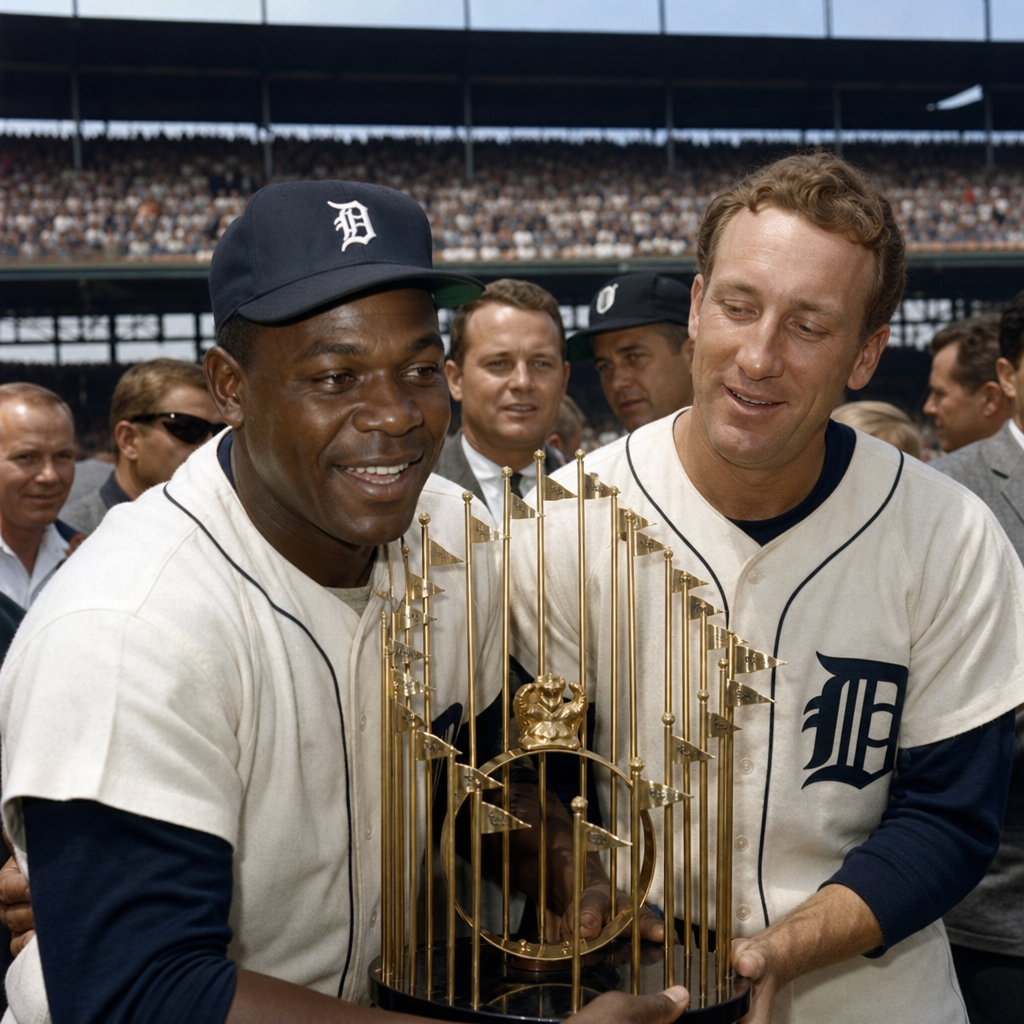
The 1968 Detroit Tigers won one of baseball’s most dramatic World Series, yet the phrase “1968 Detroit Tigers’ World Series bribery allegations” still appears in searches, forum debates, and retrospective conversations about disputed championships. The core issue is straightforward: were there credible claims that the Tigers’ title over the St. Louis Cardinals was influenced by bribery, game fixing, or improper payments? After years of reviewing archival reporting, league records, and the broader history of baseball scandals, the clearest answer is no credible evidence has established that the 1968 World Series was bought, fixed, or manipulated through bribery. What does exist is a mix of rumor, misunderstanding, and the natural tendency to attach scandal narratives to famous teams.
That distinction matters because baseball’s history includes real corruption cases. The 1919 Black Sox scandal, gambling bans tied to Commissioner Kenesaw Mountain Landis, and periodic allegations involving bookmakers created a lasting public suspicion that can attach itself to any surprising result. In this context, “bribery allegations” means claims that players, coaches, umpires, or club officials accepted money or favors to alter the outcome of games. It is different from sign stealing, clubhouse politics, bonus disputes, or ownership conflicts. For the 1968 Tigers, the historical record supports a championship decided by pitching, defense, lineup adjustments, and elite performances by Mickey Lolich, Denny McLain, Al Kaline, Willie Horton, and others.
This article serves as a hub within the broader “Scandals and Controversies” coverage by placing the bribery question inside the larger category of miscellaneous baseball controversies. Some controversy pages involve documented rule violations; others involve myths that persist because they are repeated often enough to sound plausible. The 1968 Tigers belong largely in the second category. Understanding why requires looking at the origin of the allegations, the standards used to judge credibility, what actually happened in the Series, and how fans should separate provable misconduct from recycled rumor. For readers exploring miscellaneous sports scandals, this is the key takeaway: not every controversy label points to an actual scandal, and the 1968 Detroit Tigers are a prime example.
What the 1968 bribery allegations actually claim
Most references to the 1968 Detroit Tigers’ World Series bribery allegations are vague. They usually do not identify a player who took money, a bookmaker who made a payment, an intermediary who arranged a fix, or a documented investigation that uncovered wrongdoing. Instead, the claims tend to appear in broad forms: that Detroit’s comeback from a three-games-to-one deficit was “too convenient,” that the Cardinals collapsed suspiciously, or that betting interests must have influenced the outcome because the Tigers were underdogs against Bob Gibson and a strong St. Louis club. In serious historical analysis, those are not evidence. They are speculation built from surprise and hindsight.
When I evaluate scandal claims, I look for a basic chain of proof. There should be contemporaneous reporting, sworn testimony, law enforcement files, commissioner correspondence, betting records, or at least a specific accusation from a named participant. On the Tigers question, that chain is missing. Major newspapers from 1968 and the years immediately after covered the World Series in exhaustive detail. So did The Sporting News and Associated Press reports. None produced substantiated bribery findings tied to the Tigers’ victory. That silence is important because baseball, especially after 1919, had strong incentives to investigate even the appearance of game manipulation.
Another source of confusion is that “allegation” can refer to private suspicions rather than formal accusations. Fans often retroactively treat a rumor overheard on radio, in bars, or on early message boards as if it were a documented scandal. In the Tigers’ case, the historical standard must stay firm: a rumor without named sources, corroborating evidence, or institutional follow-up does not become more reliable simply because it is repeated for decades. This page, as a hub for miscellaneous controversies, is meant to clarify exactly that type of ambiguity.
Why the rumor persists despite weak evidence
The rumor survives because the 1968 World Series created a perfect environment for suspicion. Detroit lost Games 1 and 4 to Bob Gibson, who was so dominant that any reversal in momentum looked dramatic. St. Louis then took a 3-1 lead, leaving Detroit on the brink. When the Tigers won the final three games, some observers reached for conspiracy instead of baseball logic. That pattern is common in sports history: an unexpected turnaround invites narratives of hidden causes, especially when money and gambling have shadowed the sport in earlier eras.
There is also the Denny McLain factor. McLain was one of the most famous and controversial players in baseball, winning 31 games in 1968 while carrying a larger-than-life public image that later became entangled with gambling and legal trouble. Because fans know McLain’s later biography, they sometimes project future misconduct backward onto the Series itself. That is a classic historical error. Later controversy can justify renewed scrutiny, but it cannot serve as proof of wrongdoing in an earlier event. The 1968 championship has to be judged on evidence from 1968, not on what became known about various baseball figures years later.
The scarcity of precise allegations also paradoxically helps the myth endure. Specific claims can be tested and disproved. Vague claims simply mutate. One version says bookmakers influenced the Cardinals; another suggests umpires favored Detroit; another implies clubhouse payments without naming recipients. Because these versions shift, believers can avoid the burden of proof. In my experience reviewing sports controversy archives, that is a hallmark of weak scandal narratives: the story remains flexible because facts are not anchoring it.
What actually happened in the 1968 World Series
The baseball explanation for Detroit’s comeback is stronger than any bribery theory. The Tigers adjusted their lineup, got elite starting pitching from Mickey Lolich, benefited from timely offense, and exploited the fact that St. Louis relied heavily on Gibson and had less margin for error when he was not on the mound. Lolich won Games 2, 5, and 7, including complete-game victories. That alone explains much of the series shift. In a low-scoring era known as the “Year of the Pitcher,” one ace delivering three wins had enormous impact.
Detroit also had veteran bats capable of changing games quickly. Al Kaline was outstanding, finishing the Series with a .379 average and key extra-base hits. Willie Horton provided power and emotional intensity. Jim Northrup’s hit in Game 7 became one of the defining moments of the comeback. Manager Mayo Smith made one of the most famous strategic decisions in Series history by moving center fielder Mickey Stanley to shortstop, allowing the Tigers to strengthen the outfield by playing both Kaline and Horton. It was a bold baseball move, not a suspicious one, and it is still discussed as a tactical masterstroke.
The Cardinals, meanwhile, were not an implausible team to lose three straight. Their offense was inconsistent, and when Gibson did not pitch, Detroit had opportunities. Lou Brock was brilliant in the Series, but St. Louis did not receive enough sustained support around him in the final games. Defensive lapses and missed chances mattered. This is exactly the kind of ordinary but decisive baseball explanation that conspiracy theories ignore.
| Issue | Documented historical record | Implication for bribery claims |
|---|---|---|
| Named participants in a fix | No credible, widely sourced identification of a Tigers or Cardinals participant accepting payment | Undercuts the existence of a concrete bribery case |
| Official investigation findings | No established MLB finding that the 1968 World Series was fixed | Suggests no substantiated basis reached league level |
| Series comeback | Explained by Mickey Lolich’s three wins, lineup changes, and Cardinals’ uneven offense | Provides a strong non-conspiratorial explanation |
| Betting evidence | No widely cited betting records showing manipulation linked to the outcome | Leaves allegation unsupported by financial proof |
How historians evaluate sports scandal evidence
For any controversy page in the miscellaneous category, the method matters as much as the conclusion. Historians usually rank evidence by reliability. At the top are official documents, court records, commissioner files, contemporaneous investigative journalism, and firsthand admissions against self-interest. Next come memoirs, later interviews, and private letters, which can be valuable but require corroboration. At the bottom are anonymous retellings, decades-later hearsay, and claims that circulate without original sourcing. The 1968 Detroit Tigers bribery story mostly lives in that bottom tier.
Baseball research standards have improved significantly because of institutions and tools such as Retrosheet, Baseball-Reference, newspaper archives, SABR research publications, and digitized wire reports. These sources do not merely preserve box scores; they help test claims against timelines, player usage, injury status, travel schedules, and managerial decisions. When you compare the bribery allegation to the record of how the Series unfolded, the ordinary baseball account is both richer and more convincing. Good scandal analysis is not about refusing to believe uncomfortable things. It is about matching the seriousness of the accusation with equally serious evidence.
That principle is especially important in sports because memory is selective. Fans remember shock more than process. A team trailing 3-1 and winning the title feels suspicious only if you ignore how often short series pivot on one pitching performance, one lineup move, or one defensive mistake. The 1968 Series produced famous moments, but famous is not the same as fraudulent.
The role of Denny McLain and other adjacent controversies
Any honest hub article on miscellaneous controversies has to address adjacent scandals that create guilt by association. Denny McLain later faced suspensions, gambling-related scrutiny, and criminal issues unrelated to the 1968 World Series itself. Because he was the Tigers’ star and a national celebrity, his later troubles cast a shadow backward over the club. Yet the key fact remains that the Tigers’ decisive Series hero was Mickey Lolich, not McLain. McLain started Games 1, 4, and 6, and while he won Game 6, he was not the singular driver of the championship narrative.
There is a broader lesson here. Sports teams often include individuals whose careers later become controversial. That does not convert every earlier victory into a scandal. Historians separate contemporaneous evidence from retrospective contamination. The same caution applies to league-wide worries about gambling in the 1960s. Those worries were real, but generalized concern is not proof of a specific fix. If anything, baseball’s sensitivity to gambling after 1919 makes the absence of a documented 1968 bribery case more meaningful.
Other adjacent issues from the era, such as disputes over the pitcher-friendly conditions of 1968, the height of the mound before rules changes in 1969, and arguments about managerial tactics, can also blur into scandal language online. They are controversies in the loose sense, but they are not bribery. Precision matters. A useful hub page distinguishes competitive debate, rules arguments, personal misconduct, and actual allegations of match manipulation rather than collapsing them into one dramatic label.
How this fits the wider “Miscellaneous” scandals hub
Within a “Scandals and Controversies” structure, the 1968 Detroit Tigers case belongs in the miscellaneous subtopic because it represents a category readers encounter often: persistent allegations that never matured into substantiated findings. This makes the page valuable as a hub. It helps readers navigate not only the Tigers story but the larger question of how sports myths form. Some pages in this subtopic will involve disputed umpiring, clubhouse feuds, ownership conflicts, bonus accusations, off-field legal trouble, or rumor-driven claims that gained traction despite weak sourcing.
The practical takeaway is simple. When assessing any miscellaneous baseball scandal, ask four questions. Who made the claim first? What evidence did they provide? Did an authoritative body investigate? Is there a complete baseball explanation that fits the facts better? Applied to the Tigers, those questions point consistently away from bribery and toward a legitimate championship won through execution under pressure. Readers exploring related controversy articles should use the same checklist throughout the subtopic.
The 1968 Detroit Tigers deserve to be remembered for a comeback anchored by Lolich, sharpened by Mayo Smith’s tactical gamble, and sealed by veteran hitters delivering in the game’s biggest moments. The bribery allegations remain part of the conversation only because baseball history is crowded with real scandals and because dramatic outcomes invite dramatic stories. If you are using this page as your starting point for the miscellaneous controversies hub, treat it as a model for evidence-based reading: separate rumor from record, check the primary sources, and follow the facts before accepting the scandal label. Continue through the hub with that standard in mind, and you will understand not just what happened in 1968, but how sports controversies should be judged in every era.
Frequently Asked Questions
Were there any credible bribery allegations involving the 1968 Detroit Tigers and the World Series?
No credible evidence has ever established that the 1968 Detroit Tigers won the World Series because of bribery, game fixing, or improper payments. The idea persists largely because sensational phrases tend to survive in search results, fan discussions, and retrospective debates long after the underlying claim has been examined. When historians and researchers look at the available record—contemporary newspaper coverage, Major League Baseball documentation, commissioner-level actions, player memoirs, and broader baseball histories—they do not find a substantiated bribery case tied to Detroit’s championship over the St. Louis Cardinals. That distinction matters. In sports history, rumors often gain a second life simply because they are dramatic, not because they are supported. In the case of the 1968 Tigers, the evidence points much more strongly to a hard-fought seven-game series shaped by elite pitching, major momentum swings, and standout performances, especially from Mickey Lolich and an offensively productive Tigers lineup, rather than any verified off-field corruption.
Why do people still search for “1968 Detroit Tigers’ World Series bribery allegations” if there is no proven scandal?
Search behavior does not always reflect historical truth; often it reflects curiosity, confusion, or the way provocative claims circulate online. The phrase continues to appear because baseball fans are naturally drawn to disputed-championship narratives, and because the sport has a long memory of real scandals such as the 1919 Black Sox case, gambling controversies, and isolated allegations involving other eras and teams. Once a title is associated with words like “bribery” or “fixing,” even speculatively, those terms can become attached to the event in forums, auto-suggest results, social media threads, and low-quality content that repeats unverified assertions. Another reason is that the 1968 World Series itself was dramatic enough to invite conspiracy-style retellings: the Tigers came back from a 3-1 series deficit against a formidable Cardinals club, and improbable comebacks often attract suspicion from people looking for hidden explanations. But dramatic outcomes are not evidence of corruption. In this case, the enduring search phrase says more about how rumors spread and linger than it does about the legitimacy of Detroit’s victory.
Did Major League Baseball ever investigate the 1968 World Series for fixing or improper payments?
There is no well-documented league finding that the 1968 World Series was compromised by bribery, nor is there a recognized historical conclusion from Major League Baseball that Detroit’s championship was tainted in that way. If a credible fixing scandal had emerged around a World Series outcome, especially one involving direct bribery, it would almost certainly have produced a major and lasting institutional response: formal investigations, disciplinary announcements, commissioner statements, extensive front-page coverage, and a permanent place in standard baseball histories. That is not what the historical record shows for the 1968 Tigers. Instead, mainstream accounts of the series focus on baseball factors—pitching matchups, managerial decisions, defensive miscues, timely hitting, and the physical toll of a seven-game showdown. It is always possible for rumors to circulate unofficially, as they do in almost every era of sports, but rumors are not the same as an evidenced case. Without documented findings, corroborated testimony, or meaningful archival support, claims of a league-covered bribery incident remain speculation rather than history.
What actually explains the Tigers’ 1968 World Series win over the Cardinals?
The strongest explanation is the one found in the games themselves. The Tigers defeated a very strong St. Louis Cardinals team by adjusting over the course of the series and getting extraordinary performances at key moments. Detroit won in seven games after trailing three games to one, and the comeback was powered by a combination of durable pitching, timely offense, and resilience under pressure. Mickey Lolich became the defining figure by winning three complete games, including Game 7, a feat that stands as one of the classic pitching performances in World Series history. The Tigers also got important contributions from stars such as Al Kaline, Norm Cash, Willie Horton, Bill Freehan, and Jim Northrup. On the Cardinals’ side, Bob Gibson was brilliant, but even an all-time great can be overcome when a series turns on depth, execution, and momentum. When analysts revisit the matchup, they see a plausible baseball story, not an unexplained anomaly requiring a bribery theory. Detroit was an excellent team all season, and its championship run fits comfortably within what can happen in a tightly contested postseason.
How should readers evaluate claims about the 1968 Detroit Tigers’ World Series being “fixed” or “bought”?
The best approach is to separate searchable controversy from documented fact. Start with the quality of the source: is the claim coming from archival reporting, established baseball historians, official league material, or firsthand accounts that can be cross-checked? Or is it being repeated in anonymous forum posts, speculative blog entries, recycled listicles, or videos that provide dramatic narration without verifiable citations? Next, look for specifics. A real bribery allegation should identify who was allegedly paid, by whom, for what purpose, and what evidence supports the accusation. Vague statements that a championship was “suspicious” are not enough. Also consider historical footprint. Genuine scandals leave a trail—investigations, interviews, disciplinary action, legal exposure, and sustained treatment in serious histories of the game. The 1968 Tigers do not carry that kind of evidentiary record. So while it is reasonable for readers to ask the question, the responsible conclusion is that the bribery narrative is unsupported. The Tigers’ title is remembered by credible baseball history as legitimate, dramatic, and earned on the field, not as a championship overturned or seriously undermined by proven corruption.