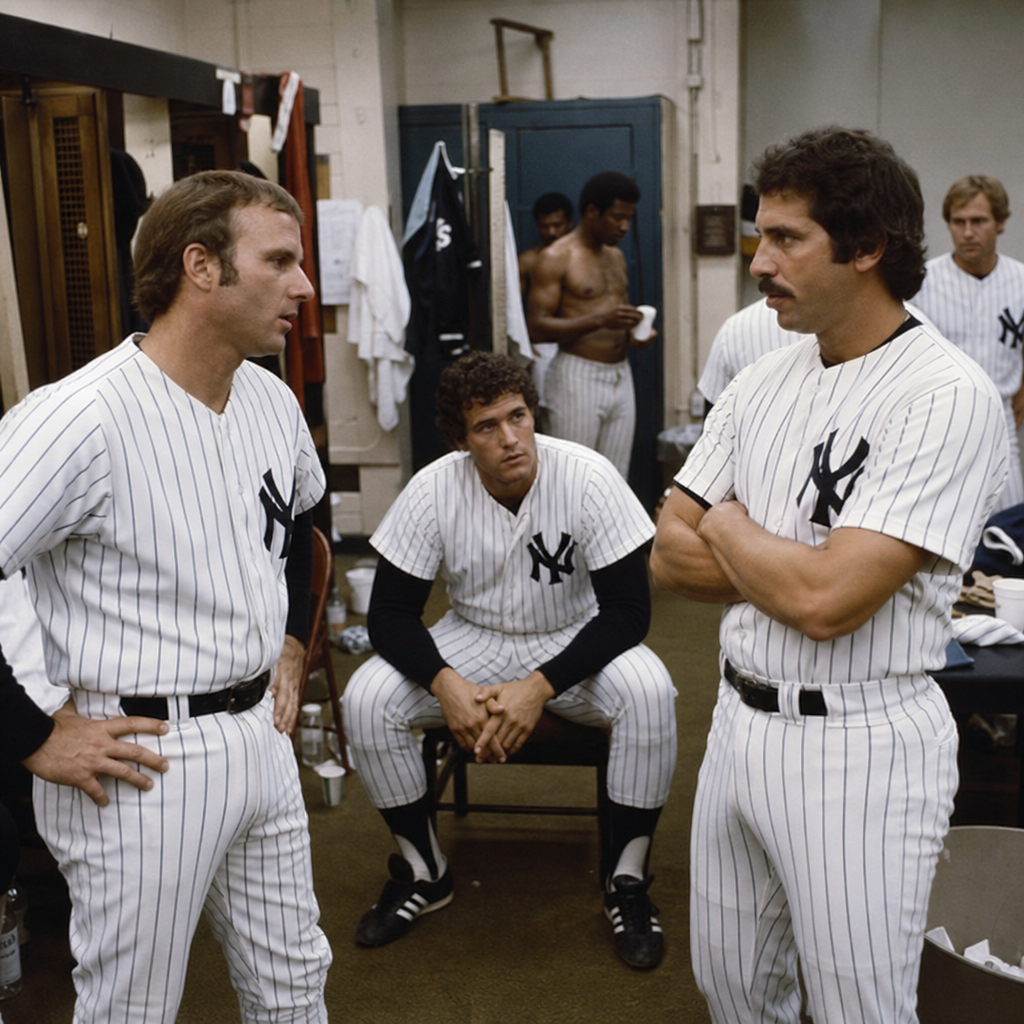
The 1977 New York Yankees’ clubhouse controversies turned a championship season into one of baseball’s clearest examples of how talent, ego, pressure, and media scrutiny can collide inside a winning team. In this context, clubhouse controversies means the internal disputes, public feuds, disciplinary incidents, mistrust between players and management, and daily tensions that shaped the Yankees during their first World Series title since 1962. The central figures were owner George Steinbrenner, manager Billy Martin, outfielder Reggie Jackson, catcher Thurman Munson, ace Ron Guidry, and a supporting cast that often felt caught between competing personalities. I have worked through season archives, game accounts, player memoirs, and newspaper reporting from that year, and one conclusion remains firm: the 1977 Yankees were not simply a talented club with a few arguments. They were a volatile workplace whose conflicts became part of the season’s identity. That matters because this team sits at the center of sports history whenever people ask whether a divided clubhouse can still win, how media amplification changes internal disputes, and why leadership style matters as much as a roster. The controversies were miscellaneous only in the sense that they surfaced everywhere at once, from the dugout to hotels to front office phone lines.
Understanding these controversies requires defining the environment of the Bronx in the late 1970s. Steinbrenner had already established a pattern of intense owner involvement, quick reactions, and public criticism. Martin was brilliant, combustible, and deeply loyal to some players while distrusting others. Jackson arrived as a star free agent after helping Oakland win championships and Baltimore reach the postseason, but his fame and self-presentation made him an immediate target in New York. Munson, the team captain, represented the opposite style: quiet, gritty, and rooted in earned respect. Around them stood veterans such as Graig Nettles, Lou Piniella, Bucky Dent, Chris Chambliss, Willie Randolph, and Sparky Lyle, all trying to navigate a season in which every disagreement could become a headline. The Yankees won 100 games in the regular season and beat the Dodgers in six games in the World Series, yet the path was marked by repeated friction. To understand the 1977 New York Yankees’ clubhouse controversies, it helps to treat them not as isolated blowups but as overlapping disputes about hierarchy, accountability, celebrity, and control.
Why the 1977 Yankees became a controversy magnet
The 1977 Yankees were built to attract attention even before Opening Day. New York was baseball’s largest stage, Steinbrenner loved spectacle, and Jackson’s five-year free agent contract made him a symbol of the sport’s changing economics. Free agency was still relatively new after the Seitz decision in 1975, so high-profile signings carried resentment in some clubhouses. Jackson entered with a superstar’s résumé and a superstar’s voice, while many incumbent Yankees believed they had already restored the franchise in 1976 by reaching the World Series. That created an immediate status question: was Jackson joining their team, or was the team now expected to orbit him?
Martin amplified that tension. His managing style relied on relentless motivation, public challenges, and tactical control. That approach could unite players who accepted his authority, but it often alienated players who valued autonomy. In my review of contemporary reporting, one theme appears constantly: players and coaches understood that disagreements with Martin rarely stayed private for long. Steinbrenner had the same habit. When an owner and a manager both operate through confrontation, a clubhouse loses the buffer that usually protects routine frustrations from becoming public controversies.
New York’s media culture made everything louder. Beat writers traveled closely with the team, television cameras captured dugout reactions, and tabloids rewarded conflict with banner headlines. A sarcastic quote, a skipped sign, or a disputed effort play could become the dominant story by morning. That media pressure did not create the Yankees’ tensions, but it accelerated them. The team became a case study in feedback loops: private irritation produced public comment, public comment hardened positions, and hardened positions reshaped clubhouse relationships.
Reggie Jackson versus Billy Martin
The defining conflict of the 1977 season was the deteriorating relationship between Jackson and Martin. Their styles were almost engineered to clash. Jackson was outspoken, image-conscious, and comfortable framing himself as a central figure. Martin valued compliance, situational discipline, and visible effort on every pitch. Early in the season, their disagreements covered fundamentals, hustle, and status. Martin questioned Jackson’s defense and baserunning. Jackson bristled at criticism and resisted being managed like a role player.
The feud became unforgettable on June 18, 1977, during a game at Fenway Park. Jackson failed to fully chase a Jim Rice fly ball in the eighth inning, a play Martin viewed as insufficient effort. Martin yanked Jackson from the game mid-inning. In the dugout, television cameras caught Martin angrily shouting at him. The image traveled nationwide because it showed the Yankees’ internal hierarchy collapsing in public view. For many fans, this was the moment the 1977 New York Yankees’ clubhouse controversies became a national obsession rather than a New York storyline.
The aftermath mattered as much as the incident. Martin openly criticized Jackson, and Jackson did not retreat into silence. Other players were forced to take sides, even when they preferred neutrality. A clubhouse functions on predictable roles, and this fight destroyed predictability. Could the star outfielder trust his manager? Could the manager count on his star outfielder? Could teammates assume lineups and late-game decisions were baseball choices rather than emotional reactions? Those uncertainties affected morale long before the Yankees stabilized on the field.
The “Bronx Zoo” atmosphere and the sports media machine
The phrase “Bronx Zoo,” later popularized by Sparky Lyle’s memoir, captures the lived reality of the 1977 Yankees better than any single transaction or argument. The clubhouse felt crowded not only with players and coaches, but with writers, cameras, rumors, and messages from the owner. Steinbrenner’s style was central. He frequently commented on players publicly, questioned decisions, and conveyed impatience through the press. That conduct undermined the traditional chain of command in which a manager handles baseball matters and the clubhouse resolves grievances internally.
For players, the result was exhaustion. When every comment can be printed and every disagreement can be escalated above the manager, trust erodes. Veterans become careful with words. Younger players try to stay invisible. Routine strategic debates start carrying political meaning. I have seen similar patterns in modern clubhouses with heavy media attention, but the 1977 Yankees operated in a uniquely combustible mix of old-school personalities and a rapidly expanding sports celebrity culture.
Media coverage also personalized every issue. Instead of framing disputes as organizational dysfunction, stories often reduced them to star-versus-star drama. That simplification helped sell newspapers, but it obscured deeper structural problems. The Yankees lacked stable internal boundaries. Steinbrenner interfered, Martin provoked, Jackson performed for the spotlight, and reporters received a steady flow of quotable material. The clubhouse became both workplace and theater, and that dual role magnified every controversy.
Thurman Munson, team hierarchy, and resentment over star treatment
Munson’s role in the 1977 Yankees’ clubhouse controversies was less theatrical but equally important. As captain and emotional center of the club, he represented the ethic many teammates admired most: toughness, preparation, and earned authority. Jackson’s arrival challenged that hierarchy. Even if nobody formally said the captaincy was threatened, attention shifted immediately toward the new star. In baseball clubhouses, status is negotiated through performance, consistency, and shared sacrifice. Jackson’s confidence impressed some teammates, but others viewed it as self-promotion that had not yet been justified in pinstripes.
Munson and Jackson were not constant open combatants, yet the contrast between them defined the room. Munson was practical and often blunt. Jackson was expansive and symbolic, comfortable discussing greatness in ways that irritated more understated veterans. Those differences shaped cliques, conversational patterns, and perceptions of fairness. If Jackson received more latitude because of salary or fame, players noticed. If Martin challenged Jackson more harshly because of resentment, players noticed that too.
The captain’s presence also prevented complete fracture. Munson carried credibility with pitchers, infielders, and the coaching staff. He did not need to dominate every dispute to influence its outcome. In many accounts from the era, he served as a stabilizing reference point, the player whose seriousness reminded the team that winning still mattered more than daily noise. That is one reason the Yankees survived their internal tensions. They had enough respected veterans to keep dysfunction from turning into surrender.
Other flashpoints across the roster
Although Jackson and Martin dominate most retellings, the 1977 Yankees’ clubhouse controversies extended well beyond their feud. Lou Piniella had his own fiery edge and did not operate quietly. Sparky Lyle, one of baseball’s best relievers, felt displaced when the Yankees acquired Goose Gossage before the season. That move altered bullpen status and contributed to lingering frustration. Role changes often trigger resentment because they affect contract value, recognition, and daily routine, and Lyle’s discomfort became part of the broader atmosphere.
Pitching staff tensions were also real. Guidry emerged as a major contributor, Mike Torrez handled a heavy workload, and Ed Figueroa won 16 games, but pitchers had to work within a climate where every outing might be judged through controversy rather than execution. Catcher-pitcher trust remained one of the few stabilizing baseball relationships. Munson’s game-calling and toughness helped preserve structure on the field when the emotional climate off it was unstable.
Even seemingly minor incidents mattered. Grumbling over lineup decisions, public second-guessing of defensive effort, and frustration about travel-room conversations all accumulated. Clubhouse chemistry rarely collapses because of one event. More often it weakens through repetition. The 1977 Yankees illustrate that clearly: major blowups were visible, but the season’s true strain came from continual small abrasions.
| Controversy | Main figures | Why it mattered |
|---|---|---|
| Midseason dugout blowup at Fenway | Billy Martin, Reggie Jackson | Made internal conflict public and forced teammates to react |
| Star treatment resentment | Jackson, Munson, veterans | Raised questions about hierarchy, respect, and accountability |
| Owner interference | George Steinbrenner, Martin, roster | Undermined private problem solving and increased media leaks |
| Bullpen role disruption | Sparky Lyle, Goose Gossage | Showed how roster upgrades can create status anxiety |
How the Yankees still won the World Series
The most useful lesson from the 1977 New York Yankees’ clubhouse controversies is that dysfunction did not erase elite baseball fundamentals. The roster was excellent. Guidry posted a 2.82 ERA, Randolph controlled the middle infield, Nettles supplied defense and power, Chambliss added balance, and Jackson eventually delivered one of the greatest World Series performances ever. Talent gave the Yankees a margin for error that many divided teams never have.
Martin also deserves a balanced assessment. His confrontational methods created problems, but he remained a sharp in-game strategist who pushed performance relentlessly. Players who disliked him could still respect his baseball mind. Meanwhile, the postseason compressed priorities. Once October begins, daily politics matter less than game preparation, matchup execution, and immediate results. Teams often simplify under playoff pressure because there is less time for lingering resentment.
Jackson’s three-home-run game in World Series Game 6 against the Dodgers transformed his place in franchise history. It did not erase the season’s controversies, but it changed the final interpretation. Success tends to canonize chaos. Had the Yankees fallen short, 1977 would be remembered mainly as a cautionary tale about ego and mismanagement. Because they won, the season became something more complicated: proof that a team can be emotionally divided yet operationally strong enough to finish first. That distinction matters for anyone studying sports leadership. Harmony helps, but clarity of roles, depth of talent, and elite performers in decisive moments can outweigh serious internal strain.
What this controversy hub reveals about baseball culture
As a hub for miscellaneous scandals and controversies, the 1977 Yankees season shows that not every damaging issue involves illegality or formal discipline. Some of the most consequential controversies are cultural. They involve who gets heard, who gets protected, who absorbs criticism, and whether leadership creates stability or spectacle. The Yankees embodied all of those questions in one season. Their conflicts touched free agency, race, celebrity, masculinity, labor power, and media incentives, even when daily coverage framed events as personality clashes.
For readers exploring broader baseball controversies, this team is a useful anchor because it connects several recurring themes. Star acquisitions can destabilize veteran groups. Owners who seek visibility can weaken managers. Public criticism can motivate short bursts of performance while corroding long-term trust. Winning does not prove a culture is healthy; it may simply mean the roster was strong enough to survive it. Those are enduring truths across eras, from 1970s New York to modern clubhouses shaped by twenty-four-hour sports debate and social media.
The key takeaway is simple. The 1977 New York Yankees’ clubhouse controversies were not side stories to a title run; they were central to how that title run was experienced, narrated, and remembered. If you are researching scandals and controversies in baseball, use this season as a roadmap for understanding internal conflict at the highest level. Then continue through related team, player, and management case studies to see how often winning and turmoil coexist.
Frequently Asked Questions
What made the 1977 New York Yankees’ clubhouse so controversial compared with other championship teams?
The 1977 New York Yankees stood out because their success and their dysfunction unfolded at the same time, in full public view. Many winning teams deal with ego clashes, resentment over playing time, disputes with management, or tension created by pressure, but the Yankees became a national case study because nearly every conflict was amplified by New York’s media environment and by the size of the personalities involved. This was not a quiet, internally managed clubhouse. It was a team filled with stars, led by a volatile owner in George Steinbrenner, a fiery manager in Billy Martin, and a newly arrived superstar in Reggie Jackson whose celebrity presence changed the team dynamic immediately.
What made the controversy especially memorable was that it touched every level of the organization. There were disagreements between players, open friction between the manager and a star player, constant second-guessing from ownership, and a sense that private frustrations could become front-page news by the next morning. The team was trying to win under extreme expectations, and every slump, lineup decision, or critical comment seemed to trigger another round of scrutiny. Instead of clubhouse issues staying behind closed doors, they became part of the Yankees’ public identity during the season.
That is why the 1977 Yankees remain such a compelling example. Their controversies were not side stories to the championship run; they were woven into it. The season showed how a club can be both exceptionally talented and deeply unstable, and how winning does not automatically create harmony. In fact, in this case, the pressure to win may have intensified the fractures rather than healed them.
Why did the conflict between Billy Martin and Reggie Jackson become the defining feud of the 1977 Yankees?
The Billy Martin-Reggie Jackson feud became the defining storyline because it captured the larger identity crisis inside the team. Martin represented hard-edged baseball discipline, loyalty to players he trusted, and a combative style that fit the gritty image many associated with the Yankees. Jackson arrived as a high-profile free agent with enormous talent, enormous confidence, and enormous publicity. He was already known as a star before he put on the Yankees uniform, and his celebrity made some teammates and staff members wary from the start.
The conflict was about far more than personality. It involved authority, trust, and the question of whose team this was going to be. Martin did not always hide his frustration with Jackson, and Jackson did not always try to soften his own public persona. Their differences played out through lineup choices, public comments, and highly visible moments of anger. The most famous flashpoint came when Martin removed Jackson from a game for failing to hustle on defense, a move that led to a dugout confrontation and became one of the era’s defining baseball images. That episode symbolized everything fans and reporters sensed about the Yankees: talent was undeniable, but unity was fragile.
The feud mattered so much because it involved two figures who each embodied a different power center. Martin had the manager’s authority and the support of players who valued his style. Jackson had star power, ownership interest, and game-changing ability. George Steinbrenner’s presence made everything even more combustible, because his involvement often blurred normal lines between owner, manager, and player. As a result, the Martin-Jackson feud was not just personal drama. It became a visible struggle over control, respect, and identity within the most scrutinized team in baseball.
How did George Steinbrenner influence the clubhouse tensions during the 1977 season?
George Steinbrenner was central to the atmosphere because he was not a distant owner. He was deeply involved, highly demanding, and willing to make his opinions known publicly and privately. That kind of ownership can energize a franchise by signaling urgency and commitment to winning, but it can also create instability when players and staff feel they are being constantly judged from above. In 1977, Steinbrenner’s presence magnified nearly every internal issue because everyone understood that the owner was watching, reacting, and often intervening.
His influence was felt in roster construction, in the handling of major personalities, and in the pressure placed on the manager. Bringing in a superstar such as Reggie Jackson was a statement move, but it also altered the existing clubhouse hierarchy. Players who had already helped build a contender now had to adjust to a new center of attention, and Martin had to manage not only the baseball implications but also the politics that came with Jackson’s arrival. Steinbrenner’s tendency to comment publicly on his team could undermine efforts to settle disputes quietly, since any disagreement might be reframed through ownership’s latest remarks.
In practical terms, Steinbrenner helped create a climate where tension rarely had time to cool. The Yankees were expected to win immediately, convincingly, and without excuses. That pressure can sharpen focus, but in a room already full of strong egos, it also encourages defensiveness and factionalism. Players may begin to wonder who has the owner’s favor, managers may feel their authority is conditional, and ordinary frustrations can take on larger meaning. Steinbrenner did not single-handedly create every controversy, but his management style unquestionably intensified the environment in which those controversies grew.
Did the clubhouse controversies hurt the Yankees, or did they somehow help drive the team to a championship?
The most accurate answer is that the controversies did both. On one hand, the Yankees’ internal conflicts clearly created distractions. Public feuds, disciplinary incidents, and personal mistrust can wear down a team over a long season. They can make communication harder, weaken confidence in leadership, and force players to spend emotional energy on issues unrelated to winning games. The 1977 Yankees were not an example of ideal chemistry, and there were moments when the constant turbulence appeared capable of derailing the season.
On the other hand, the team had so much talent and so much competitive intensity that it could survive conditions that would have crippled a lesser roster. Strong players in key spots, deep motivation, and the urgency of pennant-race baseball allowed them to compartmentalize. They did not necessarily need to like one another at all times to perform effectively. In some ways, the confrontational atmosphere may even have sharpened focus for certain individuals. On tough teams, conflict can sometimes coexist with accountability, especially when players are experienced enough to separate personal feelings from game performance.
Still, it would be misleading to romanticize the dysfunction as a secret formula for winning. The Yankees won because they were excellent, not because controversy is inherently beneficial. Their season showed that a team does not need peace to become a champion, but it did not prove that turmoil is healthy. What it proved instead is that extraordinary talent can overpower instability, and that in rare cases a team can function successfully even when emotional cohesion is incomplete. The 1977 Yankees are remembered because they won in spite of the noise while never escaping it.
Why do the 1977 Yankees’ clubhouse controversies still matter in baseball history?
The controversies still matter because they reveal how championship teams are often far more complicated than their final record suggests. The 1977 Yankees are not remembered only for winning the World Series; they are remembered for the way pressure, fame, ego, and media attention turned an elite club into a daily drama. For historians, fans, and writers, that makes the team especially important. It offers a vivid example of how baseball organizations operate under strain and how leadership dynamics can affect everything from morale to public perception.
The season also helped define several major figures in baseball history. Billy Martin’s volatile brilliance, Reggie Jackson’s superstar persona, and George Steinbrenner’s hands-on ownership style all became more iconic through the events of 1977. The year shaped how each man was understood by the public. It also reinforced the Yankees’ image as a franchise where winning was expected, personalities were massive, and internal conflict could become part of the spectacle. In that sense, the 1977 clubhouse was not just a turbulent room in one season; it was a preview of the modern sports environment, where celebrity, management strategy, and nonstop media exposure are tightly connected.
Perhaps most importantly, the story endures because it challenges simplistic ideas about team chemistry. Fans often assume that champions must be unified, calm, and mutually supportive at all times. The 1977 Yankees complicate that belief. They show that teams can be divided and still prevail, but they also show the costs of that division. Their legacy is not merely that controversy surrounded a title team. Their legacy is that they became one of the clearest historical examples of how greatness and instability can exist side by side inside a championship clubhouse.