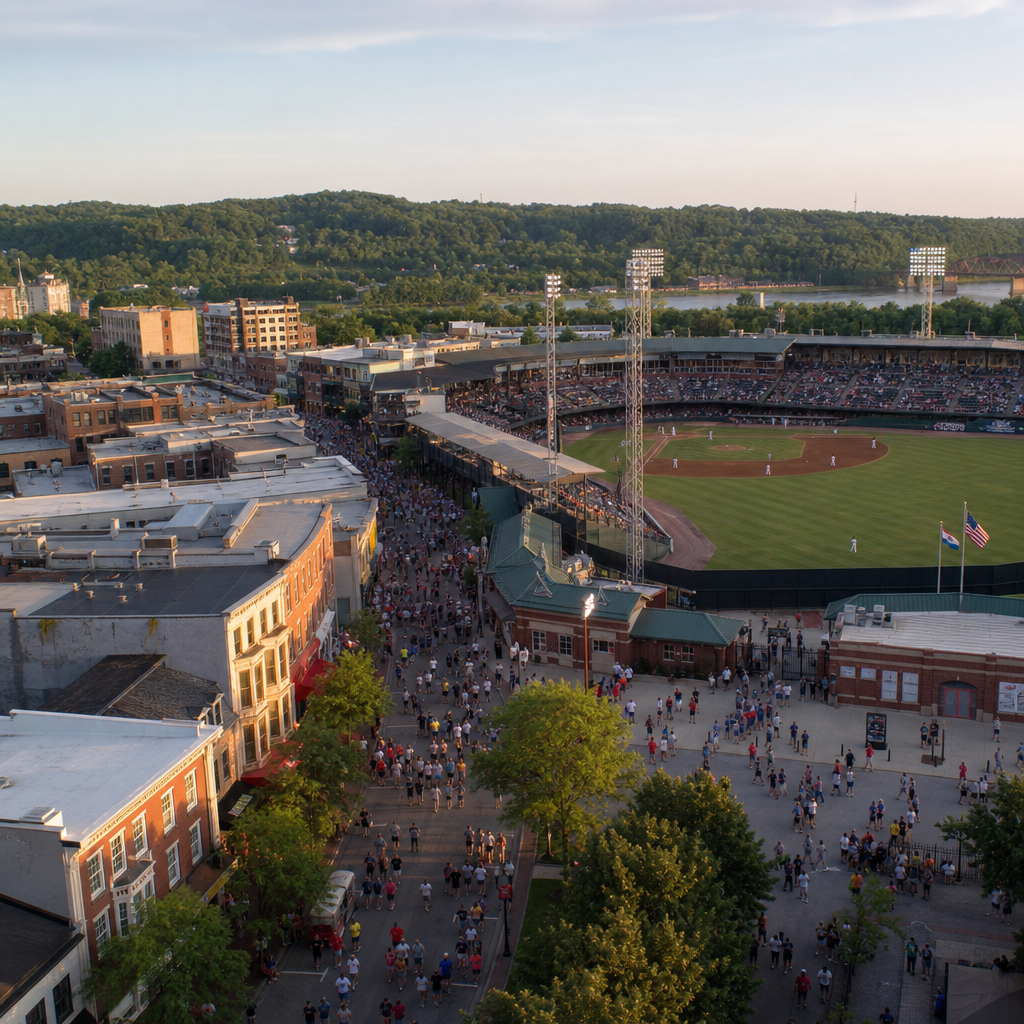
Minor league baseball shapes local economies in ways that are easy to overlook until a team arrives, a stadium opens, or a season disappears. The economic impact of minor leagues and local communities extends beyond ticket sales because clubs influence downtown foot traffic, seasonal hiring, public infrastructure decisions, tourism patterns, civic identity, and small business confidence. In practical terms, minor leagues are professional baseball circuits below Major League Baseball, while local communities include host cities, suburbs, counties, neighborhood business districts, colleges, and regional employers touched by game-day activity. I have worked with sports venue content, municipal development plans, and local business performance reports long enough to see one consistent pattern: the most valuable effects are usually indirect, cumulative, and highly dependent on management quality. A well-run club can anchor a district for decades, while a poorly integrated team can struggle to justify public support. That is why this topic matters within the broader Minor Leagues and College Baseball landscape. It connects sports, real estate, labor markets, tourism, transportation, and public finance in one place, giving readers a foundation for exploring every related article in this hub.
Understanding the economics starts with a simple distinction between direct, indirect, and induced effects. Direct effects come from obvious spending such as tickets, concessions, parking, sponsorships, and stadium jobs. Indirect effects occur when nearby restaurants, hotels, retailers, maintenance contractors, beverage distributors, security firms, and print shops gain business because games draw people into an area. Induced effects appear when workers paid by the team or by supporting businesses spend their wages locally on groceries, rent, child care, and services. Economists also look at substitution effects, which ask whether residents merely shift entertainment dollars from one local activity to another. That caution matters because not every dollar at a ballpark is new to a city. Still, minor league baseball often performs better than critics expect because teams create repeat visits over seventy or more home dates, keep prices accessible, and package the stadium as a community venue rather than a single-use facility. For city leaders, universities, and business owners, the key question is not whether baseball has any value, but how to capture and measure it responsibly.
How Minor League Teams Generate Local Spending
The clearest economic contribution of a minor league team is recurring consumer activity. Unlike a one-week festival or a handful of college rivalry games, a baseball season delivers frequent, predictable demand. Fans buy tickets, food, merchandise, and parking, then often spend before or after games at bars, coffee shops, breweries, and family restaurants nearby. In cities such as Durham, North Carolina, and Columbus, Georgia, stadium-centered districts have benefited from this repeat foot traffic because businesses can plan staffing and inventory around the schedule. Promotional nights amplify that pattern. Fireworks weekends, school appreciation nights, charity fundraisers, and specialty jersey events attract casual visitors who might not otherwise come downtown. From experience reviewing attendance-driven business trends, I have seen that consistency matters more than single-night peaks. A restaurant owner can build a sustainable operating model around 60 to 70 moderate surges better than around two massive annual events.
Corporate spending is another important layer. Local companies purchase season-ticket packages, luxury suites, hospitality areas, signage, and sponsorship activations because minor league venues offer affordable business development compared with major league properties. A regional bank may sponsor a kids club, a hospital system may underwrite community wellness nights, and a car dealership may use in-stadium promotions to generate leads. Those agreements support team payrolls, front-office employment, media buying, local printing, and event production. They also create a business-to-business ecosystem around the club. In smaller markets, the ballpark can function as a civic networking platform where chambers of commerce, nonprofits, and employers build relationships. This is one reason minor league economics should not be reduced to attendance alone. The commercial value of the team often includes marketing access, community visibility, and client entertainment that would otherwise require more expensive channels.
Jobs, Wages, and Seasonal Employment Effects
Minor league teams create jobs, but the quality and durability of those jobs vary. On the team side, there are full-time roles in ticket sales, sponsorship, marketing, operations, groundskeeping, finance, broadcasting, and community relations. On the venue side, there are seasonal roles in concessions, ushering, custodial services, event security, parking, merchandise, and food preparation. Some positions are part-time and modestly paid, so it would be misleading to present them as a complete labor-market solution. Yet for students, retirees, teachers seeking summer work, and workers needing flexible schedules, stadium employment fills a real niche. College towns especially benefit because baseball schedules align with summer availability. In my review of team operations across similar markets, the strongest organizations treat seasonal staff as an extension of the brand, which improves retention, service quality, and fan spending per visit.
The wider labor effect comes from adjacent businesses responding to game traffic. Restaurants add shifts, hotels increase housekeeping demand during tournament weekends or opening series, rideshare and taxi drivers gain fares, and local vendors secure contracts for everything from signage to pest control. Construction jobs also emerge when a stadium is built or renovated. Modern player facility standards, accessibility upgrades, and mixed-use development plans can trigger years of design, engineering, and contracting work. The Professional Development League restructuring and MLB facility requirements pushed many communities to invest in clubhouses, lighting, training areas, and fan amenities. Those projects did not benefit every town equally, but they demonstrated how sports infrastructure decisions ripple through local employment. The best way to interpret job impact is not as a single headline number, but as a layered set of opportunities tied to operations, construction, hospitality, and service supply chains.
Stadium Districts, Real Estate, and Public Investment
Ballparks often serve as redevelopment anchors, especially in districts with underused industrial land, vacant parcels, or weak evening traffic. The classic example is Durham Bulls Athletic Park, which helped transform downtown Durham into a destination for offices, apartments, restaurants, and entertainment. Similar patterns have appeared in places like Memphis around AutoZone Park and in selective mixed-use projects tied to newer stadium concepts. The mechanism is straightforward: a stadium concentrates people on predictable dates, improves perceived safety through activity, and gives developers a recognizable anchor when pitching residential or commercial projects. But the presence of a team alone is not enough. Successful districts usually depend on walkability, transit access, coordinated zoning, and year-round programming. A stadium surrounded by surface parking and disconnected streets will produce weaker spillover than a venue embedded in a street-level retail environment.
Public financing is where debate intensifies. Cities may contribute land, tax increment financing, infrastructure upgrades, bond support, or direct construction subsidies. Supporters argue that the public sector is investing not only in baseball, but in placemaking, tax base growth, and civic use of the venue. Skeptics point out that projected multipliers can be optimistic and that public money has opportunity costs. Both arguments have merit. Based on municipal case studies, the smartest deals tie incentives to measurable outcomes, preserve public access, and avoid relying solely on inflated attendance forecasts. Communities should ask specific questions: Who owns the stadium? Who pays maintenance and capital repairs? Can the facility host concerts, high school championships, job fairs, and festivals? What happens if the team relocates? Those governance details shape whether a ballpark becomes a productive civic asset or an expensive symbolic project.
| Impact Area | Typical Benefit | Main Limitation |
|---|---|---|
| Game-day spending | Recurring revenue for food, retail, parking, and hospitality businesses | Some spending may substitute for other local entertainment |
| Employment | Seasonal jobs, operational roles, construction contracts, vendor work | Many positions are part-time or lower wage |
| Downtown development | Higher foot traffic, stronger investor confidence, mixed-use momentum | Benefits depend on location, transit, and surrounding land use |
| Public finance | Potential tax growth and broader civic use of facilities | Debt, maintenance costs, and uncertain return on subsidy |
| Community identity | Brand visibility, local pride, charitable engagement, regional marketing | Harder to quantify in standard economic models |
Small Business, Tourism, and the Visitor Economy
Local businesses often feel the effects of minor league baseball more immediately than city budget offices do. Restaurants near the stadium can build specials around first pitch times, breweries can host pregame events, and retailers can benefit from souvenir-driven foot traffic. Teams that coordinate with merchants through discount programs, cross-promotions, and neighborhood maps tend to create stronger local gains than teams that keep fans entirely inside the stadium footprint. I have seen this difference clearly in urban venues where clubs intentionally push fans toward nearby storefronts. Even simple tactics such as featuring local restaurants at the park, promoting “dine before the game” campaigns, or selling district passes can spread spending more broadly. That matters because criticism of sports economics often centers on revenue capture staying inside the venue. Smart integration reduces that problem.
Tourism adds another layer, particularly for markets with recognizable brands or summer travel appeal. Visiting families may combine a game with a weekend trip, especially when teams are linked to beaches, mountain regions, or college towns with other attractions. Youth baseball tournaments and showcase events can further boost hotel demand when paired with the local club’s schedule. Cities like Myrtle Beach and Spokane have benefited from this overlap between baseball and destination travel. Even when the absolute numbers are modest compared with major league markets, the relative effect can be meaningful for small and midsize communities. A few hundred additional hotel room nights across a series can matter. Tourism offices value minor league teams because they provide marketable content, a built-in calendar of events, and imagery that helps position the city as active and family friendly.
Civic Identity, Social Capital, and Community Return
Some of the most important returns are not captured fully in tax receipts or payroll figures. Minor league teams give communities a visible symbol of local identity. Logos appear on hats, school fundraiser flyers, city welcome materials, and social media posts. Mascots visit hospitals, libraries, and elementary schools. Players and staff attend charity events, youth clinics, and reading programs. These activities build social capital, a term used to describe the networks, trust, and norms that help communities function. While social capital is hard to monetize precisely, it has practical value. It strengthens nonprofit fundraising, improves civic participation, and gives residents shared rituals across income levels. In smaller cities especially, the ballpark can be one of the few places where families, students, retirees, office workers, and local officials gather regularly in the same space.
This community role also matters during periods of disruption. After storms, economic setbacks, or public health shocks, teams often serve as communication partners and morale builders. Stadiums have been used for blood drives, relief collections, vaccination efforts, and graduation ceremonies. During the pandemic era, the loss of baseball highlighted how much these venues contribute beyond sport. Communities missed not only games, but seasonal employment, downtown activity, and a familiar gathering place. That absence clarified a point that standard economic models sometimes underestimate: routine, affordable entertainment has stabilizing value. When a team is woven into civic life, residents are more likely to support local businesses, attend community events, and see downtown as part of their normal routine rather than as an occasional destination.
Risks, Measurement Challenges, and What Communities Should Track
Not every minor league team delivers broad-based gains, and honest analysis requires stating why. Attendance can be volatile. Weather affects baseball heavily. Affiliations change. League restructuring can remove teams from markets that once assumed permanence. Public subsidies can outlast private enthusiasm. There is also leakage, meaning money leaves the region through outside ownership, imported vendors, or debt service. For these reasons, communities should measure performance with discipline. Useful indicators include average attendance, local versus nonlocal ticket buyers, hotel occupancy on game weekends, sales tax trends in nearby districts, commercial vacancy rates, transit ridership, sponsorship renewals, and non-baseball event usage. Surveying merchants before and after stadium openings is especially valuable because it reveals whether hoped-for spillover is real.
The best local strategy is diversification. A stadium should host baseball, but it should also support concerts, festivals, college games, camps, holiday events, and corporate gatherings. Teams should maintain strong school partnerships, transparent community reporting, and active collaboration with downtown organizations. Public officials should negotiate leases that define maintenance obligations and protect taxpayers from open-ended costs. For readers exploring this sub-pillar hub, that is the central lesson of the economic impact of minor leagues and local communities: baseball works best as part of a broader local development ecosystem. It is neither a miracle cure nor a trivial sideshow. When paired with sound planning, accessible pricing, smart land use, and neighborhood partnerships, a minor league team can generate spending, jobs, identity, and momentum that outlast the final inning. Use this hub as your starting point, then dive into the related articles on stadium finance, fan culture, college baseball connections, and community development to understand the full picture.
Frequently Asked Questions
How do minor league teams affect local economies beyond ticket sales?
Minor league teams influence local economies in ways that stretch far beyond what is collected at the gate. A game night brings people downtown or into nearby commercial districts, and that increased foot traffic often benefits restaurants, bars, coffee shops, parking operators, retail stores, and hotels. Even when fans come primarily for baseball, their spending usually extends to meals, merchandise, transportation, and other purchases before and after the game. Over a full season, that repeated activity can create a steady economic rhythm for surrounding businesses, especially in areas that rely on evening and weekend traffic.
The impact also includes employment and vendor activity. Minor league clubs typically support seasonal and part-time jobs in concessions, maintenance, security, promotions, groundskeeping, and event operations. Local suppliers may provide food products, printing, signage, cleaning services, audiovisual support, and construction or repair work tied to stadium upkeep. While these jobs and contracts may not always be large individually, collectively they contribute to the circulation of money within the community.
There is also a less visible but still important confidence effect. When a team is active and a stadium is functioning as a regular gathering place, investors and small business owners may feel more comfortable opening nearby concepts or expanding existing ones. In that sense, minor league baseball can act as an anchor amenity that supports broader commercial momentum. The strongest economic outcomes usually happen when the team is integrated into a walkable district, connected to local businesses, and used as part of a wider development strategy rather than treated as a standalone attraction.
Do minor league stadiums really help revitalize downtown areas?
They can, but the results depend heavily on location, planning, and how well the stadium is connected to the rest of the community. A well-placed minor league ballpark can draw consistent crowds into downtown districts that need regular activity, particularly on nights and weekends when office traffic fades. That recurring attendance can improve visibility for nearby businesses and make the area feel more active, safer, and more attractive to residents and visitors. In many cities, a stadium has served as a catalyst for new restaurants, apartments, hotels, public gathering spaces, and streetscape improvements.
That said, a stadium does not automatically create revitalization on its own. If it is isolated from surrounding commerce, surrounded by large parking lots, or used only for baseball without broader event programming, the economic benefit may be more limited. Successful projects usually include mixed-use planning, pedestrian access, transit links, and coordination with local merchants. Communities tend to see stronger results when the ballpark is treated as one piece of a larger district strategy rather than as a silver bullet for economic development.
It is also important to distinguish between direct and indirect effects. Direct benefits may include spending by fans and event attendees. Indirect benefits may show up in higher property interest, increased investor attention, and a stronger downtown identity. Revitalization is most realistic when local leaders set practical expectations: a minor league stadium can stimulate activity and support redevelopment, but it works best when paired with thoughtful public policy, private investment, and year-round use.
What types of jobs and business opportunities do minor league teams create for local communities?
Minor league teams create a range of employment opportunities, many of which are seasonal, part-time, or event-based, but still meaningful to the local labor market. Jobs often include ticketing staff, ushers, concession workers, security personnel, grounds crews, cleaning teams, production assistants, marketing staff, and community relations coordinators. For students, retirees, and workers seeking supplemental income, these roles can provide accessible employment and hands-on experience in sports, hospitality, and entertainment operations.
Beyond direct team employment, there are business opportunities for local vendors and service providers. Food and beverage distributors, uniform suppliers, screen printers, photographers, florists, musicians, transportation companies, and maintenance contractors may all benefit from team operations and stadium events. Local sponsors also gain a platform to reach residents through signage, promotions, and in-game advertising, which can strengthen business visibility and encourage long-term customer relationships.
Another important point is that a minor league ballpark is often more than a baseball venue. Many facilities host concerts, festivals, high school games, corporate events, charity fundraisers, and community celebrations. That expanded calendar creates additional work for caterers, event planners, staging companies, security firms, and local entertainers. While a minor league franchise may not transform a labor market in the same way a major manufacturing plant would, it can still support a diverse network of small-scale economic activity that matters to local households and entrepreneurs.
Why do local governments invest in minor league stadiums and related infrastructure?
Local governments often support minor league stadium projects because they see them as tools for economic development, placemaking, and community branding. A stadium can help activate underused land, attract private investment, improve public spaces, and create a focal point for civic life. In some cases, public investment goes beyond the ballpark itself and includes roads, sidewalks, lighting, utilities, parking, transit access, and nearby redevelopment projects. Officials may justify these investments by arguing that the facility will generate tax revenue, support business growth, and make the area more appealing for residents, employers, and visitors.
There is also a strategic quality-of-life argument. Cities and towns compete not only for business but also for talent, tourism, and residents. A minor league team can become part of a community’s identity, offering affordable family entertainment and a recognizable local asset that keeps people engaged with the area. For smaller markets especially, a team may serve as a high-profile cultural amenity that boosts civic pride and gives the community a more distinct public image.
However, these investments are often debated, and rightly so. The economic return on publicly funded sports facilities can vary widely, and not every project delivers the same benefits. The most responsible approach is to evaluate realistic revenue projections, long-term maintenance costs, alternative uses for public money, and the specific needs of the neighborhood. Public investment tends to be easier to defend when the stadium has multipurpose use, is embedded in a larger redevelopment plan, and creates measurable community benefits rather than relying on optimistic assumptions alone.
What happens to a local community when a minor league team leaves or a season is disrupted?
When a minor league team leaves or a season is canceled or reduced, the effects can be immediate and surprisingly broad. Nearby businesses that depend on game-day traffic may experience a drop in revenue, especially restaurants, bars, parking operators, and shops located close to the stadium. Seasonal workers lose income opportunities, and vendors tied to the team or venue may see contracts disappear. In communities where the team serves as a major entertainment anchor, the absence of games can leave a noticeable gap in evening activity and downtown energy.
The impact is not only financial. A minor league team often functions as a regular social ritual for residents, families, youth groups, and local organizations. Games provide gathering opportunities, charitable partnerships, school tie-ins, and civic traditions that help connect people to one another and to the place they live. When that disappears, the community can lose a source of shared identity and visibility. This is especially true in smaller markets where there are fewer large-scale attractions competing for attention.
Longer-term consequences may include stalled redevelopment plans, reduced investor confidence around the stadium district, and uncertainty about what to do with the venue itself. Some communities adapt by repurposing stadiums for amateur sports, concerts, festivals, or other events, but that transition is not always easy or financially equal to a full professional season. The broader lesson is that the economic impact of minor leagues and local communities is deeply interconnected: when a team thrives, many local systems benefit, and when it disappears, the loss is felt across business, employment, public life, and community morale.