Baseball’s economic structure has changed more in the past three decades than in the previous hundred years, and sponsorship and endorsements sit at the center of that transformation. In practical terms, sponsorship means a business pays for association with a team, league, venue, broadcast, or event, while an endorsement is a player, coach, or baseball personality promoting a brand. Those two revenue streams once played supporting roles behind ticket sales, local media contracts, and concessions. Today they influence payroll strategy, franchise valuation, stadium design, international marketing, player branding, and even how fans experience a game on a phone or in the ballpark.
I have worked with sports business reporting and commercial partnership analysis long enough to see the shift in real time: where teams once sold outfield wall signs and a few radio mentions, they now build fully integrated partnership portfolios with naming rights, jersey patches, official category partners, social media campaigns, hospitality packages, and data-driven activations. That matters because baseball’s finances are no longer shaped only by wins, attendance, and television. They are shaped by brand alignment, audience segmentation, digital reach, and sponsor demand for measurable return on investment. For clubs trying to remain competitive and for fans trying to understand why the sport looks different, sponsorship and endorsements are essential to understanding the modern baseball economy.
This hub article explains the major economic shifts and their effects across professional baseball. It covers how sponsorship revenue evolved, why endorsements became more sophisticated, what changes mean for large-market and small-market clubs, how new assets such as jersey patches and streaming inventory affect revenues, and where the risks lie. If you want a clear view of how money flows through modern baseball, this is the starting point.
How Sponsorship Became a Core Baseball Revenue Engine
For most of baseball history, commercial partnerships were visible but limited. Teams sold signage, program ads, and local promotions, but those deals rarely drove the business. The modern change began when clubs and leagues recognized that baseball offers something advertisers value deeply: a long season, frequent broadcasts, local loyalty, intergenerational fandom, and a venue that can host premium hospitality. A sponsor does not buy only exposure; it buys repeated association with trusted community institutions and emotionally invested audiences.
The rise of regional sports networks accelerated this model. More game inventory meant more ad slots, sponsored segments, and integrated branding. Then ballparks became year-round entertainment properties rather than simple sports facilities. Naming rights deals turned venues into long-term media assets. Premium clubs, sponsored fan zones, branded entrances, and partner-backed technology platforms created new categories to sell. MLB clubs also professionalized their sales operations, building dedicated partnership teams using audience data, valuation models, and account management systems similar to those used in larger entertainment industries.
A clear example is stadium naming rights. Deals such as Citi Field in New York or loanDepot park in Miami are not cosmetic. They deliver predictable long-term income, often tied to hospitality, signage, digital rights, and community programming. The result is stronger non-baseball revenue that can support debt service, venue upgrades, and broader operating budgets. Even when naming rights totals vary by market size, the strategic effect is similar: they diversify income beyond ticket sales and reduce dependence on seasonal attendance swings.
The Endorsement Economy and the Rise of the Player as a Media Property
Endorsements changed because players are no longer marketed only through national television and print campaigns. They are now media properties in their own right. A star such as Shohei Ohtani illustrates the modern model: on-field excellence, international appeal, cultural relevance, and digital visibility combine to make one player attractive to multiple sponsors across apparel, technology, beverages, financial services, and collectibles. The commercial value comes from credibility and reach together. Brands want athletes who can move between local fandom and global recognition.
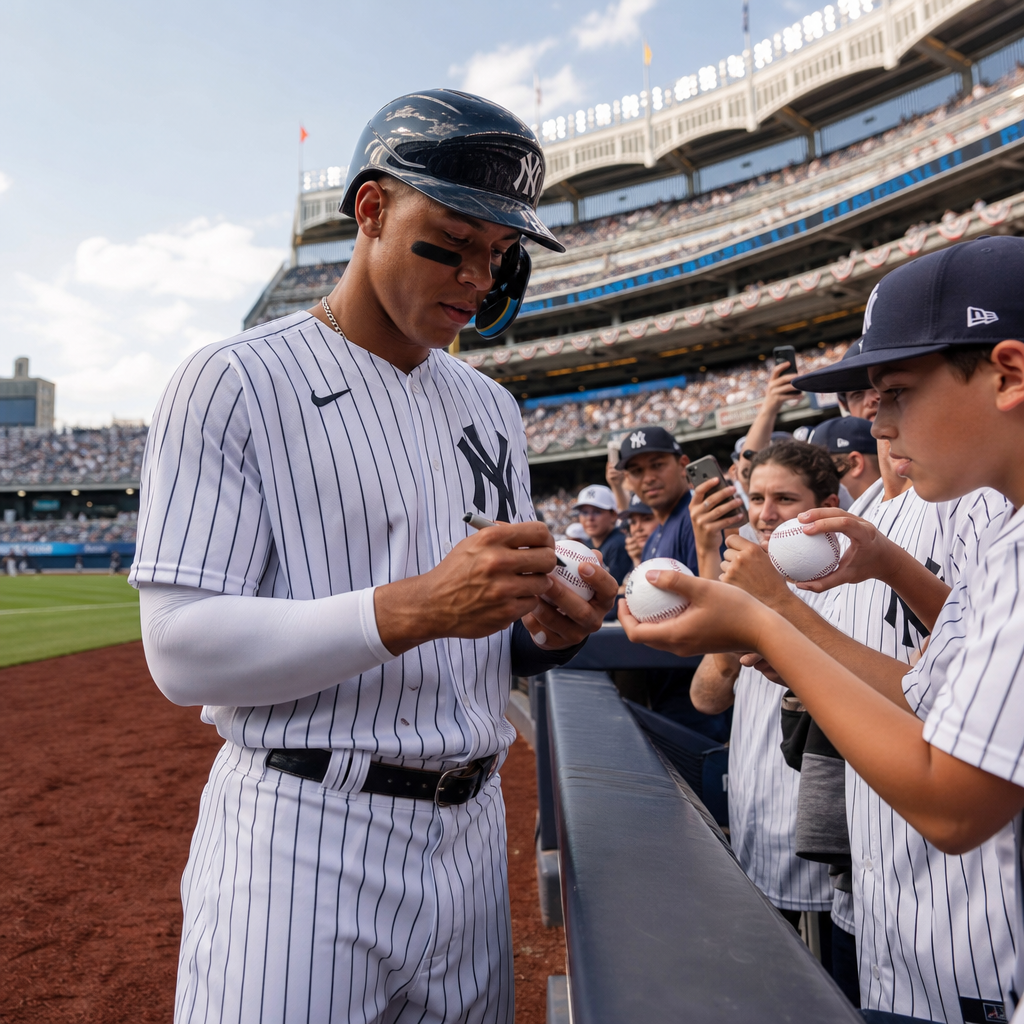
In earlier eras, only a small set of elite stars secured major endorsements, often focused on equipment, cards, soft drinks, or cars. Today the endorsement market is broader and more segmented. Position players, pitchers, prospects, retired legends, broadcasters, and niche creators within baseball can all monetize audiences. Local dealership ads and autograph sessions still exist, but they sit alongside social campaigns, limited-edition merchandise collaborations, podcast sponsorships, and ambassador agreements structured around content output and engagement metrics.
This has changed incentives. Players and agents now manage personal brands with the same seriousness once reserved for contract negotiations. They consider marketability, offseason visibility, media training, and reputational risk. For teams, a roster with marketable stars can unlock partner value. For leagues, recognizable personalities help sell international games and digital subscriptions. Endorsements therefore do more than enrich individuals; they expand the commercial ecosystem around baseball.
Major Revenue Categories and Their Effects on Clubs
To understand economic shifts in baseball, it helps to break sponsorship into the specific assets teams sell and how each affects operations. Some revenues are stable and contractual, while others rise and fall with team performance, market buzz, or media trends.
| Revenue category | What it includes | Main financial effect | Example of impact |
|---|---|---|---|
| Naming rights | Stadium or facility naming agreements, long-term signage, hospitality, community programs | Creates predictable multiyear revenue and supports capital planning | A club can fund renovations or offset venue debt with contracted annual payments |
| Jersey patch sponsorships | Brand logos on uniforms with related digital and retail rights | Adds premium inventory with league-wide visibility | Patch income can support payroll flexibility or baseball operations staffing |
| Founding and category partners | Exclusive deals in banking, telecom, insurance, beer, airline, and similar sectors | Diversifies sponsor portfolio and reduces reliance on one large partner | A team can package in-stadium signage, app integration, and hospitality under one category |
| Media and digital activations | Sponsored content, social posts, streaming features, branded segments, data integrations | Raises value by proving engagement and measurable reach | A sponsor pays more when a team can show click-through rates, views, and audience demographics |
| Player endorsements | Equipment deals, ads, personal appearances, licensed merchandise, social campaigns | Increases off-field earnings and broadens baseball’s commercial visibility | A star’s national campaign can attract new fans and increase merchandise demand |
The key point is that not all sponsorship dollars are equal. A ten-year naming rights agreement offers a different planning benefit than a one-season digital campaign. Teams with balanced revenue portfolios are more resilient during losing seasons, economic downturns, or media disruption. In my experience, clubs that rely too heavily on one source, especially a volatile local media stream, face sharper pressure when markets change.
Why Large-Market and Small-Market Teams Experience Sponsorship Differently
Sponsorship does not erase baseball’s competitive imbalance, but it does reshape it. Large-market clubs benefit from broader corporate bases, denser media ecosystems, larger hospitality demand, and more nationally recognized players. A team in New York, Los Angeles, or Chicago can command premium rates because sponsors expect larger audiences and stronger executive networking opportunities. The inventory itself may be similar to a smaller market’s inventory, but the pricing power is dramatically different.
Small-market clubs respond by emphasizing local identity, regional loyalty, and bespoke partnership packages. Some succeed by becoming indispensable civic brands. A regional healthcare provider, bank, or supermarket chain may value trusted hometown affiliation more than national scale. Clubs can also create impact through community outreach, youth baseball programs, and family-oriented sponsorship activations that feel authentic rather than generic.
That said, the gap remains meaningful. If one club can monetize premium seating, naming rights, patch inventory, and star endorsements at far higher rates, it enters each season with a financial advantage that can translate into payroll depth, analytics staffing, player development resources, and international scouting. Revenue sharing softens the divide, but it does not remove commercial asymmetry. This is one of the central economic effects of the sponsorship era: commercial sophistication can magnify existing market differences.
Uniform Patches, Ballpark Branding, and the Commercialization Debate
One of the clearest recent examples of change is the spread of jersey patch sponsorships. For decades, MLB uniforms were treated as almost untouchable cultural property. Once clubs began selling patch inventory, baseball crossed an important symbolic line. The economic logic was straightforward: uniforms generate high-visibility impressions across broadcasts, highlights, photography, social posts, and merchandise discussions. In a media environment where traditional advertising is fragmented, that kind of repeated exposure is premium inventory.
Critics argue that too much branding dilutes tradition and turns the game into a commercial canvas. That concern is real. Baseball’s visual identity matters, and clubs have to weigh short-term revenue against long-term brand equity. The best implementations keep logos small, category-appropriate, and integrated into wider partnerships rather than treating the patch as a disconnected sale. Fans generally tolerate commercialization when it feels restrained and when teams communicate how new revenue supports competitiveness or fan amenities.
Ballpark branding raises similar questions. Sponsored replay reviews, branded strike zone graphics, sponsored bullpen carts, and naming rights for every concourse corner can create clutter. Yet these assets also help finance modern venues and keep ticket prices from carrying the entire burden. The practical issue is not whether sponsorship belongs in baseball. It already does. The issue is whether clubs manage the commercial load with enough discipline to preserve the experience fans actually value.
Digital Media, Streaming, and Data-Driven Partnership Value
The next major shift is measurement. Sponsors no longer accept vague promises of exposure. They want data on impressions, demographic fit, click-through rates, redemptions, lead generation, and brand lift. Baseball is well positioned here because it produces constant content: 162 games, highlights, player interviews, behind-the-scenes footage, fantasy integrations, and historical storytelling. Every asset can be tagged, tracked, and packaged.
Streaming has intensified this change. As local sports media models face pressure, clubs and leagues are looking for more direct digital relationships with fans. That creates fresh sponsored inventory, from pre-roll ads and branded watch experiences to integrated stats features and in-app offers. A financial services partner might sponsor advanced metrics segments. A betting operator, where legally permitted, might support live odds content. A telecom brand might back enhanced mobile experiences inside the stadium.
These partnerships are more valuable when teams can prove outcomes. Tools such as CRM platforms, ticketing databases, social analytics dashboards, and sponsorship valuation services let rights holders move from selling exposure to selling performance. This favors organizations with strong data infrastructure and experienced commercial teams. It also changes negotiations: sponsors ask harder questions, and teams that answer them with evidence win larger and longer deals.
Effects on Players, Labor, and Competitive Strategy
Sponsorship and endorsements influence labor dynamics even when they do not appear on payroll ledgers. A franchise with stronger commercial revenues can invest more aggressively in front office hiring, sports science, training technology, international academies, and player retention. Not every sponsorship dollar becomes salary, but richer organizations gain strategic options. Over time, those options matter.
For players, endorsements can alter career decisions. Market size still affects visibility, but digital platforms have reduced the old monopoly of major cities. A star in a smaller market can build a national profile if performance, personality, and content strategy align. Still, postseason exposure and national relevance drive endorsement upside, which can influence how players think about legacy, exposure, and team context.
There are limits. Commercial success cannot fully compensate for poor baseball decisions, and sponsors prefer brands associated with stability, professionalism, and audience trust. Teams that chase every available deal without protecting reputation can weaken long-term value. The most effective clubs connect commercial growth to baseball credibility. They use sponsorship money to improve player development, fan experience, and operational competence, then let those improvements strengthen the brand further.
Risks, Regulation, and What Comes Next
Baseball’s commercial expansion brings real risks. Economic concentration is one. If too much revenue growth depends on premium sponsorship categories, downturns in sectors such as finance, crypto, media, or sports betting can hit teams quickly. Reputational risk is another. Partnering with unstable or controversial brands can create short-term gains and long-term damage. Several sports properties across the industry learned this when speculative companies collapsed after splashy deals.
There are also governance concerns. Leagues must balance club flexibility with standards on uniform branding, betting partnerships, alcohol promotion, data usage, and international marketing claims. Clear rules protect both competitive integrity and fan trust. MLB has generally moved cautiously compared with some global sports leagues, and that restraint has value. Baseball’s commercial future depends not only on monetizing attention but on protecting the authenticity that makes the attention valuable in the first place.
Looking ahead, expect more personalized sponsorship tied to streaming, retail media, and fan data. International player brands will matter even more as MLB expands global reach. Women’s baseball, youth development, and community programs will attract mission-driven sponsors seeking more than logo placement. Artificial intelligence will improve targeting and valuation, but it will not replace the basic rule I have seen hold across every era of the business: the strongest baseball partnerships feel credible to fans, useful to brands, and sustainable for the club.
Sponsorship and endorsements have changed the financial face of baseball by turning commercial relationships into core strategic assets. They now influence everything from stadium funding and digital media planning to player branding and competitive balance. The biggest shift is not simply that there is more money in the system. It is that revenue is more diversified, more measurable, and more tightly linked to how teams present themselves across physical, broadcast, and digital spaces.
For readers following economic shifts and their effects, this hub should frame the broader subtopic clearly. Naming rights, jersey patches, media integrations, category exclusivity, and player endorsements all feed the same larger story: baseball’s business model is expanding beyond traditional gate receipts and television dependence. That creates opportunity, but also sharper differences between clubs with powerful commercial ecosystems and those still building them.
The takeaway is straightforward. If you want to understand modern baseball, follow the sponsorship strategy as closely as the standings. It reveals how teams fund ambition, how players build off-field value, and how the sport is adapting to a fragmented media economy. Use this hub as your starting point, then explore related articles on media rights, payroll trends, stadium finance, and global expansion to see the full picture.
Frequently Asked Questions
1. How have sponsorships and endorsements changed the financial structure of baseball?
Sponsorships and endorsements have helped shift baseball from a business driven mainly by ticket sales, local broadcasting rights, and in-stadium purchases into a far more diversified commercial industry. For much of baseball’s early economic history, teams depended heavily on gate receipts and regional fan spending. Over the past three decades, however, corporate partnerships have become central to franchise economics. Teams now generate substantial income from naming rights, jersey patch deals, official category sponsorships, digital partnerships, hospitality branding, sponsored fan experiences, and integrated media campaigns. At the same time, endorsements have allowed individual players and other baseball figures to build personal brands that operate alongside, and sometimes beyond, their on-field careers.
This matters because diversified revenue changes how clubs budget, invest, and compete. Sponsorship money can support player payroll, stadium upgrades, training technology, community programs, international scouting, and fan engagement efforts. It also makes organizations less dependent on game-day attendance alone, which is especially important during weak seasons or broader economic slowdowns. In practical terms, baseball is no longer funded only by what happens when fans enter the ballpark; it is increasingly funded by what happens across media platforms, corporate relationships, and branded experiences all year long. That has fundamentally changed the financial face of the sport.
2. What is the difference between a sponsorship and an endorsement in baseball?
Although the terms are often used together, sponsorships and endorsements are not the same thing. A sponsorship usually involves a company paying for an official association with a baseball entity such as a team, league, stadium, event, or broadcast property. Examples include a bank becoming the “official financial partner” of a club, a telecom brand sponsoring a replay feature during broadcasts, or a corporation purchasing stadium naming rights. These deals are structured around visibility, audience access, hospitality opportunities, brand alignment, and marketing integration. In other words, the business is paying to connect itself with baseball as a platform.
An endorsement, by contrast, is tied to an individual personality. A player, manager, former star, or commentator promotes a product or service, either through advertising, public appearances, social media, licensing, or campaign partnerships. The value comes from trust, recognition, and influence. If a star shortstop appears in a shoe commercial, or a well-known pitcher promotes a fitness brand, that is an endorsement. The company is not just buying placement within baseball; it is buying the credibility and appeal of a specific person. Both sponsorships and endorsements generate revenue, but sponsorships usually strengthen organizational finances while endorsements primarily benefit individuals, even though successful player branding can also raise the visibility and commercial power of the sport as a whole.
3. Why have sponsorships become so important to teams, leagues, and stadium operators?
Sponsorships have become essential because they offer scalable, recurring, and highly adaptable revenue. Unlike ticket income, which depends on attendance and seating capacity, sponsorship inventory can be expanded and repackaged in many ways. A team can sell premium partnerships, digital activations, in-game branded segments, luxury suite integration, social content packages, youth program sponsorships, and data-driven marketing rights. Stadium operators can monetize everything from concourse zones and gates to premium lounges and technology systems. Leagues can build national sponsor portfolios that complement local team deals. This creates multiple layers of commercial value from the same baseball product.
Another reason sponsorships matter so much is that brands want access to baseball’s loyal, multigenerational audience. Baseball offers long seasons, frequent content, strong local identity, and a deep emotional connection between fans and clubs. That makes it attractive to sponsors looking for repeated exposure and sustained storytelling rather than one-time impressions. Corporate partners also value baseball’s community presence, family appeal, and regional relevance, which can help brands position themselves as trusted local participants rather than distant advertisers. For teams and venues, that demand translates into a more stable and predictable source of income, especially when carefully structured through multiyear agreements. In a modern sports economy, sponsorships are not peripheral extras; they are foundational assets.
4. How do player endorsements influence the business side of baseball?
Player endorsements influence baseball’s business side by turning athletes into commercial ambassadors whose reach can extend well beyond the stadium. When a star player partners with a national or global brand, that relationship often elevates both the athlete’s profile and the visibility of the sport itself. Endorsements can attract new audiences, particularly younger fans who follow athletes through social media, lifestyle marketing, and cross-industry campaigns. A player who appears in advertisements for apparel, technology, beverages, or financial services becomes part of a broader consumer culture, and that helps baseball stay visible in a crowded entertainment marketplace.
These deals also affect how value is measured within the game. A player’s marketability now includes personality, public image, communication skills, digital following, and off-field reputation, not just statistics. That can shape media strategy, brand partnerships, and even the way clubs present and promote their stars. In some cases, endorsement power can influence merchandise sales, fan engagement, sponsorship opportunities, and international growth. For players, endorsements create additional income streams and long-term earning potential beyond salary. For baseball, they help transform athletes into year-round marketing assets. The result is a sport whose financial ecosystem is increasingly tied to personality-driven branding as much as traditional competitive performance.
5. Are there any risks or challenges tied to baseball’s growing reliance on sponsorship and endorsement revenue?
Yes, and that is an important part of the conversation. While sponsorships and endorsements have created major financial opportunities, they also introduce pressures and potential trade-offs. One concern is overcommercialization. If every part of the fan experience becomes branded, teams risk making the game feel less authentic or more corporate than community-based. There is also the challenge of brand fit. Not every sponsor aligns naturally with a team’s identity, fan values, or public image, and poorly matched partnerships can generate backlash. In endorsement deals, athletes face reputational risk as well. A player’s public controversy can damage a brand, and a brand’s controversy can hurt the player.
There are also broader strategic issues. Heavy dependence on corporate revenue can make teams vulnerable to changes in advertising markets, economic downturns, or shifts in media consumption. If sponsors reduce spending, organizations that built budgets around aggressive partnership growth may feel the impact quickly. In addition, rising commercial value can widen the gap between wealthier franchises with stronger markets and smaller organizations with less sponsorship leverage. That creates competitive and structural questions across the sport. In short, sponsorship and endorsement growth has strengthened baseball financially, but it requires careful management. The most successful organizations treat these deals not simply as cash sources, but as long-term relationships that must protect fan trust, brand credibility, and the integrity of the game.