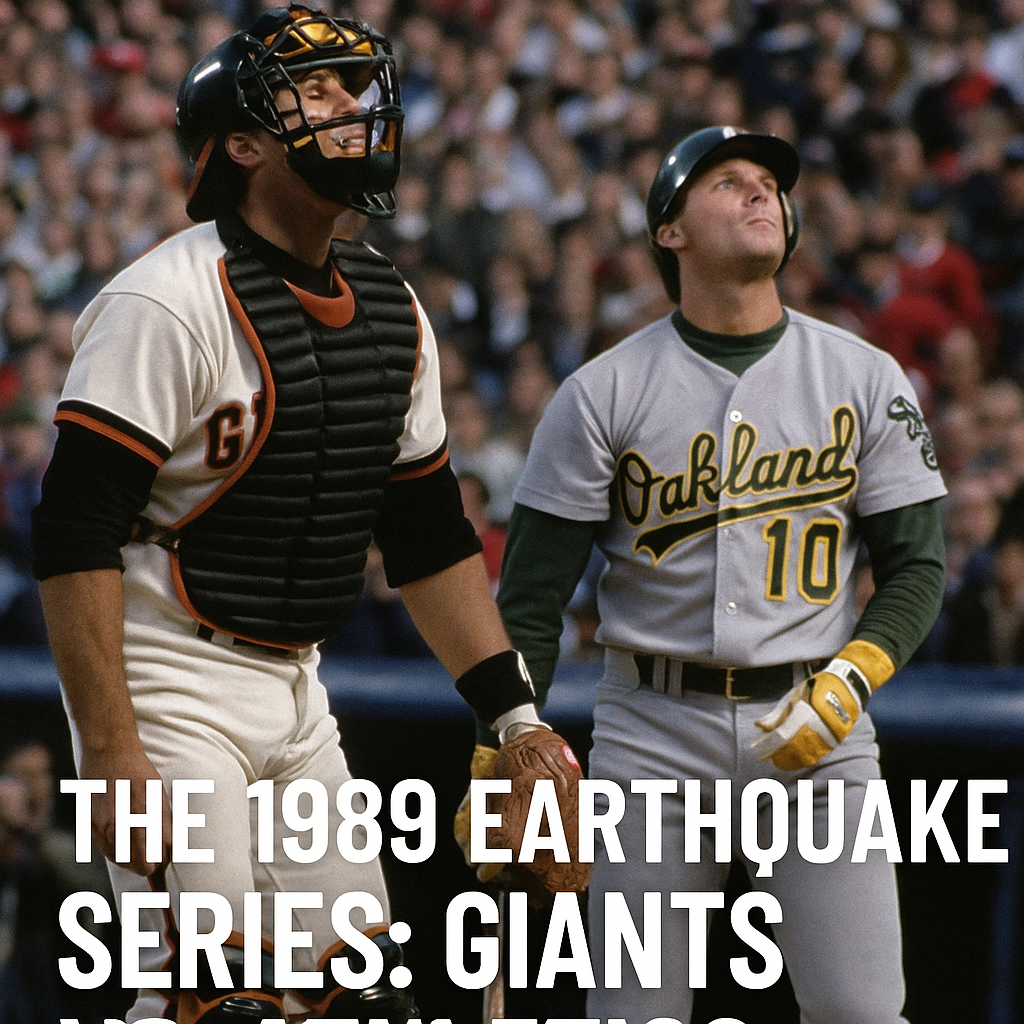
The 1989 Earthquake Series, commonly known as the Battle of the Bay, was a hallmark event in Major League Baseball that pitted the San Francisco Giants against the Oakland Athletics. This World Series gained historical significance beyond the diamond as it was marred by the Loma Prieta earthquake, a catastrophic seismic event. While the series itself featured fascinating on-field narratives between two cross-bay rivals, the geological phenomenon overshadowed the games, linking the world of sports with a natural disaster’s ominous presence. This rare intersection of sports and geological upheaval left an indelible mark on the people, communities, and landscape of the San Francisco Bay Area. It is an event marked by extraordinary circumstances, highlighting both the resilience of individuals and the fandom dedicated to America’s pastime amidst adversity. In this article, we will revisit the series from multiple angles—detailing the players, game logistics, and the earthquake’s impact—ultimately illustrating how the 1989 World Series became unforgettable in more ways than anticipated.
The general atmosphere surrounding the series was one of excitement and anticipation as this was a unique clash between the Giants and Athletics, two teams representing the cultural and geographical tapestry of the Bay Area. Historically seen as friendly rivals, the stakes were elevated as these two teams had not faced off in the World Series since their relocation to California. To add to the intrigue, both teams boasted star-studded rosters with overachieving sluggers and premier pitchers, setting the stage for an anticipated classic showdown. However, the majestic competition turned into a backdrop for a more pressing conflict between nature’s wrath and human resilience. With nature’s intervention, this series became a broader story compelling enough to impact societal and cultural narratives beyond the parameters of baseball, bringing national attention to the Bay Area not merely as a sporting epicenter but also as a community recovering from disaster. Understanding the complexities of this World Series paints a vivid picture of how unpredictability and exhibitions of human spirit often go hand-in-hand, bringing people together in unexpected ways.
Before the Earthquake: Prelude to the Series
The road to the 1989 World Series was paved with intense performances by both the Oakland Athletics and the San Francisco Giants. The Athletics entered the series as clear favorites, having dominated the American League with a 99-63 record. This formidable squad was stacked with talent including power-hitters like Mark McGwire and Jose Canseco, known collectively as the “Bash Brothers,” who consistently sent baseballs soaring into the stratosphere. Complementing their offensive firepower was ace pitcher Dave Stewart and closer Dennis Eckersley, whose formidable presence on the mound added depth to the team’s aspirations.
Contrastingly, the San Francisco Giants were seen as underdogs despite their own formidable 92-70 record in the National League. Helmed by manager Roger Craig, their journey was characterized by persistence and determination. The Giants boasted a talented ensemble featuring the notably skilled Will Clark and powerful Kevin Mitchell. Their pitching rotation led by Rick Reuschel and Scott Garrelts posed significant challenges to opponents throughout the season, cementing their ability to contest with any opponent bold enough to confront them.
From a broader perspective, the dynamic between these two teams offered viewers an exhibition of baseball prowess cultivated in the Bay Area. Fans eagerly awaited this intra-state rivalry, where bragging rights were playfully but passionately contested. Little did fans realize, however, how the storyline was about to transform—not by the rivaling dynamics of two formidable teams but by an unpredictable act of nature that would interrupt and pivot the course of events.
The Earthquake: Shattering Perspectives
The seismic event that not only disrupted but profoundly altered the 1989 World Series narrative was the Loma Prieta earthquake. Occurring on October 17, 1989, at precisely 5:04 p.m. local time, a massive 6.9-magnitude earthquake struck the Bay Area. As fans settled into their seats at Candlestick Park, eager for Game 3 to commence, an unexpected geological upheaval triggered mass pandemonium.
During this seismic catastrophe, chaos ensued as the stadium quivered under tectonic pressures. Television broadcasters, mid-consciousness of baseball stats, found themselves reporting on structural damage and jarring earth tremors. The rattling ground left players, fans, and officials grappling with newfound uncertainty. An eerie calm followed the initial shock, with dust settling over a community realigning its priorities amidst a considerable disaster, now simply hoping to ensure the safety of all involved.
While the immediate aftermath saw fans evacuated, the broader repercussions of this event echoed across the Bay Area as buildings crumbled, roadways cracked, and communities sought refuge and relief. Amidst this somber context, baseball—as an institution—seemed momentarily irrelevant, its narrative subordinated to the harsh realities pressing upon people’s psyches. Yet, sports often function as a medium to unite and comfort, an idea that loomed large over subsequent restoration endeavors and echoed across efforts to resume the games.
Resuming the Series: Uneasy Ground and Human Resilience
Despite extensive uncertainties, efforts emerged to conclude the 1989 World Series as a testament of unity, symbolizing what baseball enthusiasts and affected communities cherished most—normalcy amidst the crisis. After a ten-day postponement forced by chaos and recovery efforts, Game 3 resumed on October 27. However, its nature assumed new connotations beyond mere sportsmanship; it symbolized resilience and determination to persist, even when confronted with overwhelming odds.
The manner in which both teams returned to the diamond said volumes about the determination ingrained in sports culture. Players from both sides re-entered the fray more as healers than competitors, acknowledging the broader significance of community healing and the role of entertainment in aligning disparate focus back towards optimism. The Athletics showcased their prowess, unfazed by interruption, while the Giants sought to capitalize on newfound principles centered upon solidarity and effort against an adverse backdrop.
On October 27, common enemy insignias receded into distant memory as fans—once spiritedly divided—united in hope, appreciating the game for what it offered. It wasn’t merely perseverance on display but an appreciation for the enduring spectacle of sports’ ability to unify and provide solace. In this space something novel arose: beyond the convergence of sports and disaster, an intricate story revealing connections of human compassion, determination, and inherent varsity amidst trials took precedence.
The Athletics’ Triumph and Its Symbolism
In a series that encapsulated emotions ranging from tragedy to triumph, the Oakland Athletics emerged victorious in a 4-0 sweep, solidifying their dominance both on and off field. Yet, their triumph exceeded the parameters of baseball, reflecting grace amidst chaos, forging solidarity when it mattered most. Their win became a symbol epitomizing more than a mere athletic achievement, representing unity, perseverance, and renewal—pronounced under exceptional circumstances.
For the Athletics, their victory wasn’t simply about the usual ceremony of lifting the trophy and basking in glory; it represented the spirit of championship, not just marked by athleticism but by once-in-a-lifetime circumstances demanding indisputable maturity. The broader significance resonated with audiences also adapting amidst their own battles—struggling against the apparent deception of uncontrollable circumstances yet finding ways to conquer.
In sporting terms, the Games 3, 4, and 5 reinforced their ability, defeating the Giants 13-7, 13-7, and 9-6 respectively, showcasing resilience not just on part of performers but fans, persistently cheering despite contextual adjustments. Universally, victory was interpreted beyond statistics—it marked a victory over adversity, illustrating how communal contribution towards shared hopes signified much more than individual ability, even in a competitive sport.
Conclusion
The 1989 Earthquake Series, while predominantly remembered as a convergence of sports and tragedy, transcends the boundaries of basic sporting narratives. It embodies tenacity, the spirit to overcome, and offers a poignant reminder of the profound unity found in community between tragedy and celebration. As the San Francisco Giants and Oakland Athletics reprised roles they never anticipated, their confrontation exceeded rivalry, reflecting genuine adversity alongside championship.
Considering the eventful history of Major League Baseball, the 1989 World Series is unparalleled—a narrative of unexpected occurrences where glory was redefined outside of traditional spaces. While players and fans initially converged anticipating a gripping series, what unfolded was a testament to how sports culture and communal resilience foster connections in unexpected avenues, often through unforeseen detours.
At the intersection of tectonic disruption and sports-induced euphoria, the 1989 World Series left an enduring legacy—championing resilience, audacity, and humanity’s collective victory over nature’s unpredictable whims. The Athletics’ triumph in a backdrop characterized by such elements made their win distinctly memorable, remembered for its significance and narrative transgressing regular competitive domains.
Yet the overriding memory for so many associated with this landmark series is the reminder of human spirit, the ability to champion love and life amidst uncertainty. The 1989 World Series married profound complexities, meshing palpable sporting excitement with the intangible progression of healing and identity beyond prescribed boundaries, making it a compelling part of both baseball lore and human stories.
Frequently Asked Questions
1. What is the significance of the 1989 Earthquake Series in baseball history?
The 1989 Earthquake Series, also known as the Battle of the Bay, holds a special place in Major League Baseball history for a number of reasons. It’s the only World Series played between two teams from the same metropolitan area, the Oakland Athletics and the San Francisco Giants, adding an extra layer of rivalry and excitement to the games. However, what truly cast this series into a broader narrative was the occurrence of the Loma Prieta earthquake on October 17, 1989. The earthquake struck minutes before the start of Game 3, causing significant damage to infrastructure in the Bay Area, leading to a 10-day postponement of the series. This event was unprecedented in baseball and sports history in general, intertwining the drama of professional rivalry with the real-life drama of a natural disaster. The series not only ended with the Athletics claiming victory, but it also highlighted the resilience and solidarity among fans and the community in the aftermath of the quake. This combination of factors makes the 1989 Earthquake Series a poignant moment in sports history for both athletic and humanitarian reasons.
2. How did the Loma Prieta earthquake impact the World Series schedule?
The Loma Prieta earthquake struck Northern California on October 17, 1989, at 5:04 PM, right before Game 3 of the World Series was set to begin at Candlestick Park. The earthquake, measured at a devastating 6.9 magnitude, caused widespread damage in the Bay Area, including the partial collapse of the Bay Bridge and numerous buildings, along with significant damage to transportation systems. In this moment of crisis, baseball took a back seat to public safety concerns and recovery efforts. As a result, the series was halted for 10 days, marking the longest break between games in World Series history up to that time. The postponement allowed for safety evaluations and gave residents and officials time to address the immediate aftermath and logistics of recovery, ensuring an environment where fans could safely return to the stands. When play resumed on October 27, baseball became a symbol of normalcy returning to the community, even if only momentarily.
3. What was the outcome of the 1989 World Series after the earthquake suspension?
Once play resumed, the Oakland Athletics continued their dominant performance from the beginning of the series. Prior to the earthquake, the Athletics had already established a 2-0 lead over the Giants, and they maintained their momentum following the hiatus. On October 27, the Athletics won Game 3 with a decisive 13-7 victory at Candlestick Park. The following evening, the Athletics completed their sweep of the Giants with a 9-6 win in Game 4, securing their World Series title. This victory marked the Athletics’ fourth championship since moving to Oakland and ninth overall in franchise history. The series sweep was a testament to the Athletics’ strength and skill during that period, as they boasted a talented roster featuring iconic players such as Jose Canseco, Mark McGwire, and Rickey Henderson, as well as powerhouses on the mound like Dave Stewart. This championship placed a bright spot amidst the tumultuous backdrop of the earthquake, offering both teams and their fans a sense of joy and redemption.
4. How did the earthquake influence the fan experience and baseball operations?
The earthquake profoundly impacted the fans and operations surrounding the series. At Candlestick Park, where Game 3 was about to begin, fans experienced the quake firsthand, causing panic and chaos. Fortunately, due to the stadium’s robust structural integrity, the crowd did not suffer major injuries. Outside the stadium, the story was much more severe. Fans and residents had to grapple with infrastructural damage, rolling blackouts, and disrupted transportation systems, all of which changed the logistics of attending a ballgame. Once the series restarted, the sense of community was palpable, with many viewing the series as a unifying experience amidst the rebuilding efforts. The tragedy increased the importance of event coordination, safety protocols, and emergency preparedness in MLB operations and underscored the relationship between sports and societal contexts. The series, more than just baseball games, became a significant cultural touchstone that required the league, teams, and fans to adapt and come together in the wake of disaster.
5. Were there any long-term effects of the 1989 Earthquake Series on Major League Baseball?
The 1989 Earthquake Series left lasting impressions on Major League Baseball in several ways. Firstly, it highlighted the need for robust disaster preparedness and response plans within the league. Safety protocols for players, staff, and fans became more rigorous in terms of dealing with unexpected disruptions. Furthermore, the series brought about more considerate scheduling and logistics planning, as transportation and infrastructure reliability became more scrutinized in the context of game hosting. Beyond operations, the series showed the power of sports as a unifying force in times of crisis. Baseball’s ability to provide hope, distraction, and a semblance of normalcy in the wake of tragedy emphasized the platform’s importance in social contexts, influencing how leagues and teams approached engagement with their community. Lastly, the series helped cement the role of media in sports, as it was one of the earliest instances where a sporting event was preserved in its entirety by television footage, providing a live broadcast of a historical event that blurred life and athletics. This helped shape the future of sports broadcasting and how it frames narratives in extraordinary circumstances.