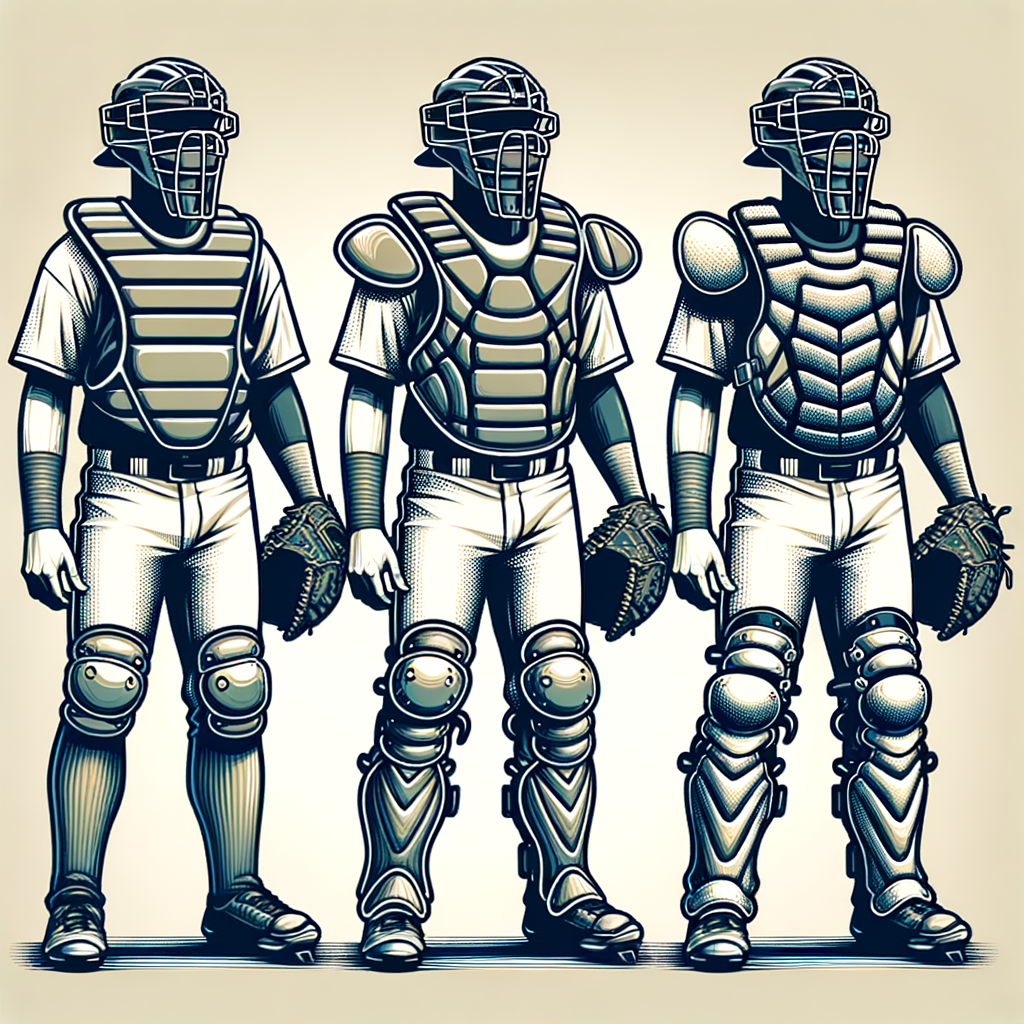
The role of the catcher in baseball is one of the most demanding on the field, requiring both physical endurance and mental strength. Over recent decades, the equipment used by catchers has seen significant evolution. The transformation is apparent when one compares the sparse gear of the sport’s early days to the advanced armor worn by contemporary athletes. Originally, safety precautions were almost non-existent, with catchers relying on minimal gear that offered scant protection. However, innovations driven by the need for safety and comfort have transformed this gear into sophisticated armor designed to protect against the powerful forces at play in modern baseball. This article explores the changes in catcher’s gear throughout baseball history, charting its progression from rudimentary gear to advanced protective armor in use today. Understanding this evolution provides insight into how technological advancements and changing perceptions of player safety have affected this critical position in baseball.
The Early Years: Basic and Vulnerable
The beginnings of catcher’s gear can be traced back to the late 19th century, a time when baseball was growing in popularity but was not yet professionalized in terms of equipment. The protective gear available for catchers consisted of a simple glove and little else. Catchers wore fingerless gloves that did little to absorb impact or protect hands from injury. The primary purpose of these gloves was to improve grip rather than offer actual protection. It wasn’t until 1875 that the first rudimentary catcher’s mask was introduced. Created by Fred Thayer, a player at Harvard, this mask was a simple wire frame meant to guard the face from incoming pitches without diminishing the catcher’s field of vision significantly. Although innovative for its time, the mask covered only part of the face, leaving much of it exposed.
During this era, chest protectors and shin guards were unheard of. Catchers often resorted to makeshift solutions to protect their bodies. They used items like newspapers or magazines tucked under their shirts to cushion their bodies against wild pitches and foul balls. Despite being largely ineffective, these ad hoc solutions highlighted catchers’ increasing awareness of the need for protection. The position was dangerous, with players frequently suffering injuries due to inadequate protective equipment. The psychological strain of being perpetually vulnerable only added to the physical challenges faced by early catchers.
Transitioning to Tactical Safety
As baseball continued to professionalize in the early 20th century, improvements in catcher’s gear finally began to accelerate. The sport’s growing popularity, coupled with an increasing understanding of the risks involved, drove both leagues and manufacturers to develop better protective equipment. Catcher’s masks were redesigned with sturdier frames and added padding, providing better face protection. The developments in mask technology helped reduce injuries, creating an environment where players could focus more on their gameplay while feeling safer.
Alongside improvements in masks, chest protectors started becoming part of the standard kit for catchers by the 1910s. Initially, these protectors were nothing more than canvas pads with cotton stuffing worn over the uniform. These early versions, while a step towards greater protection, were bulky and restricted movement. Nevertheless, they were crucial in reducing the frequency of injuries from chest-impact plays and errant pitches.
Another significant development during this period was the introduction of shin guards. Though bulky and rudimentary, these additions were essential to safeguarding against foul tips and wild pitches aimed towards the lower part of the body. The use of shin guards was inspired by cricket, where leg protection was already common. Despite their importance, these protective pieces were initially met with resistance, as some catchers found them cumbersome and restrictive. However, the gradual integration of shin guards marked a public shift towards more comprehensive protective strategies in baseball.
Mid-Century Enhancements: Improved Materials and Design
The mid-20th century ushered in a period of significant technological advancement, allowing for substantial improvements in catcher’s gear design and material. Synthetic materials, like high-impact plastics and foam padding, began to replace the heavier, less efficient substances used previously. These innovations led to gear that was not only more protective but lighter and more comfortable to wear for long periods. As a result, catchers could maintain their performance throughout games without being unduly burdened by their equipment.
The design of catcher’s masks saw further improvements, with the advent of the helmet-style mask in the 1960s. This innovation combined a helmet with a faceguard, offering complete head protection, minimizing the risk of concussions and facial injuries. The added protection provided a psychological boost, allowing catchers to play more aggressively, knowing their vulnerable areas were shielded. Similarly, chest protectors were refined with lighter and more efficient padding materials, enhancing protection without compromising agility or speed.
The evolution continued with shin guards, which featured better anatomical designs. The integration of knee pads and protective cups within the guards offered fuller leg protection, and vent designs improved breathability. The enhancements ensured that players no longer had to choose between comfort and protection. Overall, these advancements enabled catchers to increase their effectiveness behind the plate while minimizing the risk of injury.
The Modern Era: Sophisticated Armor and Advanced Technology
Today, catcher’s gear is characterized by state-of-the-art materials and designs focused on maximum protection, comfort, and performance. Modern catcher’s masks, for example, often feature titanium frames, making them lightweight yet extremely resilient. The chin and ear guards are padded with impact-absorbing materials, further enhancing safety during play.
Contemporary chest protectors now utilize layers of memory foam and high-density polymers, providing localized impact resistance while maintaining a slim profile. These protectors are often customized to fit individual players, ensuring a snug yet flexible fit that moves seamlessly with the player’s body. Slimmer designs also help with ventilation and heat dissipation, significantly benefiting catchers during extended games in warm weather conditions.
Technical advancements haven’t been limited to masks and chest protectors, with shin guards also benefiting from innovative manufacturing techniques. They’re now engineered with polymer composites and advanced padding, offering unparalleled protection. Many models feature removable knee pads and are designed to allow full range of motion. Some feature moisture-wicking technology, enabling catchers to maintain dry and comfortable legs even during the most intense games.
Technology has also played a crucial role in modern catcher’s gear through the introduction of data collection and analysis. Some equipment now features integrated sensors that track various metrics like impact force and movement patterns. These insights can help coaches and players optimize their strategies and training regimes based on real data, further enhancing a catcher’s performance on the field.
Conclusion
The evolution of catcher’s gear from minimal to advanced armor is a testament to the sport’s dedication to player safety and performance. Historically, catchers had to rely on sparse, makeshift protectives, prioritizing the bare minimum, often at the expense of their own safety. The modest beginnings in the late 19th century, with basic masks and makeshift chest protectors, required significant courage and resilience from players stepping onto the field. Over the years, increasing awareness of the physical demands of the game spurred drastic improvements in the equipment available to catchers.
Throughout the 20th century, the transition to more tactical safety gear demonstrated an understanding of the need for reliable protection. This led to developments in material science and design innovation that drastically improved the efficiency and comfort of catcher’s gear. Modern innovations focus on comprehensive protection from head to shin, often integrating leading-edge technology for enhanced performance and safety.
In the current era, this gear reflects a blend of technology, comfort, and safety, highlighting how far the sport has come. Young catchers today benefit from unparalleled protection and performance-enhancing technology, ensuring they can play the game at their competitive best without compromising their safety. The journey of catcher’s gear mirrors baseball’s broader evolution and progressiveness, reinforcing an enduring commitment to player safety and innovative performance. The history and progress of catcher’s gear exemplify the balance between tradition and innovation, ensuring that the sport remains both relatively safe and competitive. Indeed, the story of catcher’s gear evolution is one of technological triumph and the constant pursuit of sporting excellence.
Frequently Asked Questions
1. How has catcher’s gear developed from the early days of baseball to now?
The evolution of catcher’s gear is an intriguing journey, one that mirrors the growing understanding of safety and technological advancements in sports. In the early days of baseball, catchers wore little more than a cap, perhaps a soft glove, and maybe some makeshift padding. Think of it as minimalism at its most dangerous. There was an inherent risk in standing behind the plate with such scant protection, but back then, the priority was on agility rather than safety.
As injuries became more recognized, equipment started to evolve. The introduction of the catcher’s mask in the late 1800s was a pivotal moment, offering critical facial protection and soon becoming an integral part of the gear. This mask has continuously improved over time, now often incorporating advanced materials and designs that enhance visibility and impact resistance.
Over the decades, chest protectors and leg guards were added, transforming the catcher into what looks like a modern knight. These pieces of equipment have gone through numerous redesigns to optimize for flexibility, durability, and comprehensive protection against high-speed pitches, foul balls, and collisions at home plate. Today’s catchers sport gear that is technical and protective, providing armor-like security that allows them to concentrate on their demanding role without undue fear of injury.
2. Why was there initially minimal gear for catchers, and what risks did this present?
In the nascent stages of baseball, the lack of comprehensive catcher’s gear can be attributed to several factors. Primarily, there was a different cultural mindset regarding sports safety—athletes often relied on their instincts and physical resilience rather than protective gear. Additionally, the development of specialized equipment lagged due to both technological limitations and a slower pace of innovation in athletic gear.
This minimal gear presented significant risks. Catchers were extremely vulnerable to potentially severe injuries from fast pitches or errant foul balls. Facial injuries were common prior to the widespread adoption of masks, and the absence of body padding meant heightened risk to critical areas like the chest and knees. Some players even retired early due to injuries sustained from inadequate gear. With the keen recognition of these dangers, the evolution towards more robust protection was inevitable and much needed.
3. What advancements have been made to modern catcher’s gear in recent years?
Recent advancements in catcher’s gear revolve around materials, design, and comfort. Modern catcher’s masks, for example, often use lightweight composites and alloys that provide extraordinary strength without a weight penalty, ensuring the catcher can move swiftly while maintaining complete facial protection.
For chest protectors and leg guards, ergonomic designs have become a priority. Many of these pieces now utilize memory foam padding, which provides excellent impact absorption and comfort. Ventilation systems are also a common feature, ensuring that catchers remain cool and dry even during the most intense games.
Customization has also entered the fray, allowing for tailored fits that enhance mobility and performance. Manufacturers now offer different sizes and shapes to better match an individual catcher’s body type, decreasing bulkiness and increasing the range of motion. Furthermore, new technology such as shock-absorbing gels and impact dispersion systems have made these pieces of gear more effective at preventing injuries than ever before.
4. What role does technology play in the ongoing evolution of catcher’s gear?
Technology plays a crucial role in the ongoing evolution of catcher’s gear, acting as both a catalyst for safety enhancements and a driver for performance optimization. The integration of cutting-edge materials such as Kevlar and advanced polymers has led to lighter, yet more protective equipment. Such materials made famous by military use are now leveraged in sports to protect athletes under extreme conditions.
Moreover, technology has enabled the creation of gear that is not only safer but smarter. For instance, some equipment lines now feature sensors that can record the impact of a pitch or foul ball, providing data that can help in understanding stress points and potential injury risks. This information is invaluable for both manufacturers looking to improve their designs and for teams aiming to safeguard their players.
Technology also contributes to custom fitting through 3D scanning and rapid prototyping, ensuring that every piece of gear contours as naturally as possible to the catcher’s unique anatomy. As innovation continues to progress, expect technology to further optimize and revolutionize catcher’s gear, merging the realms of sports safety, performance, and personalized comfort.
5. How has the evolution of catcher’s gear impacted the role and strategy of the catcher in baseball?
The evolution of catcher’s gear has greatly influenced both the role and strategy of the catcher in baseball. With more robust and protective equipment, catchers can focus more on their strategic duties rather than being preoccupied with safety concerns. Being fully armored allows catchers to be more aggressive in blocking pitches in the dirt, thus improving their handling of balls that would previously have been too risky to stop.
This advancement in gear also permits catchers to handle their primary responsibilities with more assertiveness, such as framing pitches, setting up in a manner that maximizes strike-zone efficiency, and protecting the plate during close plays without trepidation. The assurance of safety has enabled catchers to work more closely with pitchers, calling games with an emphasis on outcomes rather than physical preservation.
Furthermore, modern gear allows catchers to endure the physical demands of their role over a longer period, reducing injuries and extending careers. This physical and mental security fosters better performance during games, greater consistency throughout the season, and ultimately contributes to team success. The enhancement in gear technology fosters an environment where catchers can truly excel in one of baseball’s most demanding and strategic positions.