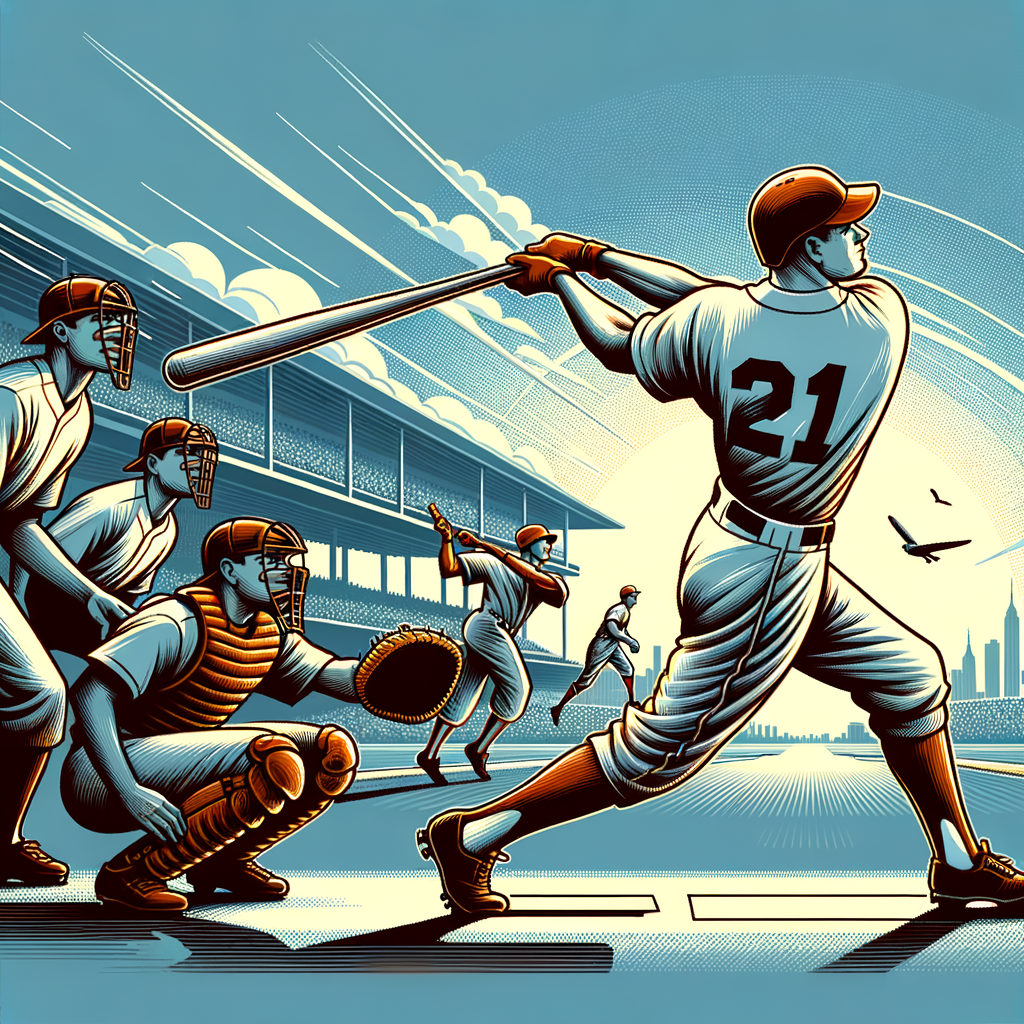
Baseball, America’s pastime, has always been a sport where legends are made. Among these legends, perhaps none looms larger than Babe Ruth, the “Sultan of Swat,” whose record-setting prowess in the early 20th century captured the hearts of fans everywhere. Ruth’s most famous achievement was his remarkable ability to hit home runs, a feat that set a standard in Major League Baseball (MLB) for decades. However, as time passed and baseball evolved, new players emerged, chasing the ghost of Ruth’s legacy and his home run record. This article delves into the journey of these players, focusing on their triumphs, challenges, and what breaking—or coming close to breaking—the Bambino’s record signified in their eras.
Babe Ruth’s record of 714 home runs stood as an unreachable summit for many years. To fans, it represented not just a number but a symbol of dominance in hitting power. Driven by ambition, several players throughout the 20th and 21st centuries set their sights on breaking this monumental record. From technological changes in the sport to the varied controversies that arose around those who got close, the pursuit of Ruth’s record has been both thrilling and fraught with claims of integrity. As we explore the stories behind the men who risked their numbers, reputations, and careers in the name of cracking this record, we’ll uncover tales of dedication, innovation, controversy, and passion.
The Life and Legend of Babe Ruth
George Herman “Babe” Ruth was more than just a baseball player; he was a national icon. Rising to stardom in the 1920s, Ruth’s charismatic presence on and off the field made him the face of the sport. While he began his career with the Boston Red Sox as a stellar pitcher, his prowess truly emerged when he joined the New York Yankees and transitioned into a full-time hitter. Ruth’s impact was immediate; he was one of the first players to focus singularly on home run hitting, transforming it into a spectacle worth traveling to the ballpark for.
Ruth’s home run record of 60 in a single season back in 1927 and his eventual career record of 714 became milestones against which future sluggers would be measured. But it was not just his sheer numbers that captivated audiences—it was the persona. The Bambino’s larger-than-life character, combined with his unprecedented achievements, cemented his place as a pivotal figure in the annals of baseball history. Fans flocked to the stadiums to watch this wonder and later relished tales of his mammoth hits that soared over the fences, sometimes even beyond the confines of the stadiums themselves.
Challenges and Aspirants: The Early Chasers
As Ruth’s career wound down, several players emerged attempting to mimic or surpass his power. None came closer in the post-war era than Jimmie Foxx and Hank Greenberg. Throughout the 1930s and 1940s, Foxx carved out a career that would see him end with 534 home runs and two MVP awards. Although he never quite achieved Ruth-like notoriety, his raw power and sporting spirit made him a notable figure. Similarly, Greenberg, with his towering build, was also a threatening slugger of the era, racking up 331 home runs despite serving during World War II.
However, it was not merely about raw power. The consistency and resilience required to challenge Ruth’s epochal 714 meant playing at elite levels for years. Injuries, team dynamics, and changes in the league’s format influenced every aspirant’s journey. Understanding the magnitude of Ruth’s achievement perhaps became even more apparent during this time. The strategies that marked Ruth’s gameplay began to evolve. Pitchers began to devise new approaches, making it increasingly difficult for anyone aiming to replicate or surpass Ruth’s performance.
Hank Aaron: The True Record Breaker
If one player stood unarguably close to being called “Ruth’s successor,” it had to be Hank Aaron, or “Hammerin’ Hank.” Playing predominantly for the Milwaukee and later Atlanta Braves, Aaron methodically chipped away at Ruth’s record over two decades known for consistency, power, and resilience. Born in the segregated South, Aaron faced immeasurable pressure, not only from pitchers on the mound but from segments of society that were reluctant to witness a Black man breaking one of America’s most cherished records.
By April 8, 1974, with 715 home runs, Hank Aaron officially surpassed Babe Ruth amid a storm of both celebration and racial tension. His achievement was not simply a testament to his talent but also to his enduring spirit and determination. Eventually retiring with 755 home runs, Aaron not only set a new standard for future home run hitters but also became a symbol of dignity and perseverance. His journey was one characterized by unwavering commitment both on and off the field, turning Ruth’s daunting number into a reachable landmark, through adherence to integrity and hard work.
The Steroid Era: A Tarnished Chase
The late 1990s and early 2000s ushered in what is often referred to as the “steroid era” of baseball. During this time, slugging potential reached unprecedented heights. Players towering with muscled physiques began to close in on Ruth’s, and Aaron’s records. Chief among these were Mark McGwire, Sammy Sosa, and Barry Bonds. In 1998, Mark McGwire and Sammy Sosa captured the world’s attention with a spirited race to break Roger Maris’s single-season home run record. Both surpassed the 61 homers Maris set in 1961, bringing them dangerously close to Ruth’s legacy.
Yet, this period of baseball was heavily marred by scandal. Performance-enhancing drugs overshadowed accomplishments on the field, and the legitimacy of these achievements came under serious scrutiny. Barry Bonds, whose single-season record of 73 home runs and career tally of 762 surpassed Aaron, faced even more controversy due to his alleged steroid use. Despite his achievements and exceptional sporting talent, the specter of controversy significantly tainted the aura of breaking Babe Ruth’s record, casting a shadow over the integrity and the spirit of the game.
The Clean Chases: Griffey and Pujols
Throughout the steroid era’s tumult, some players remained renowned for avoiding controversy. Ken Griffey Jr., though injury-prone, was heralded for his natural talent and iconic swing. Griffey accrued 630 home runs during an illustrious career. Despite falling significantly short of Ruth’s 714, Griffey’s pursuit was adored by fans, serving as a beacon of hope during baseball’s dark era.
Another contender emerged with Albert Pujols, a player known not just for his power but also his remarkable consistency and class on and off the field. Pujols’ glaring deficiency in controversy allowed him to be a representative of the true spirit of breaking records. Ending his career with over 700 home runs, he became a modern-era icon who brought fans back to the game’s roots, reminiscent of the clean sluggers of past eras while maintaining the progress of current times.
Legacy and The Unending Pursuit
Today, the pursuit of Babe Ruth’s home run record continues as the sport evolves further. As of the latest MLB seasons, new prodigies have begun emerging, determined to leave as profound a mark on the sport as the legends before them. Technologies like Statcast offer rich data for analysis, allowing fans to delve deeper into the intricacies of home rain hitting, dissecting strides, bat angles, and swing velocities to an unparalleled degree. Players like Aaron Judge and Giancarlo Stanton symbolize the next generation’s chase of Ruth’s monumental numbers, blending form and technology.
In analyzing this journey, Babe Ruth’s legacy transcends being merely an objective of breaking. His iconic achievements serve as benchmarks and aspirations, offering glimpses into an ongoing quest fueled by ambition, embodying the spirit of innovation and progress. His shadow remains cast across baseball fields, connecting the souls of players and fans throughout eras. The run for Ruth’s record symbolizes the paramount dedication in chasing excellence and cementing one’s name alongside the greatest to ever play.
Conclusion
As baseball continues its evolution, the legend of Babe Ruth and his near-mythical home run record remains firmly entrenched in the sport’s cultural lore. Those who have attempted to surpass his incredible feat reflect not only the rich history of baseball but also the ever-present drive for greatness inherent in every player that steps onto the field. Each aspirant, whether successful or not, has contributed to the dynamic narrative bridging the past and present.
Ultimately, breaking Babe Ruth’s home run record entails more than setting a new numerical milestone; it requires embodying dedication, enduring public scrutiny, embodying integrity, and withstanding the test of technological advancements. Ruth’s record serves as a source of inspiration, pushing players toward unparalleled feats while reminding them, and us all, of the relentless pursuit needed to become legendary. Even as numerical tallies shift and names rise upon leaderboards, Ruth’s 714 continues to unite generations, remaining an irreplaceable paragon of possibility within the world of baseball. Every batter swinging at the plate relives the limitless chase to achieve the reportedly unachievable, demonstrating the deepest aspirations for greatness that defines humanity.
Frequently Asked Questions
1. What was Babe Ruth’s home run record, and why was it so significant?
Babe Ruth, often referred to as the “Sultan of Swat,” set his most famous home run record in 1927 when he hit 60 home runs in a single Major League Baseball (MLB) season. This was a groundbreaking achievement at the time because it demonstrated his unparalleled power and skill in transforming the game. Ruth’s ability to hit the long ball captivated fans and redefined baseball, shifting the focus from a strategic game dominated by bunts and base-stealing to a power-driven spectacle. His 60-home-run milestone was unmatched for decades, and it became a benchmark for excellence, inspiring future generations of players to aim for greatness and solidifying his place as a baseball legend.
2. Who were some of the key players who chased Babe Ruth’s home run record?
Over the years, several baseball players emerged as contenders to break Ruth’s iconic home run record. Notably, Roger Maris broke Ruth’s record by hitting 61 home runs in 1961, a feat met with controversy and mixed reactions given that the season had been extended from 154 to 162 games. Hank Aaron was another significant figure, chasing Ruth’s career home run tally and eventually surpassing it in 1974, finishing with a total of 755 home runs. Additionally, in the modern era, players like Mark McGwire, Sammy Sosa, and Barry Bonds garnered attention for their impressive home run totals, with Bonds ultimately setting the new single-season record at 73 home runs in 2001. Each of these players faced immense pressure and scrutiny as they aimed to break a record that had become almost mythical in the world of sports.
3. How did Babe Ruth’s era of baseball differ from the modern game?
Babe Ruth played during what is known as the “dead-ball era,” a period marked by a lower number of overall home runs and a focus on small-ball tactics such as bunting and stealing bases. The equipment used during Ruth’s time also played a role; baseballs were not as lively, and training methods were not as advanced compared to today’s standards. As the game evolved, so did the conditions of play. Modern players benefit from technological advancements in bats and balls, more comprehensive training and fitness regimes, and meticulous analysis of game strategies through data analytics. Moreover, the evolution of player diet and sports science has arguably contributed to the increased athleticism seen in today’s players, enabling them to chase and surpass records once considered untouchable.
4. How did fans and the media react to players attempting to break Ruth’s record?
Fans and the media have historically had mixed reactions to players attempting to break Babe Ruth’s home run record. Roger Maris, for example, faced immense public scrutiny during his record-breaking 1961 season, with critics diminishing his accomplishment by arguing it was aided by an extended season. People of the era idolized Ruth, and any threat to his record was perceived as a challenge to baseball’s history and nostalgia. In more recent times, players like Mark McGwire, Sammy Sosa, and Barry Bonds dealt with suspicions of performance-enhancing drug use, leading to debates about the legitimacy of their achievements. The romanticism tied to Ruth’s record has always colored public perception, reflecting a deep-seated reverence for baseball’s storied past amid the quest for new legends.
5. Why does Babe Ruth’s home run legacy continue to captivate people today?
Babe Ruth’s legacy endures due to several factors. Firstly, he was one of the first athletes to achieve celebrity status, influencing American culture beyond just baseball. His charisma and larger-than-life persona captivated fans, making him more than just a sports figure—he was a symbol of the American Dream. Ruth’s incredible achievements during a pivotal era of baseball contributed to cementing his legacy in sports history, and his records stood for so long that they became the standard for comparing future talents. Additionally, nostalgia for the “golden age” of baseball drives enduring interest in Ruth’s contributions to the game. People are naturally drawn to stories of legend and triumph, and Ruth’s career is a compelling tale of unprecedented success and timeless allure in America’s favorite pastime.