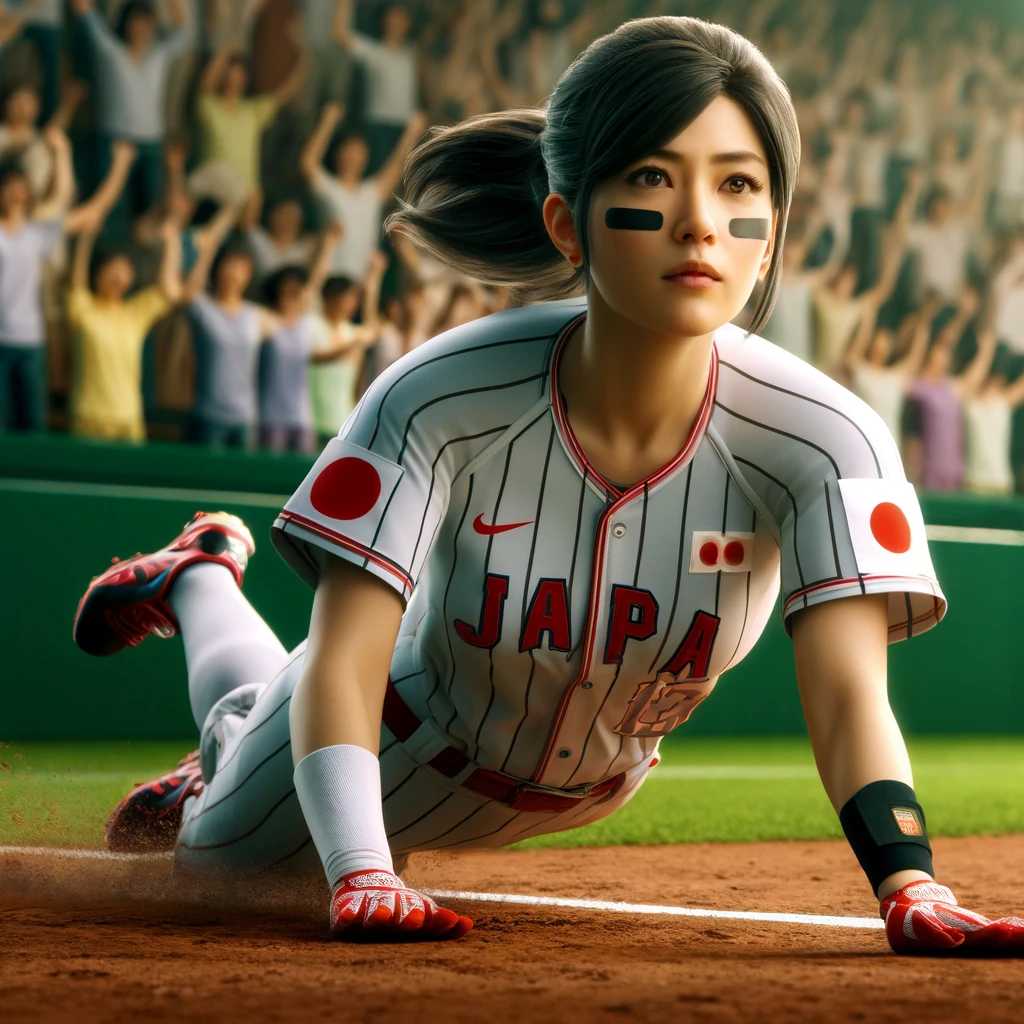
Baseball, or “yakyu” as it is known in Japan, has a rich and storied history that dates back to the 19th century. Initially introduced to the country by American educators, it quickly became a national pastime, with men’s baseball enjoying widespread popularity and media attention. However, under the surface of this male-dominated sport lies the untold story of women’s baseball in Japan, a narrative that speaks volumes about resilience, passion, and the pursuit of equality in the face of entrenched societal norms.
The Early Days
The history of women’s baseball in Japan can be traced back to the 1920s and 1930s when the first all-women’s teams were formed, often as part of company teams or as club activities in schools. These early pioneers of women’s baseball faced considerable obstacles, from societal expectations about femininity and the appropriate roles of women to limited access to facilities and equipment. Despite these challenges, women’s baseball teams managed to carve out a niche for themselves, albeit in the shadows of their male counterparts.
Post-War Era and The Evolution
The post-war era brought significant changes to Japanese society, including gradual shifts in attitudes towards women’s roles. The 1950s and 1960s saw a resurgence in the popularity of women’s baseball, culminating in the establishment of the first national women’s baseball tournament in 1950. This period also witnessed the formation of several women’s professional teams, although the professional league struggled to gain the same recognition and financial support as men’s pro baseball.
The Role of High School Baseball
High school baseball holds a special place in Japan’s baseball culture, with the annual National High School Baseball Championship being one of the country’s most popular sporting events. However, it was not until 1999 that the Japan High School Baseball Federation officially recognized women’s participation, allowing female players to compete alongside male players in high school teams. Despite this milestone, female players often found themselves relegated to bench roles, highlighting the ongoing struggle for true gender equality in the sport.
The International Arena and The Women’s Baseball World Cup
Japan’s women’s baseball made its mark on the international stage with the inception of the Women’s Baseball World Cup in 2004. The Japanese national team, known as “Madonna Japan,” has dominated the tournament, winning multiple championships and establishing Japan as a powerhouse in women’s baseball. These victories have not only boosted the profile of women’s baseball in Japan but also inspired a new generation of female players to pursue the sport professionally.
Breaking Stereotypes and Challenging Norms
Women in Japan’s baseball community continue to face stereotypes and societal pressures that dictate what women can or cannot do. The prevailing image of baseball as a masculine sport has been both a barrier and a motivator for female players who are determined to prove that talent and passion are not defined by gender. Through sheer determination and talent, these women are challenging the status quo, showcasing their abilities on the national and international stages, and gradually changing perceptions about women’s capabilities in sports.
The Future of Women’s Baseball in Japan
The future of women’s baseball in Japan looks promising, with increasing support from both the public and private sectors. Initiatives to promote women’s participation in baseball, such as the establishment of more female teams and tournaments, scholarships for female players, and advocacy for greater media coverage, are slowly but surely making an impact. As societal attitudes continue to evolve, the day when women’s baseball is celebrated and supported on par with men’s baseball in Japan may not be far off.
Pioneering Players and Their Legacy
The success and visibility of Japan’s women’s baseball would not be possible without the pioneering spirit of its players. From the trailblazers of the early 20th century to the champions of Madonna Japan, these women have laid the groundwork for future generations. Their legacy is not just in their victories but in their unwavering commitment to pushing the boundaries of what is possible for women in baseball.
The journey of women’s baseball in Japan is a testament to the power of perseverance, passion, and the pursuit of equality. Despite facing numerous obstacles, the women of Japan’s baseball community have proven time and again that they are more than capable of competing at the highest levels. As they continue to break barriers and inspire future generations, the story of Japan’s women in baseball is far from over; it is only just beginning. — This exploration into Japan’s women’s baseball highlights not just the history and challenges faced by female players but also calls attention to the broader issues of gender equality and representation in sports. As these athletes continue to break barriers and defy expectations, they not only reshape the landscape of baseball in Japan but also challenge global perceptions of women in sports.

The Impact of Media and Popular Culture
The portrayal of women in sports within media and popular culture has a significant impact on societal perceptions and the growth of women’s sports. In Japan, the media coverage of women’s baseball has historically been minimal compared to its male counterpart. This discrepancy not only affects the visibility of the sport but also influences public interest and support. However, recent years have seen a subtle shift in this trend. The success of Madonna Japan in international competitions, along with increased advocacy for gender equality, has led to more media outlets covering women’s baseball, albeit still not at the level of men’s baseball. Popular culture, too, has played a role in shaping perceptions. Manga and anime have long been a vehicle for popularizing baseball in Japan, and the inclusion of female baseball players in these formats has helped to challenge traditional gender norms and inspire young girls to take up the sport.
Grassroots Movements and Community Support
At the heart of the growth of women’s baseball in Japan are the grassroots movements and community support systems that have been instrumental in nurturing talent and providing opportunities for female players. Local clubs, school teams, and amateur leagues have become the backbone of women’s baseball, offering a platform for young girls to engage with the sport from an early age. Community-driven initiatives have also been pivotal in promoting women’s baseball, organizing local tournaments and workshops to raise awareness and interest. These grassroots efforts are crucial for the development of the sport, creating a pipeline of talent that can eventually feed into the professional leagues and the national team.
Challenges and Opportunities Ahead
Despite the progress made thus far, women’s baseball in Japan continues to face numerous challenges. Access to training facilities, securing sponsorships, and achieving equal pay remain significant hurdles for female athletes. Additionally, cultural and societal attitudes towards women in sports are changing, but stereotypes and gender biases still exist, affecting everything from player recruitment to media coverage. However, these challenges also present opportunities for growth and development. The increasing success of women’s baseball on the international stage, coupled with a global push for gender equality in sports, offers a unique window to propel women’s baseball into the mainstream consciousness in Japan. Initiatives aimed at improving funding, access to resources, and media representation can leverage the current momentum to establish women’s baseball as a fixture in the Japanese sports landscape.
The Role of International Collaboration
International collaboration plays a crucial role in advancing women’s baseball in Japan and around the world. Partnerships with baseball organizations in other countries, exchange programs, and international tournaments provide valuable opportunities for sharing knowledge and resources. These collaborations not only help to improve the level of play but also foster a sense of global community among female athletes. Through international collaboration, Japanese women’s baseball can gain insights from the successes and challenges faced by other countries, applying these lessons to grow and develop the sport domestically.
Conclusion
The narrative of women’s baseball in Japan is one of resilience, community, and the relentless pursuit of equality. From the early days of overcoming societal challenges to the triumphs on the international stage, female baseball players in Japan have continuously pushed the boundaries of what is possible. As the sport continues to evolve, the efforts of individuals, communities, and organizations will be key in ensuring that women’s baseball not only survives but thrives. The journey of breaking barriers and challenging norms is far from complete, but with each swing, catch, and home run, Japan’s women in baseball move closer to a future where the sport is truly for everyone.
Frequently Asked Questions
1. How did baseball become popular in Japan, and what role did women play in its early history?
Baseball was introduced to Japan in the early 1870s by American educators, becoming an integral part of school curricula and gaining national traction as a beloved sport. While men’s baseball swiftly rose to prominence with competitive leagues, stadiums, and media coverage, a parallel narrative quietly unfolded in the margins. Women’s participation began as early as the late 19th and early 20th centuries, with female students forming informal teams at schools and universities. These pioneers played mostly in recreation but faced significant societal barriers. Women who pursued baseball often did so quietly, in private or lesser-attended games, due to societal pressures and limitations on women’s sports participation. Despite these obstacles, early women’s teams persisted, driving the growth of the sport and setting the stage for future developments in women’s baseball.
2. What challenges have women faced in advancing their baseball careers in Japan?
Women in Japanese baseball have encountered numerous challenges, ranging from societal norms to institutional barriers. Traditionally, baseball was seen as a masculine sport, and women interested in playing often faced resistance from family, institutions, and the public. Limited access to facilities and training resources mirrored the systemic gender disparities in sports. The absence of women’s leagues and the prioritization of men’s baseball meant fewer opportunities for competitive play. Additionally, insufficient media coverage further marginalized female players and their achievements. Women had to combat stereotypes and prove their capability in a largely unsupportive environment. Despite these hurdles, women players have continuously showcased their talent, relying on resilience and solidarity within the community to push for change and seek greater recognition for their contributions to the sport.
3. How has the perception of women’s baseball evolved in Japan over time?
Over the decades, the perception of women’s baseball in Japan has gradually shifted, thanks to the determination of passionate players and advocates. Initially perceived as a side activity, women’s baseball has slowly gained legitimacy as more women and girls show interest. Educational institutions began offering more support through club activities, and women’s baseball saw periodic media limelight during international competitions or remarkable individual performances. The Japan Women’s Baseball League was officially established, marking a significant step in institutional recognition. Media coverage and public interest have started to reflect a broader acceptance of women’s contributions to the sport, although challenges persist. The shift is partly due to generational changes in societal attitudes toward gender equality and the consistent efforts of current and past players to advocate for the sport’s recognition and development.
4. Are there any notable figures or role models in Japanese women’s baseball who have made significant impacts?
In the context of Japanese women’s baseball, several figures stand out for their extraordinary impact on the sport. Eri Yoshida, known as the “Knuckleball Princess,” gained fame as a groundbreaking female pitcher who played professionally in Japan and in the United States. Her success has inspired many young girls to pursue baseball seriously. Another pivotal figure is Ayumi Kataoka, who captained the Japanese Women’s National Team to victory in the Women’s Baseball World Cup, showcasing exceptional leadership and skill on a global stage. The contributions of women like these have not only sparked interest and participation among younger players but have also brought attention to the capabilities of women in this traditionally male-dominated sport. Their legacies serve as motivation for the continued pursuit of equality and recognition in baseball.
5. What is the future of women’s baseball in Japan and globally?
The future of women’s baseball in Japan and worldwide looks promising, albeit with ongoing challenges to overcome. In Japan, increased institutional support and media coverage could further elevate the sport and encourage more participation. As societal attitudes progress, there’s optimism that women will gain equal footing, and initiatives to foster young female talent will continue to flourish. Internationally, there is an emerging push for inclusion of women’s baseball in major events like the Olympics, echoing similar advancements made in women’s soccer and basketball. The global community’s focus on gender equality in sports could catalyze more opportunities for Japanese players to compete and develop connections worldwide. Increased cooperation between countries, educational programs, and investment in infrastructure will be crucial to sustaining growth and bringing women’s baseball closer to the forefront of the global sports conversation.