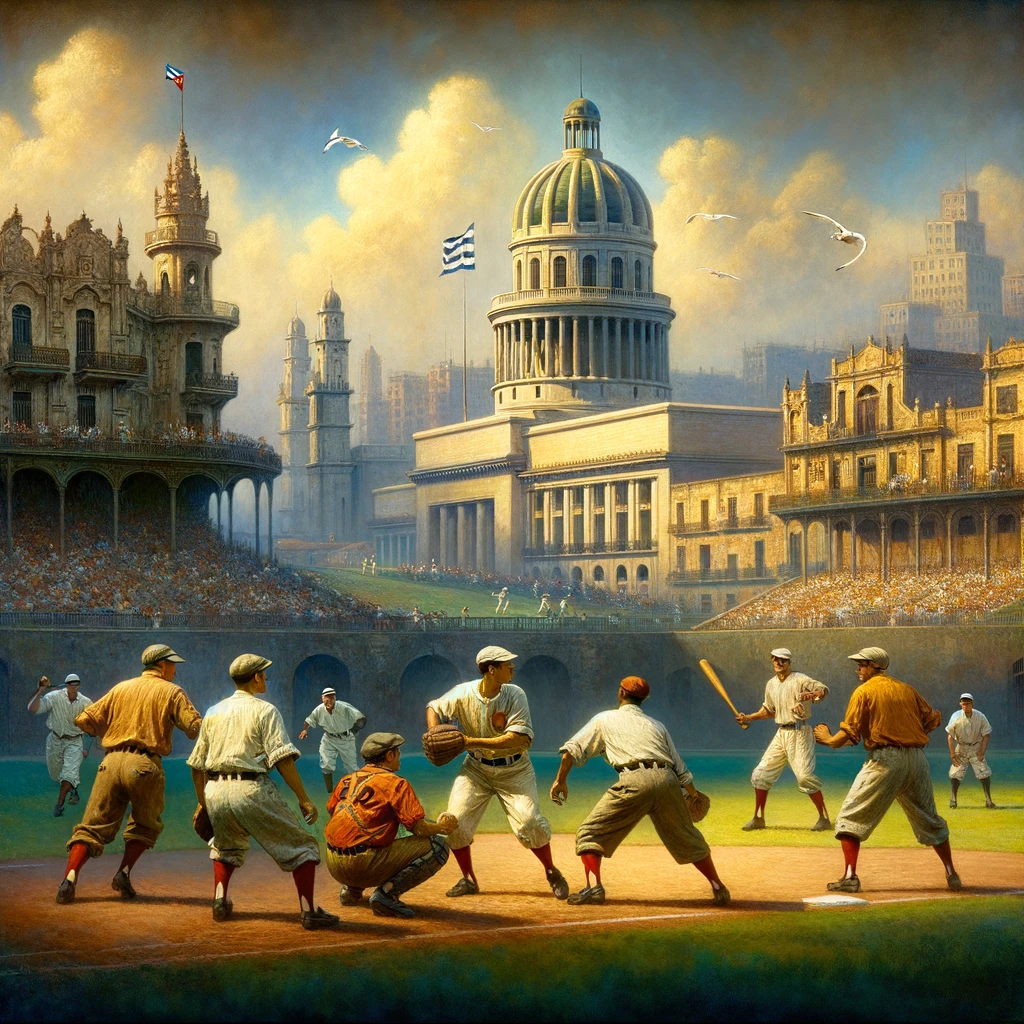
The history of baseball in Cuba is as rich and vibrant as the island nation itself. With roots stretching back to the 19th century, baseball in Cuba is not just a sport, but a reflection of the country’s cultural and social identity. This article takes you through a journey of the early years of baseball in Havana, introducing you to the legends who became the bedrock of this beloved sport in Cuba.
The Birth of Baseball in Cuba
Baseball arrived in Cuba in the 1860s, brought by Cuban students returning from American colleges and sailors docking in Havana’s ports. The first official game in Cuba was played in 1868, marking the beginning of a long and passionate relationship between Cubans and baseball.
Esteban Bellán: The Pioneer
Esteban Bellán, the first Cuban and Latin American player in professional baseball, stands as a towering figure in the annals of the sport. Playing in the United States in the 1870s, Bellán’s international success set the stage for baseball’s popularity surge in Cuba.
The Havana Baseball Club
In 1878, the Havana Baseball Club was formed, becoming the first organized baseball team in Cuba. This club played a pivotal role in popularizing the sport, leading to the establishment of the Cuban League in 1878, the first professional baseball league outside the United States.
The Golden Age of Cuban Baseball
The early 20th century witnessed what many consider the golden age of Cuban baseball. This period was marked by intense rivalries, incredible talent, and the emergence of players who would become legends.
Martín Dihigo: The Immortal
Martín Dihigo, known as “El Maestro” (The Master), dominated Cuban baseball during the 1920s and 1930s. A versatile player, Dihigo was a pitcher, infielder, and outfielder, excelling at every position. His exceptional skills earned him a place in not just the Cuban Baseball Hall of Fame, but also in the Mexican and American Negro Leagues Halls of Fame.
José Méndez: The Black Diamond
José Méndez, nicknamed “El Diamante Negro” (The Black Diamond), was another early Cuban star. A pitcher with a fearsome fastball and sharp control, Méndez led his teams to numerous victories, both in Cuba and in the Negro Leagues in the United States.
Cristóbal Torriente: The Cuban Babe Ruth
Cristóbal Torriente, often compared to Babe Ruth, was known for his powerful batting. A key player in the Cuban League and the Negro Leagues, Torriente’s hitting prowess was legendary, making him one of the most feared batters of his time.
Integration and Triumphs
The integration of baseball in Cuba mirrored broader social changes. While the sport was initially divided along racial lines, with separate leagues for white and Afro-Cuban players, these barriers gradually broke down, leading to a more inclusive and competitive sport.
Orestes Miñoso: Breaking Barriers
Orestes “Minnie” Miñoso, one of the first Afro-Cuban players in Major League Baseball (MLB), broke racial barriers in the 1950s. His success in MLB was a source of pride for Cubans and helped pave the way for future generations of Cuban baseball players.
The Role of Amateur Baseball
While professional baseball garnered most of the attention, amateur baseball played a crucial role in Cuban baseball history. Amateur leagues, often comprised of players from various social classes, were breeding grounds for talent and passion.
The Amateur World Series
Cuba’s dominance in the Amateur World Series, held annually from 1938, showcased the depth of talent in the country. Cuban teams won numerous titles, cementing the nation’s status as a baseball powerhouse.
Baseball and Cuban Identity
Baseball in Cuba was more than a sport; it was a reflection of the nation’s identity and aspirations. The sport became intertwined with Cuba’s political and social fabric, symbolizing national pride and unity.
Baseball During Political Changes
Throughout Cuba’s turbulent political history, baseball remained a constant. The Cuban Revolution of 1959 brought significant changes, including the eventual professionalization of the sport, but the love for baseball remained unchanged.
The early heroes of Havana’s ball fields laid the foundation for Cuba’s enduring love affair with baseball. Their skill, passion, and legacy continue to inspire new generations of players and fans, keeping the spirit of Cuban baseball alive.
These legends, from Esteban Bellán to Martín Dihigo, José Méndez to Cristóbal Torriente, and Orestes Miñoso, not only shaped the course of baseball in Cuba but also left an indelible mark on the sport globally. Their stories are a testament to the power of baseball in bridging cultural divides and fostering a sense of national pride.
Cuban baseball’s journey from the dusty fields of Havana to the bright lights of international stadiums is a story of triumph, passion, and resilience. It is a story that continues to unfold, with each new generation adding its chapter to this rich and colorful tapestry.

The Evolution of Cuban Baseball Post-Revolution
Following the Cuban Revolution in 1959, the landscape of baseball in Cuba underwent significant changes. The professional league was disbanded, and the sport was declared amateur by the new government. This shift marked a new era in Cuban baseball, where the focus turned to nurturing homegrown talent and promoting baseball as a symbol of national pride and revolutionary spirit.
The National Series
In 1961, the Cuban National Series was established, replacing the professional league. This amateur league became the cornerstone of Cuban baseball, showcasing the country’s best talents and fostering a highly competitive environment. The National Series not only honed the skills of Cuban players but also kept the spirit of baseball alive among the Cuban populace.
International Dominance in Amateur Baseball
Cuba’s prowess in baseball continued to shine on the international stage. The Cuban national team became a formidable force in amateur international tournaments, including the Olympics and the Baseball World Cup. Their dominance was a source of national pride, showcasing the effectiveness of the Cuban sports system in developing world-class athletes.
The Legacy of Cuban Baseball in Major League Baseball
Despite the amateur status of the sport within Cuba, the legacy of Cuban baseball players in Major League Baseball (MLB) is undeniable. Numerous Cuban players have made their mark in the MLB, carrying the torch of their predecessors and continuing the tradition of excellence established by the early legends.
Impact of Cuban Players in MLB
The influence of Cuban players in MLB has been profound. From Tony Oliva and Luis Tiant in the 1960s and 1970s to more recent stars like José Abreu and Yasiel Puig, Cuban players have brought a unique flair and passion to the game. Their success in MLB has not only highlighted the talent pool in Cuba but also served as a bridge between American and Cuban baseball cultures.
Challenges and Triumphs
The journey of Cuban players to MLB has often been fraught with challenges, including political and logistical hurdles. However, the triumphs of these players have inspired countless young athletes in Cuba, showing that talent and perseverance can overcome obstacles.
The Future of Cuban Baseball
As we look to the future, the legacy of Cuban baseball continues to evolve. With changing political and social landscapes, the relationship between Cuban baseball and the global baseball community is ever-evolving.
Developing New Talent
Cuba continues to be a hotbed of baseball talent. The focus on grassroots development and the passion for the sport among the youth ensure that the pipeline of talented players remains robust. This bodes well for the future of Cuban baseball, both nationally and internationally.
International Collaborations and Challenges
The future of Cuban baseball may see increased collaboration with international leagues, including potential changes in how Cuban players join MLB. These collaborations could provide new opportunities for Cuban players while also presenting challenges in maintaining the unique character and independence of Cuban baseball.
Preserving the Rich Heritage
As the sport continues to evolve, preserving the rich heritage of Cuban baseball remains crucial. The stories of early legends not only serve as a source of inspiration but also as a reminder of the deep cultural and historical significance of baseball in Cuba.
Celebrating the Legends
The Cuban Baseball Hall of Fame, along with museums and other cultural initiatives, plays a vital role in celebrating the history and achievements of Cuban baseball legends. These institutions help keep the memories of early heroes alive, ensuring their contributions are not forgotten.
The Enduring Spirit of Cuban Baseball
The enduring spirit of Cuban baseball is a testament to the sport’s ability to transcend cultural and political barriers. It remains a unifying force in Cuba, bringing together people of all ages and backgrounds in their shared love for the game.
Conclusion
The story of Cuban baseball is a narrative of passion, resilience, and excellence. From the pioneering heroes of Havana’s early ball fields to the modern stars shining in leagues around the world, Cuban baseball has made an indelible mark on the sport’s history. As we celebrate the achievements of its legends, we also look forward to the future chapters that will be written by the next generation of Cuban baseball heroes. The legacy of Cuban baseball is not just in the records and trophies but in the hearts of the people for whom baseball is not just a game, but a way of life.
Frequently Asked Questions
1. How did baseball become established in Cuba?
Baseball found its way to Cuban shores during the 1860s, primarily introduced by Cuban students who were studying in the United States. These young enthusiasts carried their love for the game back to the island, and it quickly gained popularity among the local population. The burgeoning sport provided a means of cultural exchange and interaction that transcended political and social boundaries. Over time, baseball ingrained itself into the Cuban cultural fabric, evolving from a pastime into a national passion and an integral part of Cuba’s identity. Beyond mere play, it offered a platform for assertions of independence and showcased a distinctive Cuban style that blended athleticism with flair.
2. Who were some of the pioneering heroes of Cuban baseball?
Cuban baseball has been graced by an array of legendary figures who laid the groundwork for its storied history. Notable among them are storied athletes such as Esteban Bellán, Cuba’s first professional player who went on to play Major League Baseball in the United States, and Martín Dihigo, known for his versatility in playing multiple positions with prowess. Dihigo’s reputation as a sheer talent and tactician helped cement the sport’s place within Cuban society. These figures, along with others who formed the early Cuban leagues and participated in international play, were trailblazers, contributing not just to the game’s development on the island but also to its global footprint. They are celebrated for their skill and their roles in fostering a legacy of excellence that persisted despite the political turmoils that later influenced the sport.
3. What role did Havana play in the development of baseball in Cuba?
Havana was the epicenter of baseball’s rise in Cuba. As the capital, it hosted the first formal games and established the initial teams and leagues that spurred wider regional engagement with baseball. Clubs sprung up rapidly in the city, with passionate rivalry fostering heightened interest and participation. The initial seeds sown in Havana helped drive baseball’s proliferation to other parts of the island, making it a ubiquitous presence. Havana’s urban centers not only cradled the nascent sport but also served as a stage for its societal and cultural significance to unfold, reflecting national sentiment and becoming a means of unifying disparate communities through shared enthusiasm for the game.
4. How did baseball become a reflection of Cuban cultural identity?
In Cuba, baseball became more than just a sport; it evolved into a mirror of the nation’s cultural soul and socio-political landscape. As the island grappled with colonial rule and sought its identity, baseball emerged as a symbol of freedom and resistance. The game provided a venue for competence, camaraderie, and national pride, embodying values that resonated deeply with the Cuban people. Players, often viewed as cultural icons, represented not only athletic prowess but also aspirations for autonomy and self-expression. Through the highs and lows of Cuban political history, baseball stood resilient, a testament to the nation’s enduring spirit, tenacity, and longing for independence.
5. What was the impact of political changes on baseball in Cuba?
The political tides in Cuba, particularly post the 1959 Revolution, led to significant repercussions for baseball. In alignment with its new socialist tenets, the Cuban government restructured sports, making baseball a government-sponsored endeavor while eliminating professional leagues. This shift didn’t diminish baseball’s presence; rather, it altered its framework toward fostering amateur sports that highlighted educational values and egalitarianism. These changes saw the nationalization of teams and efforts to compete internationally, projecting Cuba’s prowess on a global scale. Cubans excelled in international competitions, their achievements speaking volumes about the sport’s vitality and the players’ extraordinary capabilities, even under evolving conditions. The legacy persists, with Cuban baseball continuing to inspire awe and solidarity despite the political and economic challenges faced by the island nation throughout the years.