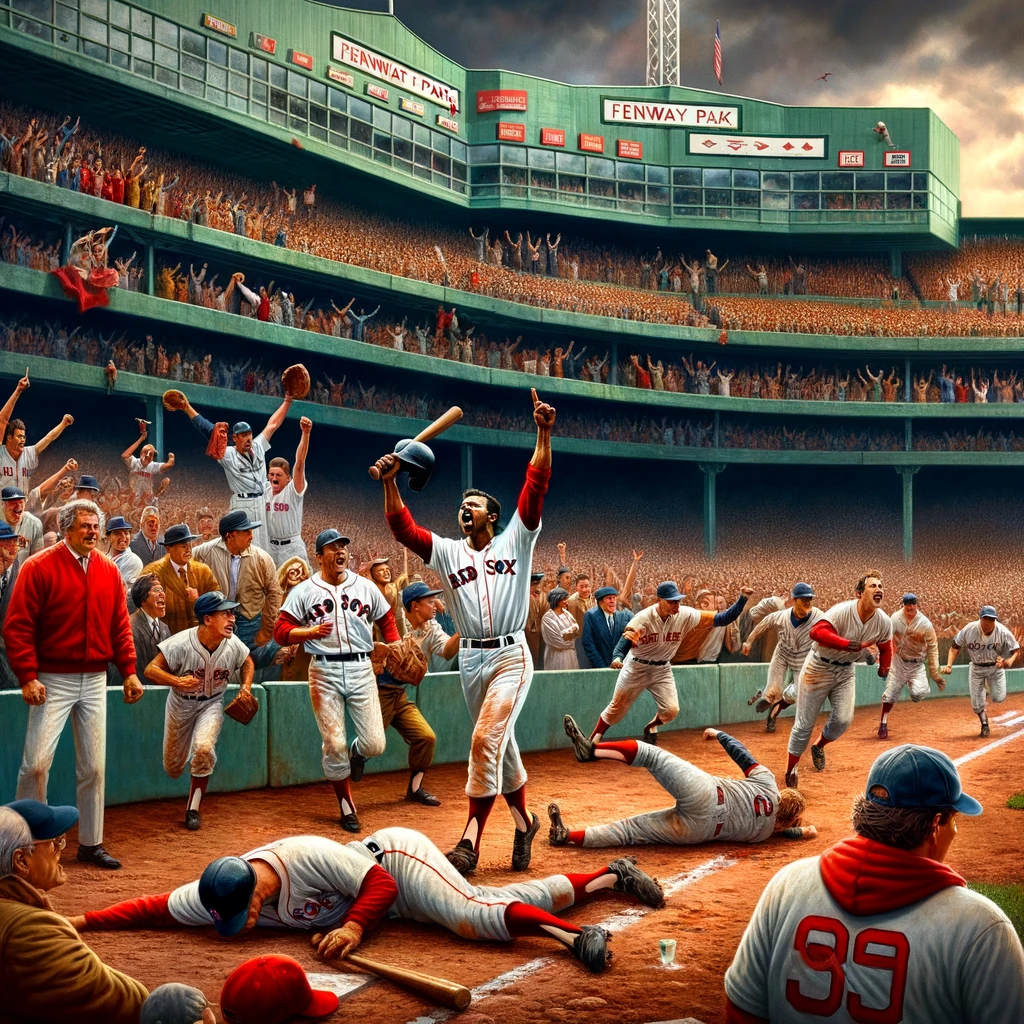
The Boston Red Sox, one of Major League Baseball’s most storied and celebrated teams, embodies a rich tapestry of triumphs and trials. This franchise, deeply woven into the fabric of Boston and the sport itself, has a history marked by legendary players, iconic moments, and heart-wrenching challenges. From its inception in the early 20th century to its recent successes and struggles, the Red Sox narrative is a compelling chronicle of baseball’s evolution and the unbreakable spirit of its fans.
Early Years: Foundations and First Triumphs
The Boston Red Sox, originally known as the Boston Americans, was established in 1901, marking the birth of a franchise that would become a cornerstone of American sports. The early years of the Red Sox were highlighted by their first World Series win in 1903, a monumental achievement that set the tone for the team’s future successes. In these formative years, the team was led by a cadre of talented players, setting up a legacy that would echo through the decades.
The Babe Ruth Era and the Curse of the Bambino
The Red Sox’s early success was soon overshadowed by one of the most infamous events in baseball history. In 1919, the team sold Babe Ruth, one of the greatest baseball players of all time, to the New York Yankees. This decision, driven by financial reasons, led to what many fans believe was the “Curse of the Bambino,” a period of 86 years where the Red Sox did not win a single World Series. This era was marked by a series of near misses and heartbreaking losses, embedding a sense of tragic fate in the hearts of Red Sox fans.
The Ted Williams Years: A Beacon of Hope
Amidst the decades of disappointment, there were glimmers of hope, most notably in the form of Ted Williams. Joining the team in 1939, Williams, known as “The Splendid Splinter,” was one of the greatest hitters in baseball history. His presence brought a renewed sense of optimism to the team and its fans, though the elusive World Series title remained out of reach during his tenure.
Breaking the Curse: The 2004 World Series Victory
The turning point in the Red Sox’s fortunes came in 2004, a year that will forever be etched in the annals of baseball history. In an unprecedented comeback during the American League Championship Series against the New York Yankees, the Red Sox became the first team in MLB history to win a series after being down three games to none. This miraculous victory led them to the World Series, where they swept the St. Louis Cardinals, finally lifting the Curse of the Bambino and ending an 86-year drought.
Continued Success and Modern Challenges
The 2004 victory ushered in a new era of success for the Red Sox, with additional World Series titles in 2007, 2013, and 2018. These triumphs were a testament to the team’s resilience and ability to adapt to the changing dynamics of modern baseball. However, the team has also faced challenges in recent years, including controversies and a changing roster that have tested the loyalty and patience of its fan base.
The Role of Fenway Park
Integral to the Red Sox’s identity is Fenway Park, their home since 1912. As the oldest ballpark in MLB, Fenway is hallowed ground for baseball fans, known for its unique features like the Green Monster. The park has not just been a venue for baseball; it has been a witness to the history of the team and the city, serving as a symbol of continuity and tradition in a rapidly evolving sport.
Legacy and Impact on Baseball
The Boston Red Sox’s impact on baseball extends far beyond their on-field accomplishments. They have been at the forefront of breaking barriers in the sport, notably being the last team to integrate in 1959 with the debut of Pumpsie Green. The franchise has also been instrumental in advancing the game through its passionate fan base, storied rivalries, and commitment to preserving the history and integrity of the sport.
The story of the Boston Red Sox is more than just a chronicle of a baseball team; it’s a narrative about perseverance, identity, and the unyielding bond between a team and its fans. Through their triumphs and trials, the Red Sox have not only shaped the history of baseball but have also become an indelible part of the cultural fabric of Boston and the nation. As they continue to write new chapters in their storied legacy, the Red Sox remain a symbol of hope, resilience, and the enduring spirit of the game.

The Red Sox in the 21st Century: Adapting to Modern Baseball
As the 21st century unfolded, the Boston Red Sox continued to evolve, adapting to the rapidly changing landscape of modern baseball. This era was marked by a combination of advanced analytics, increased focus on player development, and strategic financial management. The Red Sox embraced these changes, integrating data-driven decision-making into their operations, a shift that played a significant role in their early 21st-century successes.
The Era of Big Papi: David Ortiz’s Impact
One of the most significant figures in this period was David Ortiz, affectionately known as Big Papi. Joining the Red Sox in 2003, Ortiz became the heart and soul of the team. His charismatic leadership and clutch hitting were instrumental in the team’s 2004, 2007, and 2013 World Series victories. Ortiz’s larger-than-life persona and his dramatic performances, especially in critical situations, endeared him to fans and cemented his legacy as one of the greatest Red Sox players of all time.
Challenges and Controversies
Despite their successes, the Red Sox have not been immune to controversy and challenges in the 21st century. Issues ranging from management changes to accusations of sign-stealing have tested the franchise. The team’s response to these challenges has been a crucial aspect of their story, reflecting the complexities of maintaining a top-tier baseball organization in an era of intense scrutiny and competition.
Developing Young Talent
A key aspect of the Red Sox’s strategy in recent years has been the focus on developing young talent. This approach has seen the rise of players like Mookie Betts, Xander Bogaerts, and Rafael Devers, who have become cornerstones of the team. The emphasis on homegrown talent has not only contributed to the team’s successes but also helped maintain a strong connection with the fan base, as these players have become new heroes for a new generation of Red Sox fans.
The Role of Management and Ownership
The role of the Red Sox’s management and ownership cannot be overstated in the franchise’s recent history. Since John Henry’s ownership group took over in 2002, there has been a significant shift in how the team is run. The ownership’s willingness to invest in the team, both financially and intellectually, has been a critical factor in the Red Sox’s successes and their ability to navigate the trials of modern baseball.
Community and Cultural Impact
Beyond the diamond, the Red Sox have played a significant role in the community and culture of Boston. The team’s charitable arm, the Red Sox Foundation, has been involved in numerous initiatives, focusing on health, education, and social service programs. The Red Sox’s impact on the local community underscores the franchise’s commitment to being more than just a baseball team, but a responsible and integrated member of the Boston community.
The Future of the Franchise
Looking to the future, the Boston Red Sox stand at a crossroads. As the team grapples with the challenges of maintaining competitiveness in an increasingly complex and competitive sport, the decisions made in the front office, the performances on the field, and the support of their passionate fan base will all play a role in shaping the next chapter of the Red Sox’s storied history.
Conclusion
The Boston Red Sox’s journey from a fledgling team in the early 20th century to a modern baseball powerhouse is a tale of resilience, evolution, and unwavering spirit. Their story is not just about the games won or lost but about the impact they have had on their fans, the city of Boston, and the sport of baseball. As the Red Sox continue to write new chapters in their illustrious history, they remain a testament to the enduring appeal and transformative power of America’s pastime.
Frequently Asked Questions
1. What makes the Boston Red Sox one of Major League Baseball’s most celebrated teams?
The Boston Red Sox hold a revered place in Major League Baseball due to their rich history, a tapestry woven with both remarkable triumphs and challenging trials. Established in the early 20th century, they quickly became one of the foundational teams of the league. Known for their passionate fan base and iconic ballpark, Fenway Park, which is the oldest stadium in the MLB in use today, the Red Sox have developed a legacy of memorable moments. From the legendary feats of players like Babe Ruth, Ted Williams, Yaz, Pedro Martinez, and David Ortiz to their storied rivalries—particularly with the New York Yankees—the team has remained at the forefront of baseball’s cultural zeitgeist. The excitement of breaking the “Curse of the Bambino” in 2004 by winning their first World Series in 86 years, followed by further victories in 2007, 2013, and 2018, cement their place as one of the most beloved teams. Their history is not just a tale of championships but also one of resilience and community, making them a quintessential example of baseball’s enduring appeal.
2. Can you explain the ‘Curse of the Bambino’ and its significance to the Red Sox’s history?
The “Curse of the Bambino” is a fundamental component of the Boston Red Sox’s storied history. The tale began in 1919 when the Red Sox made the fateful decision to sell Babe Ruth, arguably the greatest baseball player of all time, to the New York Yankees. This move is often cited as the beginning of a prolonged period of misfortune for the Red Sox, who were dominant before the sale. Before Ruth’s departure, the Red Sox had won five World Series titles, but the ensuing decades saw a string of near misses and heartbreaking losses. This period was marked by notable incidents such as the 1946 World Series loss and Bucky Dent’s infamous home run in 1978. Red Sox fans have endured through these trials with unwavering loyalty. The supposed curse lasted 86 years, during which the Yankees enjoyed tremendous success, fueling the fires of one of the most heated rivalries in sports. The narrative took a dramatic turn in 2004 when the Red Sox made an epic comeback from a three-game deficit against the Yankees in the ALCS, then went on to sweep the St. Louis Cardinals to claim their first World Series title since 1918. This climactic victory wasn’t just a sports triumph; it was a cathartic moment that marked the end of a significant chapter in Red Sox lore, transforming a long-standing curse into a triumphant liberation.
3. What role has Fenway Park played in the Red Sox’s legacy?
Fenway Park is not just the home of the Boston Red Sox; it’s an intimate piece of the team’s very identity—a hallowed ground that’s both a living museum and a stage for the team’s most unforgettable moments. Opened in 1912, Fenway is the oldest Major League Baseball stadium still in use, instantly recognizable for its iconic features like the Green Monster, the Pesky Pole, and its quirky, asymmetrical design elements. Its compact dimensions and classic architecture have created a unique atmosphere that echoes with the cheers and history of baseball’s golden years. Over the decades, Fenway has been the backdrop for countless thrilling games, historic feats, and championships. Fans from every generation have flocked to its storied stands, witnessing everything from Ted Williams’ legendary smash to home runs by the “Splendid Splinter,” to modern-day walk-off wins and nail-biting playoff runs. The stories told within its walls contribute heavily to the lore of the Red Sox and baseball at large, making it a pilgrimage site for fans and an iconic symbol of baseball culture. The experiences and memories crafted at Fenway deepen the emotional ties fans feel toward both the stadium and the team, ensuring its status as a perennial treasure in the heart of Boston’s cultural heritage.
4. How has the rivalry with the New York Yankees impacted the Red Sox’s narrative?
The rivalry between the Boston Red Sox and the New York Yankees is one of the most intense and storied in all of sports, adding immense drama and intrigue to the Red Sox narrative. Stemming from the “Curse of the Bambino,” when Babe Ruth was traded to the Yankees, this rivalry escalated over the years as both teams continually vied for supremacy not just within the American League, but across Major League Baseball. The Yankees’ subsequent success exacerbated the tension, as the Bronx Bombers collected championship after championship, while the Red Sox endured their “curse” with a string of near misses and dramatic losses. This fierce competition has included moments of high drama including memorable brawls, historic playoff encounters, and epic comebacks, such as Boston’s incredible 2004 ALCS turnaround. The intensity of this rivalry has drawn national and international attention, transcending the sport to become a cultural and social phenomenon embodying the clash of two great American cities and embodying the perseverance and passion of Red Sox fans. Each game is more than a competition; it’s a battle rich with history and emotion, epitomizing baseball’s competitive spirit and adding a thrilling chapter to the legacies of both franchises.
5. Who are some of the most iconic players in Red Sox history, and what are their contributions?
The Boston Red Sox have been home to numerous legendary players who have left indelible marks on the franchise’s history and legacy, shaping not only the team’s fortunes but the broader narrative of baseball. Babe Ruth, before his departure, was an early icon whose pitching and slugging prowess brought the Red Sox multiple World Championships. Ted Williams, often lauded as the greatest hitter who ever lived, dazzled fans with his skillful batting and served as a consummate baseball icon, his legacy enshrined by his military service and community contributions. Carl Yastrzemski, or “Yaz,” carried the team through the 60s and 70s, impressively winning the Triple Crown in 1967 and cementing himself as a quintessential Boston sports hero. In more recent history, Pedro Martinez’s commanding pitching performances have been integral to the team’s competitive resurgence in the late 90s and early 2000s, while David Ortiz, fondly known as “Big Papi,” became a central figure in breaking the “Curse of the Bambino,” his clutch postseason performances forever etched in Red Sox lore. These players, among many others, form an esteemed lineage that represents excellence, dedication, and the quintessential spirit of Red Sox baseball. Each has contributed to the team’s triumphs and trials in ways that have helped shape Boston’s sports identity and left a lasting legacy that inspires new generations of fans and players alike.