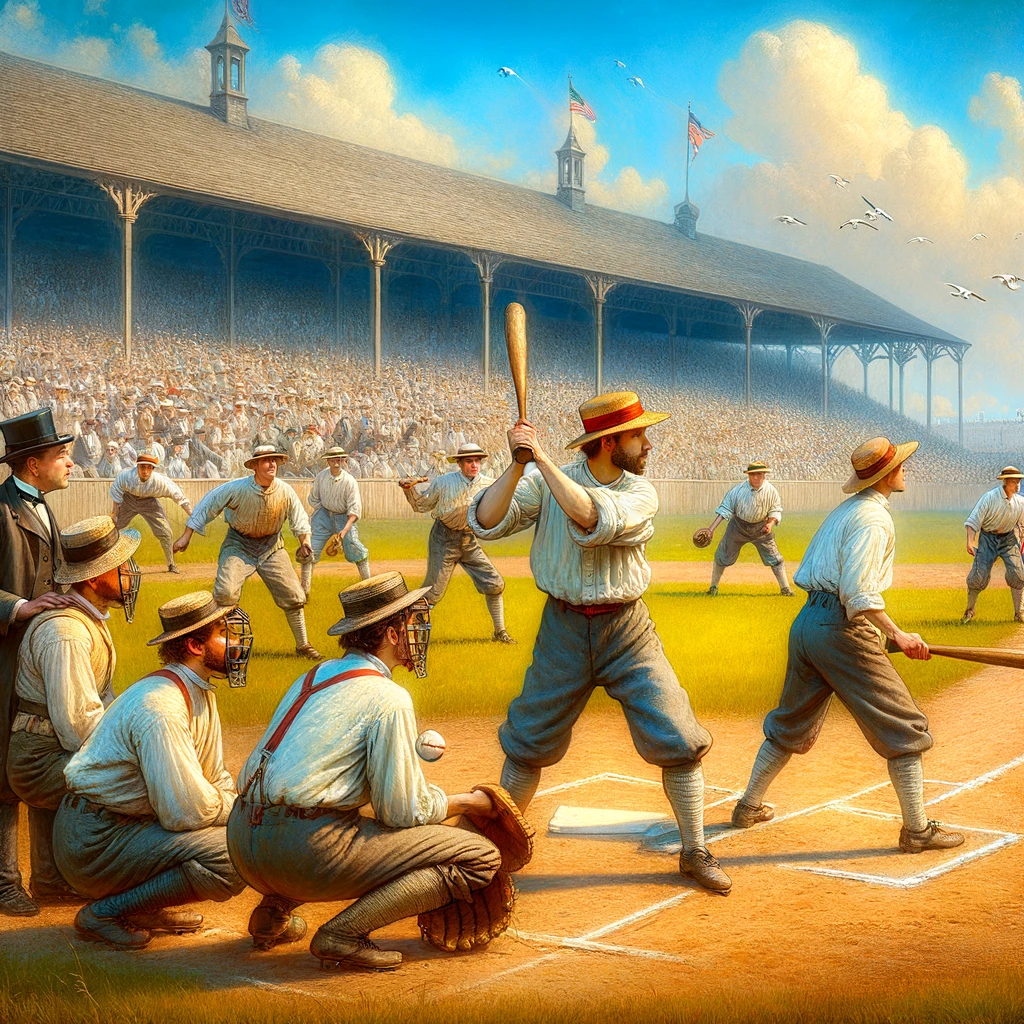
Baseball, America’s beloved pastime, has a rich and storied history. Among the numerous teams and figures that have shaped this sport, the New York Knickerbockers hold a special place. This article delves into the origins and contributions of the Knickerbockers, a team that played a pivotal role in the evolution of modern baseball.
Early Beginnings
The story of the New York Knickerbockers begins in the mid-19th century, a period marked by the gradual emergence of baseball as a structured sport. Before the Knickerbockers, baseball was a game with varying local rules and informal play. The need for a standardized set of rules was becoming increasingly apparent as the game gained popularity.
In 1842, a group of New York City men, mostly professionals and businessmen, formed a social club for the purpose of playing baseball. They were known as the New York Knickerbocker Base Ball Club, named after the Knickerbocker Engine Company where some of the members worked. Alexander Joy Cartwright, often credited as a key figure in the development of baseball, was among these founding members.
Codifying the Game
The most significant contribution of the Knickerbockers was their role in formalizing the rules of baseball. Prior to this, the game was played under a variety of local rules, some of which bore little resemblance to the modern sport. In 1845, Alexander Joy Cartwright and a committee of club members developed a set of rules that would become the cornerstone of modern baseball.
The Knickerbocker Rules, as they came to be known, introduced several key elements. They established the diamond-shaped infield, the three-strike rule, and the concept of tagging runners out. Importantly, these rules also eliminated the dangerous practice of “soaking” or “plugging,” where a fielder could put a runner out by hitting them with a thrown ball.
The First Recorded Game
The Knickerbockers played their first recorded game under these new rules on June 19, 1846, at the Elysian Fields in Hoboken, New Jersey. This game, often considered the first official game of modern baseball, was against a group known as the “New York Nine.” The Knickerbockers lost 23-1, but the event marked a significant moment in baseball history.
Spreading the Sport
Following this historic game, the popularity of baseball began to spread rapidly. Other clubs were formed, adopting the Knickerbocker Rules. The Knickerbockers themselves continued to be a driving force in the sport, promoting it and participating in the development of the game.
In 1857, the Knickerbockers were instrumental in forming The National Association of Base Ball Players (NABBP), the first organization governing American baseball. This association brought together various clubs and facilitated the scheduling of matches, further standardizing the game.
The Civil War and Baseball’s Popularity
The Civil War played an unexpected role in spreading baseball across the United States. Soldiers from New York, familiar with the Knickerbocker Rules, played the game during lulls in the war, introducing it to their counterparts from other states. Post-war, these soldiers took the game back to their home towns, further embedding baseball in the American cultural fabric.
Decline and Legacy
Despite their early prominence, the Knickerbockers gradually faded from the baseball scene. As the sport professionalized in the late 19th century, the Knickerbockers, rooted in their amateur ethos, did not make the transition to professional baseball. The club ceased playing baseball in 1872, but their legacy was already secure.
The Knickerbockers’ impact on baseball is immeasurable. They were pioneers in a time of change, setting the foundation for what baseball would become. The rules they developed and the spirit they fostered helped transform baseball from a casual pastime into a structured, competitive sport.
The New York Knickerbockers’ story is a testament to the transformative power of vision and innovation. They were not just a baseball club; they were architects of a sporting revolution. Their legacy endures in every pitch, hit, and home run in modern baseball. As we celebrate the sport today, we remember the Knickerbockers, the pioneers who helped shape the game we know and love.

The Knickerbockers’ Influence on Baseball Culture
The influence of the New York Knickerbockers extends beyond the rules and structure of the game; they also helped shape the cultural aspects of baseball. The club’s emphasis on sportsmanship, team spirit, and amateur status reflected the values of the middle-class urban society of the time. These values permeated the sport and became integral to its identity, promoting baseball not just as a game, but as a social and moral activity.
The Amateur Ideal
The Knickerbockers were staunch advocates of amateurism, playing for the love of the game rather than financial gain. This ethos defined the early years of baseball, differentiating it from other sports that were moving towards professionalism. The emphasis on amateurism fostered a sense of community and inclusivity, making baseball a sport accessible to a wide audience.
Social Impact and Community
Baseball games, as played and promoted by the Knickerbockers, became social events, attracting spectators from various backgrounds. The games offered opportunities for social interaction and community building, contributing to the sport’s growing popularity. The club’s activities also reflected the changing urban landscape of America, with more leisure time and the need for recreational activities.
Evolution of Equipment and Uniforms
The Knickerbockers were also pioneers in the evolution of baseball equipment and uniforms. They were among the first to adopt uniforms, adding a sense of formality and team identity to the sport. This move influenced other teams, leading to the standardization of baseball attire. Similarly, their use of specific baseball equipment, like bats and balls, helped standardize these items, making the game more uniform and organized.
The Knickerbockers’ Place in Baseball’s Historical Narrative
The story of the New York Knickerbockers is integral to the historical narrative of baseball. They represent a crucial bridge between the game’s informal origins and its structured, modern form. Historians and baseball enthusiasts often refer to the Knickerbockers when discussing the evolution of baseball, highlighting their role in the sport’s development.
Recognition and Memorials
The Knickerbockers have been recognized and memorialized in various ways throughout baseball history. Monuments, plaques, and historical markers have been established in key locations like the Elysian Fields to commemorate their contributions. Baseball’s Hall of Fame and Museum also acknowledges the Knickerbockers, preserving their legacy for future generations.
The Knickerbockers in Modern Times
In modern times, the legacy of the Knickerbockers continues to be celebrated. Various events, reenactments, and educational programs are organized to honor their contributions to baseball. These activities not only commemorate the Knickerbockers but also educate the public about the origins and evolution of America’s national pastime.
Final Thoughts
The New York Knickerbockers’ story is a rich tapestry woven into the fabric of baseball history. From setting the foundational rules to influencing the cultural aspects of the game, their contributions are both profound and enduring. As we enjoy modern baseball, it’s important to remember and celebrate the pioneering spirit of the Knickerbockers, the team that played a crucial role in shaping the game we love today.
In conclusion, the New York Knickerbockers were more than just a baseball team; they were visionaries who laid the groundwork for the modern sport. Their legacy is a reminder of the power of innovation and the enduring impact of a group of individuals united by a love for the game. As baseball continues to evolve, the spirit and contributions of the Knickerbockers will forever remain a pivotal chapter in the history of this beloved sport.
Frequently Asked Questions
1. Who were the New York Knickerbockers, and why are they significant in baseball history?
The New York Knickerbockers were a group of men passionate about the game of baseball in the mid-19th century. Formed in 1845, they became one of the first organized baseball clubs in the United States, playing a crucial role in the evolution of the sport from a recreational activity to a structured competition we recognize today as baseball. The significance of the Knickerbockers lies not only in their early formation but also in their contributions to standardizing the rules of the game. As pioneers, they were instrumental in transitioning baseball from casual, varying local rules to a more uniform and codified set, allowing it to grow and spread into the beloved national pastime it is today.
2. What contributions did the New York Knickerbockers make to the rules of baseball?
The Knickerbockers are often credited with modifying and formalizing the rules of baseball, establishing many of the foundational guidelines that persist in the game. Their most notable contribution came through the drafting of the “Knickerbocker Rules” in 1845, attributed to Alexander Cartwright, one of the club’s key figures. These rules included specifications for fair play and sportsmanship, such as the abolition of the “soaking” or “plugging” rule, where players were put out by being hit with a thrown ball—an element borrowed from town ball. The Knickerbocker Rules also introduced the concept of foul territory and the use of the tag at bases. These innovations not only made the game safer and more enjoyable but also helped the sport evolve into a more structured form, laying the groundwork for the standardized rules we know today.
3. How did the New York Knickerbockers influence the growth and popularity of baseball?
The New York Knickerbockers played a considerable role in popularizing baseball by organizing one of the first recorded competitive games, taking place on June 19, 1846, at the Elysian Fields in Hoboken, New Jersey. This match between the Knickerbockers and a team called the New York Nine drew attention to baseball as a formalized team sport. The visibility and excitement generated by this publicized event kicked off a larger movement toward league and team organization, inspiring many other clubs to form. These developments helped foster the competitive spirit that has characterized baseball ever since. Additionally, the club’s formal approach attracted a growing public interest in the game, further cementing its status as America’s pastime as the sport spread rapidly across the country.
4. Who was Alexander Cartwright, and what is his connection to the New York Knickerbockers?
Alexander Cartwright was a firefighter and a key founding member of the New York Knickerbockers. He is often celebrated as a crucial figure in baseball’s development, especially due to his role in drafting the Knickerbocker Rules. While the extent of his influence was debated historically, his contributions to organizing and documenting these rules were fundamental in shaping modern baseball’s structure. Cartwright’s efforts facilitated a more uniform approach, setting a template that other teams followed, promoting standardized games, and including rules regarding things such as fair and foul areas and prescribing the nine-inning format. His vision helped transition the sport from unorganized play into an institution with enduring appeal, earning him a place in baseball lore as one of its founding architects. In many ways, Cartwright’s influence through the Knickerbockers laid the groundwork for the professionalization of baseball.
5. What was the impact of the Knickerbockers’ first official game at the Elysian Fields, and why is it considered significant?
The Knickerbockers’ first official game against the New York Nine on June 19, 1846, at the Elysian Fields, Hoboken, is significant for several reasons. This match is considered one of the first organized baseball games under formal rules, effectively showcasing baseball as a spectator sport that people outside the playing circle can enjoy. Prior to this game, baseball was typically played casually, with rules varying greatly by region. The match at the Elysian Fields attracted public interest, showing that a structured version of the game could draw crowds and media attention. It set a precedent for future organized games and tournaments, stimulating the sport’s growth in both players and spectators, and paving the way for the establishment of professional leagues. This event is largely celebrated as a pivotal moment in the transition of baseball from amateur pastimes to a professionally beloved sport.