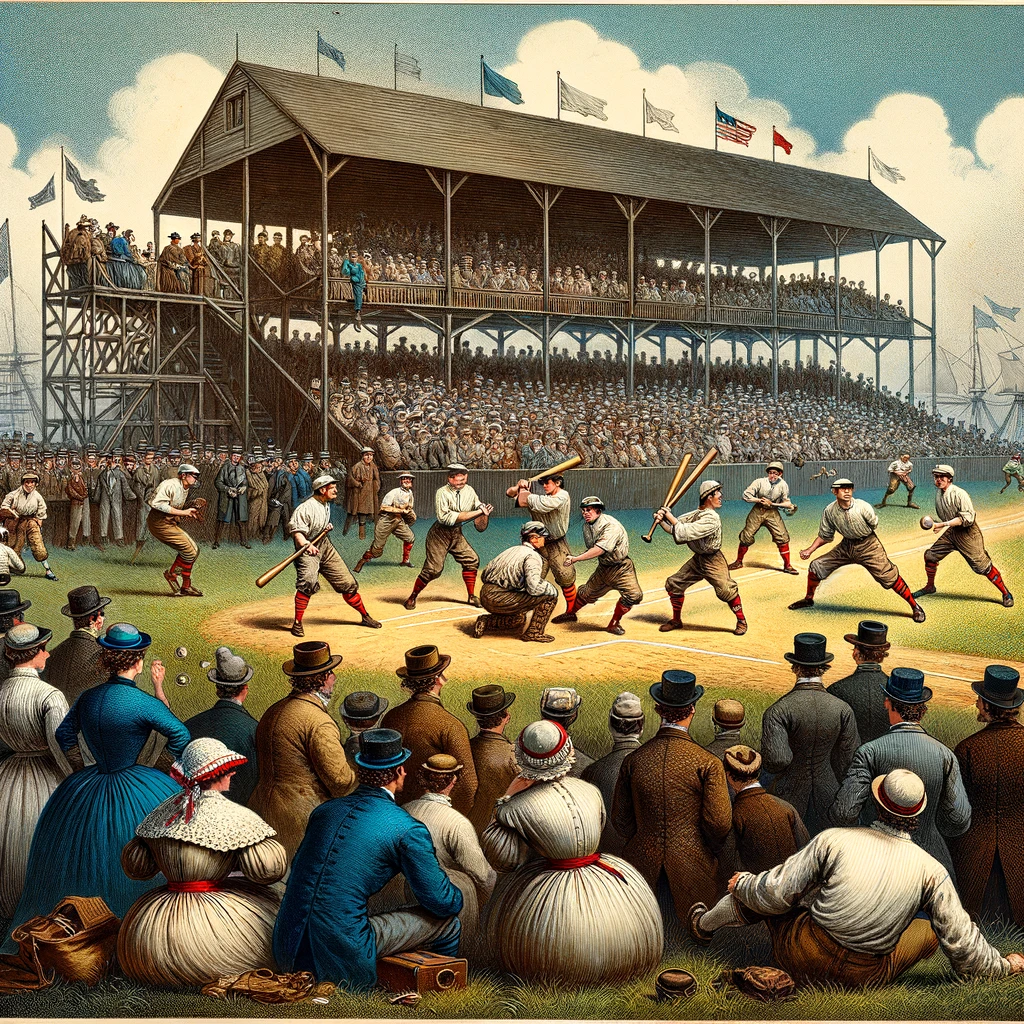
The 1860s marked a transformative era in the history of baseball, a period when the sport evolved from amateur pastime to professional spectacle. This decade witnessed the birth of professional baseball teams, laying the foundation for what would become America’s national pastime. This article delves into the early history of baseball, focusing on the rise of professional teams and the cultural and social factors that influenced this transition.
Early Beginnings
Before delving into the 1860s, it’s crucial to understand baseball’s early roots. The game, in its rudimentary form, traces back to the 18th century, with various bat-and-ball games played in England and North America. However, it was the establishment of the New York Knickerbocker Baseball Club in 1845 that marked a significant milestone. This club formulated the “Knickerbocker Rules,” which significantly influenced modern baseball’s rules.
The 1860s: A Decade of Transformation
The 1860s were pivotal in transitioning from amateur clubs to professional teams. This era was characterized by a rapid increase in baseball’s popularity, thanks in part to the Civil War. Soldiers from different regions played baseball during downtime, spreading the game’s popularity across the country.
The Emergence of Professionalism
The first openly professional baseball team was the Cincinnati Red Stockings, founded in 1869. They revolutionized the sport by paying their players, which was a departure from the norm of the time. The Red Stockings embarked on a nationwide tour, playing against amateur clubs and showcasing a higher level of skill and organization. This tour was instrumental in popularizing professional baseball and demonstrated the viability of a professional baseball team.
Impact of the Civil War
The Civil War played an unexpected but significant role in the spread of baseball. Soldiers from different states and backgrounds were exposed to the game, leading to a more unified set of rules and increased interest in the sport. Post-war, many soldiers continued to play, further embedding baseball in American culture.
The National Association of Base Ball Players
Formed in 1857, the National Association of Base Ball Players (NABBP) was the first organization to govern baseball. Initially an amateur organization, the NABBP began to see the influence of professionalism by the mid-1860s. Teams started to compensate star players under the table to ensure victories. This shift towards professionalism was gradual but inevitable, as the demand for higher-quality play increased.
The Economic Aspect
Baseball’s rise in the 1860s can also be attributed to its economic impact. The sport began to draw large crowds, and team owners realized the potential for profit. The introduction of admission fees to games was a game-changer, providing teams with a financial incentive to improve the quality of play and the experience for spectators.
Challenges and Controversies
The shift to professionalism was not without its challenges. Traditionalists viewed the move as a threat to the sport’s integrity, fearing that commercialization would corrupt it. Additionally, there were controversies regarding rules and player contracts, leading to disputes and disagreements within the sport.
Legacy and Influence
The 1860s laid the groundwork for modern professional baseball. The establishment of professional teams set the stage for the creation of the first professional baseball league, the National Association of Professional Base Ball Players, in 1871. This decade’s developments had a lasting impact, shaping how the game is played and perceived.
The 1860s were a decade of significant transformation for baseball, marking the shift from an amateur pastime to a professional sport. The rise of professional teams during this period set the stage for the development of baseball as a major American sport, influencing its cultural and economic landscape. This era’s legacy is still felt today, as professional baseball continues to be a beloved and integral part of American culture.

The Evolution of the Game
As professional teams emerged, the nature of the game itself began to evolve. The 1860s saw significant changes in rules and playing styles. The distance between bases was standardized, and the introduction of a standardized, harder baseball significantly changed how the game was played. Pitching evolved from underhand tosses to overhand throws, and the role of each player became more specialized.
Rise of Star Players
The era of professional baseball teams also saw the rise of the first baseball stars. Players like George Wright, who played for the Cincinnati Red Stockings, became well-known figures, drawing crowds and influencing the popularity of the game. The concept of the baseball hero, idolized for skill and prowess on the field, began to take root in American culture.
Influence on Society
Baseball in the 1860s played a role beyond just a sporting spectacle; it became a unifying force in a post-Civil War America. It provided a common ground for people from different backgrounds to come together, fostering a sense of community and national identity. The sport also mirrored societal changes, with discussions about professionalism in baseball reflecting broader conversations about labor and professionalism in American society.
The Role of Media
The 1860s also saw an increase in the coverage of baseball in newspapers and periodicals. This media attention helped spread the popularity of the game and informed the public about the teams and players. Reporters began to standardize the way games were covered, contributing to a shared language and understanding of the sport.
Expansion and Challenges
As professional baseball grew in popularity, so did the challenges. Issues such as gambling, match-fixing, and inconsistent rules across teams and leagues became prevalent. These issues prompted the need for a more organized and regulated approach to professional baseball, leading to the establishment of the first professional league in the following decade.
The Birth of Leagues
The foundation of professional teams in the 1860s set the stage for the creation of organized leagues. The National Association of Professional Base Ball Players, formed in 1871, was a direct result of the professionalization and popularization of the sport during the 1860s. This league, although short-lived, was pivotal in the transition to modern professional baseball leagues.
Impact on Future Generations
The professionalization of baseball teams in the 1860s had a lasting impact on the sport and American culture. It paved the way for the development of modern sports leagues, not just in baseball but in other sports as well. The era also set a precedent for the commercialization of sports, showing how a game could evolve into a profitable and widely-followed entertainment industry.
Conclusion
The 1860s were a watershed decade for baseball, marking the transition from an amateur pastime to a professional sport. This period laid the foundations for the professional leagues and the modern game as we know it. The rise of professional baseball teams during this era reflects broader themes in American history, including the impact of the Civil War, the evolution of media, and the growth of the entertainment industry. As baseball continues to evolve, the legacy of this pivotal decade remains a critical part of its history and enduring appeal.
Frequently Asked Questions
1. What led to the rise of professional baseball teams in the 1860s?
The 1860s were pivotal for baseball as the sport transitioned from being an informal pastime to becoming a more organized, professional endeavor. A few key factors contributed to the rise of professional teams during this decade. First, urbanization provided a larger audience and player pool. Cities were growing, and as people moved into urban environments, they craved entertainment and leisure activities, making baseball an increasingly popular draw. Additionally, advancements in transportation, especially the expansion of the railroad network, allowed teams to travel more widely for games, expanding the reach of baseball beyond local communities.
Another significant factor was the Civil War. Soldiers played baseball during their downtime, which spread the game’s popularity among different regions and social classes. Post-war, many soldiers returned home with a love for the game, and as these veterans settled into peacetime life, their enthusiasm helped fuel the sport’s growth. The establishment of formal rules by the National Association of Base Ball Players (NABBP) and the shift to teams covering player expenses also marked steps toward professionalism. The hiring of players to ensure consistent team strength marked the dawn of professional teams, setting the stage for baseball to become more than just an amateur pursuit.
2. How did baseball teams and the concept of professionalism evolve during the 1860s?
In the early 1860s, baseball was primarily a local tradition played by amateur clubs that saw the sport as a gentleman’s game. These clubs often consisted of local community members playing for leisure and bragging rights. However, as the decade progressed, the infiltration of money into the sport began to shape its future. Games began to attract paying spectators, and clubs recognized the financial opportunities available. One pivotal moment in this evolution came in 1869 when the Cincinnati Red Stockings emerged as the first openly professional baseball team. They broke away from the purely amateur concept by paying all their players and becoming salaried members of the team.
This move toward professionalism was not without controversy. Some purists were concerned that money would taint the gentlemanly virtues of the game, diminishing its purity and turning it into a commercial venture. Nonetheless, professionalism brought a more competitive spirit and a higher caliber of play, enhancing the sport’s appeal. Teams started to formalize, leading to a more organized competition structure that would eventually become the backbone of modern professional baseball.
3. What role did societal changes play in the transformation of baseball during this era?
The transformation of baseball in the 1860s was heavily influenced by broader societal changes. The post-Civil War era was a time of reconstruction and reintegration in America, and baseball provided a cultural touchstone that helped unite a divided nation. The sport became a microcosm of social evolution, reflecting changes in class structure and leisure time. As industrialization progressed, it led to significant shifts in the workplace, giving rise to a working class with a set schedule. This meant people had predictable leisure time, making regular attendance at games more feasible.
Moreover, the growth of the press and improved literacy rates meant that games could reach a broader audience through newspaper coverage, enhancing the sport’s popularity. Baseball, with its simple yet dynamic format, lent itself well to reporting, inviting readers into the excitement of each play. This coverage not only fueled fan interest but also stimulated rivalries, fostering a healthy competitive spirit essential for the evolution of baseball as a professional sport.
4. What was the significance of the 1869 Cincinnati Red Stockings in baseball history?
The 1869 Cincinnati Red Stockings hold a significant place in baseball history as they were the first team to field a fully professional roster. This team was instrumental in setting the precedent for professional baseball, as they demonstrated that players could be recruited and paid like employees in any other business, fundamentally changing the sport’s structure. The Red Stockings were strategically formed by Harry Wright, who recognized the value of assembling the best available talent to dominate the sport competitively and commercially.
The success of the Red Stockings was unprecedented; they went on a coast-to-coast tour and finished the season undefeated, capturing the imaginations of fans across the country. This success story showed that professional baseball could draw massive crowds and generate significant income, thereby proving the viability of professional baseball teams. Their innovative business model, challenging the norms of purely amateur teams, is often credited with ushering in a new era of baseball, paving the way for the development of future organized leagues.
5. What impact did the Civil War have on the popularity of baseball?
The Civil War played a critical role in spreading and popularizing baseball across America, transforming it into a national pastime. During the war, soldiers from different regions, often having different local games or pastimes, introduced each other to baseball. As the war unfolded, it provided an opportunity for baseball to be played extensively in military camps on both sides, introducing the game to many who had previously been unfamiliar with it.
This exposure led to significant growth in interest and enthusiasm for the sport. Baseball provided a much-needed distraction and a way to foster camaraderie among soldiers, which was crucial during the trying times of the Civil War. After the war, returning veterans carried their love for the game back to their hometowns, resulting in a boom in the setting up of baseball clubs and teams across the country. The game’s spread through military service helped promote baseball as a unifying activity across different regions in the United States, helping it grow into the cherished national pastime it is today.