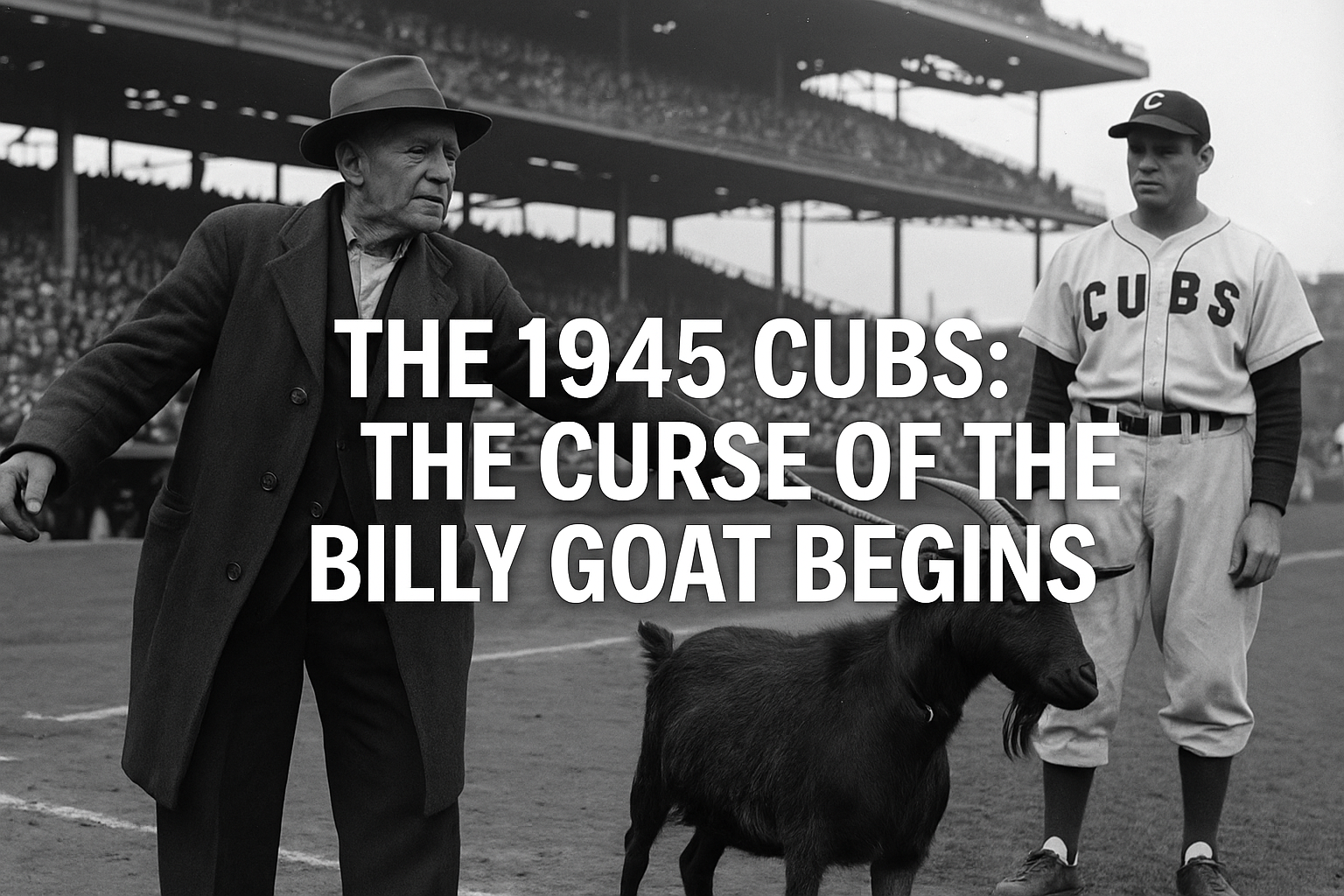
It was the 1945 MLB season, and the Chicago Cubs were contenders for the National League pennant. This was a critical moment after a long journey, considering the hurdles they had faced for decades. Despite reaching the World Series, what followed was an infamous event etched into baseball folklore: the “Curse of the Billy Goat.” With numerous twists, this tale explains why the Cubs didn’t win another championship until 2016. The entire saga surrounding the 1945 Cubs punctuates an era filled with intriguing stories, mysterious jinxes, and unwavering sports passion. We delve into the circumstances leading to 1945 and how one simple act spiraling into an enduring legend claimed the Cubs’ destiny. An exploration into this year serves as a nod to the mysterious intersection of sports achievement, superstition, and the astonishing power of legend.
The Cubs entered the 1945 season against the backdrop of global commotion. World War II had left its mark on baseball with an unsettled atmosphere, as many players served overseas. Despite this tumultuous time, the Cubs succeeded through a lineup of talent and tenacity. Their quests and sorrows in 1945, contrasted with unprecedented superstitions, illustrate a captivating year and the profound influence of good myths and legends over sports fans and teams. This article unmasks the complex tapestry of fortune, skill, and destiny that intertwined to script the unforgettable narrative known as the Curse of the Billy Goat.
The Path to the 1945 Season
Before discussing the peculiarities of the 1945 saga, it’s crucial to understand the landscape surrounding the Chicago Cubs leading up to that year. The early 20th century saw the Cubs as one of the dominant forces in baseball, having won several pennants and capturing the World Series titles in 1907 and 1908. This early success set high expectations, yet the subsequent decades were a long, challenging path. Post-World War I, the Cubs faced setbacks attributable to evolving team dynamics, competition intensity, and strategic missteps, with periods of mediocrity overshadowing hope and progress.
Baseball experienced its own recruits and drafts during World War II, as players left for military service. This situation weakened many teams, resulting in rosters filled with older veterans and younger, inexperienced players. For the Cubs, this odd period inadvertently provided a slight competitive edge, as their roster sustained relatively less disruption compared to other teams. Their persistence in dynamics filed their way to becoming a poignant contender once more.
1945 Chicago Cubs: The Season Unfolds
1945 dawned with optimism as the Cubs aspired to reverse their misfortunes on the field. The team was powered by several memorable performances throughout the season. Under the leadership of manager Charlie Grimm, the Cubs exhibited commendable resilience and collective determination. Key players such as pitcher Hank Wyse and infielder Stan Hack became critical components of the team’s rallying force. Hank Wyse, full of tenacity, consolidated the pitching lineup through effective strategies on the mound that year.
Stan Hack, pursuing competitions as a third basemen, stood as an offensive powerhouse. He laid a solid batting foundation upon its set, facilitating essential scores that spurred the team on. The evident chemistry extended across the field, with other players showing potential for greatness. The Cubs posted a formidable record, with their consistent play catapulting them to the National League pennant. Triumphantly, the fans witnessed their beloved team surge forward with palpable vigor.
The Curse: Where Myth Meets Reality
Despite prejudices about superstitions in sports, the famous Curse of the Billy Goat roots itself in an incident that swiftly captured imaginations. William “Billy” Sianis, a local tavern owner, endeavored to enter Game 4 of the World Series with his pet goat, Murphy. The confrontation at Wrigley Field was peculiar from the moment security denied entry for Sianis’s goat, unwilling to permit the animal amid loyal fans. “The goat stinks,” was the infamous reason given by ballpark officials.
In an act of frustration, Sianis retorted with a curse that resonated loudly: “Them Cubs, they ain’t gonna win no more.” This expression not only foretold ominous doom, but it foreshadowed a fate wrapped within myths. Judging the situation through these words meant interpreting intersections amidst baseball lore and seemingly unlikely incidents that persist through generations beyond commonplace conceptions.
The supposed curse would soon define Chicago’s baseball culture, as the Cubs battled both competitors and phantom obstacles elicited by legend. Despite an earnest fight, the Cubs ultimately lost the 1945 World Series to the Detroit Tigers in seven games. The fateful entanglement between Sianis’s words and Cubs’ persistent failures thus became a staple narrative against all odds in future endeavors.
Life After 1945: The Lingering Legend
Post-1945, the Cubs found it increasingly difficult to secure victory in critical seasons, perpetually battling an inexplicable obstruction. The concept of the curse grew within city circles, becoming a constant reminder of dashed hopes. The team’s struggles across decades only fueled wilder accounts of the curse’s credibility beyond mere fiction. This sense of fate became a popular explanation for misfortunes that lacked concrete sporting justifications.
With each failure, stories of appeasing rituals or superstitions emerged within fan stories and tabloids. Through home games and away challenges alike, a lingering question overshadowed skilled sportsmanship within the team, leaving these players grappling amid myth-laden environments. Attempts to remove the curse, such as leading goats around Wrigley Field, entered mythical history. Some even equated events beyond baseball with eternal jinxes transcending human control.
Generations deeply invested themselves in these narratives, nurturing relevance that inspired numerous anecdotes both humorous and contemplative. The legends surrounding the 1945 Cubs embody a broader cultural fascination with the supernatural coexistence of myth and sports, bearing huge weight over reality.
Breaking the Curse
Fast forwarding to 2016, after years fraught with anticipation and record-breaking, the Cubs triumphantly claimed the World Series title, corroding dark mythologies entwined with historic occurrences. When the Cubs overcame the Cleveland Indians in a thrilling Game 7, this remarkable triumph invoked catharsis amongst supporters spanning generations. Past paranoia around curses relaxed as the team rejuvenated itself, allowing fans ground to celebrate renewed hope and faith.
This glorious victory appeared almost surreal, uniting fans and players in rapturous celebration. Epically buried was the legacy that had hung over the franchise for more than 71 years. The history behind 1945, integrating aspects of myth and legitimacy, found repose within clubs’ shattered history of curses and predicaments. Their win ushered fresh beginnings, challenging psychologically strained eras past.
Conclusion
The story of the 1945 Cubs isn’t merely about sporting loss; it’s an intertwined tale of overcoming adversities and confronting embedded myths through shared belief. It offers numerous insights into how humor, myth, supernatural beliefs, and sports merge to propagate enduring narratives within human cultures. The juxtaposition between the 1945 struggles and the curse’s eventual dismantling in 2016, presents a rich weave of interconnected histories speckled with despair and hope.
Understanding its legend unravels more than just unwanted ill-luck, featuring an inheritance of dreams, defeats, and supernovation that accompanied each of the 108 years awaiting victory. The facades from failure traversed through engaging narratives resembling human interaction’s profoundest curiosities. The legacy drew forth inspiration as storytellers passed along tales inspiring future contenders.
The Chicago Cubs’ history, accentuated by the Curse of the Billy Goat, asks readers to recognize the mystics of sports that evoke such passionfilled stories. It underscores our eternal essence to strengthen through unique cultural folklore, elevating material struggles into meaningful, memorable institutions. Thus, the Cubs’ glorious journey, building forward from 1945, illustrates not just persevered wound-healing but also an epic renaissance for enthusiasts everywhere.
“`htmlFrequently Asked Questions
1. What exactly is the “Curse of the Billy Goat” all about?
The “Curse of the Billy Goat” is one of the most infamous sports curses, particularly in baseball folklore, and it revolves around an incident that took place during the 1945 World Series. The Chicago Cubs were playing well; they’d been through a grueling season and finally secured their spot in the World Series against the Detroit Tigers. However, during Game 4 at Wrigley Field, a tavern owner named Billy Sianis and his pet goat, Murphy, became central to the story. Sianis had brought the goat to the game, as he had done earlier in the season without issue. But this time, the Cubs’ management ejected them both, citing that the goat’s smell was bothering other fans. Insulted by their dismissal, Sianis allegedly placed a curse on the team, declaring, “Them Cubs, they ain’t gonna win no more.” The phrase marked the beginning of a 71-year championship drought for the Cubs until they finally broke the curse by winning the World Series in 2016. This curse gained notoriety over the years as the Cubs consistently fell short of winning the championship despite having numerous opportunities. Each Cubs’ failure was attributed to this legendary curse, cementing it in the team’s history.
2. Why was the 1945 season significant for the Chicago Cubs?
The 1945 season was significant for the Chicago Cubs because it represented one of the last times, until 2016, that they reached the World Series. The Cubs showcased remarkable talent and resilience throughout that season, battling through the challenges and overcoming competitors to clinch the National League pennant. This achievement set the stage for a hopeful World Series contest against the Detroit Tigers. The Cubs had not been in a World Series since the early 1900s, making their 1945 World Series appearance especially thrilling for fans. Unfortunately, optimism soon turned to frustration as the infamous “Curse of the Billy Goat” took roots during this championship run, leading to a long period of heartbreak for Cubs supporters. Thus, while 1945 was notable for the team’s success and determination, it also marked the beginning of a decades-long drought for championship gold, making the season a bittersweet memory for Baseball’s famous “lovable losers.”
3. How did the “Curse of the Billy Goat” impact the Cubs’ performance in the years following the 1945 season?
Following the 1945 season, the Chicago Cubs’ performance was inconsistent and frequently disappointing, and many believed the “Curse of the Billy Goat” was to blame. Initially, it seemed improbable that a mere curse could influence a professional sports team’s success, but the Cubs’ repeated failures on the field turned skeptics into believers over time. After the 1945 World Series, the Cubs experienced numerous near-misses. They endured heartbreaks with critical errors, devastating game losses, and unfortunate incidents that could have turned their fate around. It wasn’t just fans attributing these mishaps to the curse; newspaper headlines and player interviews often referenced the notorious goat. Whether it was poor performance, unlucky bounces, or simple mediocrity, the narrative of the curse became a cultural phenomenon that lasted for generations, almost embodying a psychological barrier. The curse became a sardonic rallying cry and a source of wry humor, but also a weight that both the team and their community carried until the curse was eventually broken. This persistent narrative means the curse didn’t just affect results; it shaped how the Cubs and their fans saw themselves and how others saw them, casting a long shadow over seven decades of baseball history.
4. Were there any attempts to break the curse before the Cubs won the World Series in 2016?
Indeed, many attempts were made over the years to break the “Curse of the Billy Goat,” each more creative and bizarre than the last. These efforts featured a mix of superstitious rituals and public shows of goodwill aimed at appeasing the curse’s mysterious stipulations. For instance, in 1973, Billy Sianis’s nephew brought a goat to Wrigley Field and attempted to publicly lift the curse, proclaiming that his uncle had forgiven the Cubs, but the team continued to struggle. In another instance, a group of die-hard Cubs fans attempted to sprinkle holy water on the field and donned priestly vestments in a humorous and earnest effort at breaking the curse. More elaborate events included the inviting of goats to significant games and even flying the goats’ descendants to Chicago. The most famous of these attempts came in the late 1990s when Sam Sianis, Billy’s nephew, again tried to lift the curse by bringing a goat to Cubs games as a symbolic gesture. Nevertheless, despite these spirited and sometimes comical attempts, success evaded the Cubs until 2016 when they won the World Series, officially putting this folklore to rest.
5. How did the curse and its eventual end in 2016 affect Cubs fans?
The “Curse of the Billy Goat” became a deeply ingrained part of the Chicago Cubs fan experience over more than seven decades. For fans, the curse was, in many ways, a measure of endurance, patience, and loyalty. They persevered through countless losing seasons, maintaining hope despite very little evidence that success would come. The specter of the curse united generations of Cubs fans in a shared sense of exasperation and comic resolve. Its eventual end in 2016 dramatically shifted the emotional landscape for Cubs fans. It was as if a heavy burden had been lifted. The victory parade that followed the Cubs’ World Series win drew an estimated five million people, pouring into the city to celebrate not just a championship but a release from a long-standing narrative of defeat. Cubs fans around the world shed tears of joy and disbelief; bars filled with strangers hugging with camaraderie, and long-time followers who had waited their entire lives for victory celebrated in a community catharsis. The archival ghost of the curse and the relief experienced across the Cubs’ fanbase showcased the power and passion that sports folklore and tradition can inspire.
“`