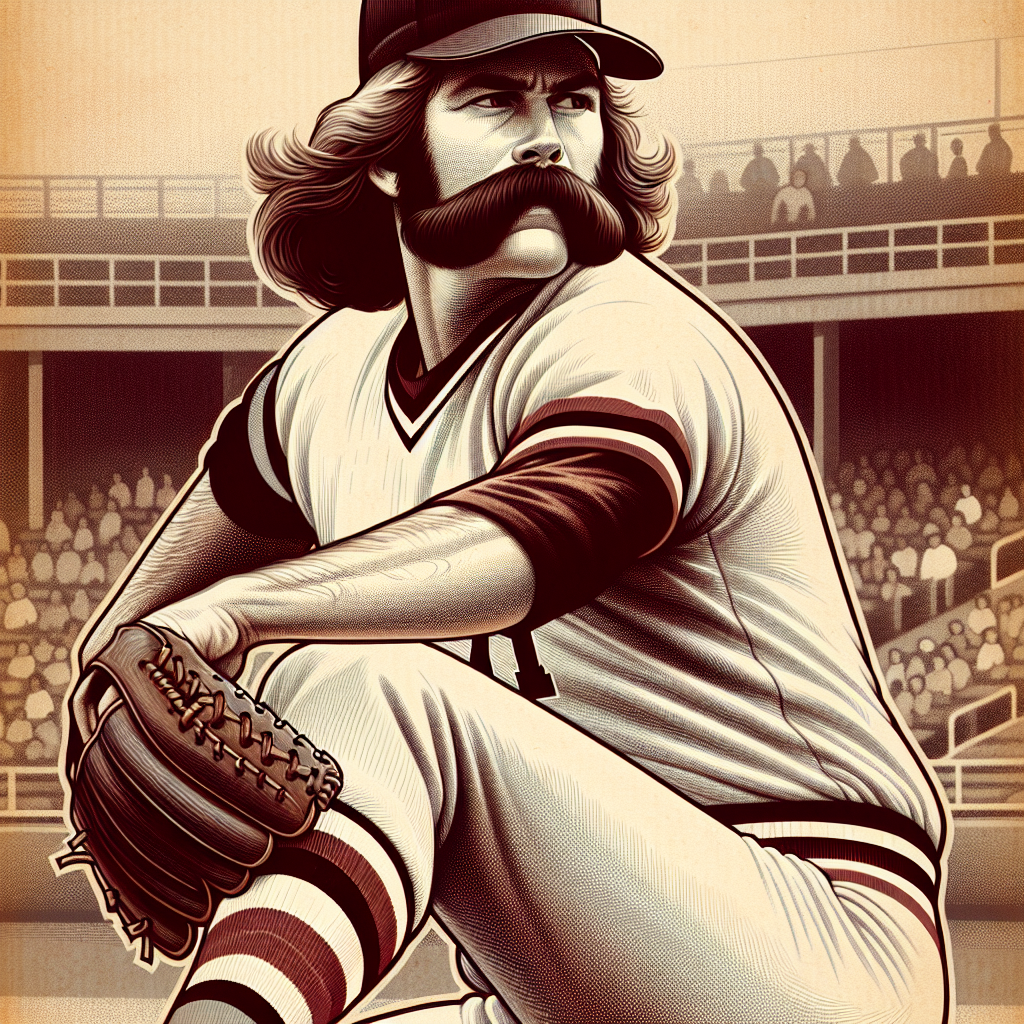
The world of baseball is storied with legendary players whose impact went beyond their exceptional skills. Among these iconic figures, Roland Glen Fingers, better known as Rollie Fingers, stands out as a pioneer in the bullpen and a master of the save. With his unique mustache and impeccable talent, Fingers not only redefined the role of relief pitchers but also left an indelible mark on the history of the game. This article dives deep into the fascinating career of Rollie Fingers, exploring his rise to stardom, key achievements, and lasting legacy.
From the Minors to the Major Leagues
Born on August 25, 1946, in Steubenville, Ohio, Rollie Fingers’ journey to baseball greatness began in the minor leagues. His family moved to California when he was young, where he discovered his love for baseball. Fingers was originally scouted and signed by the Kansas City Athletics in 1964, marking the start of a promising career.
Fingers spent several years honing his skills in the minors before making his Major League debut with the Athletics, who had moved to Oakland by that time, on September 15, 1968. The initial years were challenging as he struggled to find his niche, fluctuating between starting and relieving roles. However, it was his transition into a full-time relief pitcher during the early 1970s that saw Fingers truly come into his own.
Under the guidance of manager Dick Williams, Fingers embraced his new role with vigor. His signature handlebar mustache, grown as part of an Athletics’ promotion, began to turn heads, but it was his performance that left a lasting impression. By the early 1970s, Fingers had established himself as a reliable and dominant reliever, setting the stage for what would become a Hall of Fame career.
Dominance with the Oakland Athletics
The early 1970s were a golden era for Rollie Fingers and the Oakland Athletics. The team, known for its charismatic personalities and superb talent, enjoyed a string of successes that would see them dominate Major League Baseball. A critical component of their success was their bullpen, anchored by Rollie Fingers.
From 1972 to 1974, the Athletics captured three consecutive World Series titles, with Fingers playing a pivotal role in each championship run. His ability to deliver in high-pressure situations earned him the reputation of being one of the most clutch relievers in the game.
One of the most memorable moments of his career came during the 1972 World Series against the Cincinnati Reds. Fingers saved two games and won another, earning him the Series MVP honors. His performance was nothing short of spectacular, and it solidified his status as one of the premier relief pitchers in baseball.
During his time with the Athletics, Rollie Fingers’ contributions went beyond just saves and wins. He redefined what it meant to be a relief pitcher, making it an essential part of a team’s success. His impact was not just felt in Oakland but reverberated throughout Major League Baseball as other teams began to realize the importance of a strong bullpen.
Transition to the San Diego Padres
In 1977, Rollie Fingers’ association with the Oakland Athletics came to an end, marking the beginning of a new chapter in his career. He was traded to the San Diego Padres in a blockbuster deal that would see his influence stretch across the National League.
Joining the Padres represented a shift both for Fingers and the team. San Diego had not enjoyed significant success and Fingers’ arrival brought hope and excitement. Despite his new surroundings, Fingers continued to perform at a high level, bringing a veteran presence to the Padres’ bullpen.
During his four seasons with the Padres, Fingers delivered consistently strong performances. In 1977, he led the National League in saves with 35, setting a new standard for future relievers. His influence was evident not just in his statistics but also in his leadership both on and off the field.
Fingers’ time in San Diego was also notable for his work in mentoring younger pitchers and contributing to the culture of the ballclub. While the Padres did not achieve significant postseason success during his tenure, Fingers’ presence undoubtedly left a lasting mark. His performance earned him the Rolaids Relief Man of the Year Award in 1977 and 1978, cementing his status as a dominant force in the bullpen.

The Brewers and the Cy Young Award
Another milestone in Rollie Fingers’ illustrious career came in 1981 when he was traded to the Milwaukee Brewers. The Brewers were in need of a reliable closer, and Fingers was the perfect fit. His arrival was transformative, bringing stability and excellence to the Brewers’ bullpen.
The 1981 season proved to be one of the most remarkable in Fingers’ career. Despite the season being cut short by a players’ strike, he managed to lead the league in saves with 28 and posted an outstanding ERA of 1.04. His dominance was undeniable, and he was rewarded with both the American League MVP and Cy Young Awards. This rare double achievement underscored his extraordinary impact on the game.
Rollie Fingers continued to be a key player for the Brewers over the next few seasons. In 1982, he helped guide the team to its first-ever appearance in the World Series. Although the Brewers fell short against the St. Louis Cardinals, Fingers’ contributions were instrumental in their journey, even though he couldn’t pitch in the final due to an injury.
His achievements with the Brewers solidified his legacy as one of the greatest relief pitchers in history. Fingers demonstrated that his success was not limited to one team or one league, but that he could excel wherever he went. His time with the Brewers was a fitting penultimate chapter in a career that had already seen so many high points.
Hall of Fame and Lasting Legacy
Rollie Fingers retired from Major League Baseball in 1985, leaving behind a storied career that spanned 17 seasons. His contributions to the game were recognized almost immediately, as he was inducted into the Baseball Hall of Fame in 1992, his second year of eligibility. This honor solidified his position among the pantheon of baseball greats.
Fingers’ legacy is multi-faceted. On the field, he was one of the first relief pitchers to be utilized primarily as a closer, setting the standard for future generations. His career total of 341 saves was a record at the time of his retirement and he remains among the all-time leaders in this category.
Off the field, Rollie’s distinctive handlebar mustache became an iconic symbol of the 1970s and ‘80s baseball culture. It was more than just facial hair; it represented the colorful and charismatic nature of the game during that era. To this day, Fingers’ mustache is as recognizable as his pitching achievements.
Beyond the numbers and the accolades, Rollie Fingers left an indelible influence on the role of relief pitchers. His ability to come into games and consistently shut down opposing teams under pressure redefined the expectations and strategies related to bullpens. This opened the door for future specialists and changed the way managers approached late-game situations.
Remembering Rollie Fingers
Remembering Rollie Fingers goes beyond the stats and the awards. It’s about understanding his place within the broader narrative of baseball history. His career serves as a testament to the evolution of the game and the importance of adaptability, perseverance, and performance in high-stakes situations.
Fans and analysts often reflect on specific memories that encapsulate his greatness. Among these is his performance in the 1974 World Series, where he pitched an extraordinary four games for the A’s, showcasing his dominance. Another fond memory for many is his jovial presence at All-Star games, where his personality shone brightly among baseball’s elite.
Rollie’s work beyond the diamond, including his endeavors to coach and inspire younger pitchers, helps to complete the picture of a man who lived and breathed baseball. His presence at charity events and baseball functions continues to make an impact, demonstrating his enduring connection to the sport.
In today’s baseball landscape, the role of the closer is well-defined and highly valued, thanks in part to pioneers like Rollie Fingers. As new generations of players and fans look back at the history of the sport, they can gain a richer appreciation for the contributions of players like him who helped to shape the modern game.
Conclusion: The Eternal Icon
Rollie Fingers is more than just a name from the past; he is an eternal icon in the world of baseball. From his beginnings in the minor leagues to his triumphant saves in Major League Baseball, Fingers exemplified excellence, dedication, and innovation. His legacy continues to influence the game today, as managers and players alike recognize the significant role he played in elevating the importance of the bullpen.
Whether it’s through his numerous accolades, his signature mustache, or his influence on the position of the closer, Rollie Fingers remains a beloved figure in the sport. He is remembered not just for his saves but for the way he approached the game with both seriousness and joy. His story serves as an inspiration for aspiring pitchers and a reminder of the rich history of baseball.
Rollie Fingers’ career is a testament to what can be achieved through talent, hard work, and a little bit of flair. As fans continue to celebrate the history of baseball, his name will undoubtedly come up again and again as one of the true greats of the game.