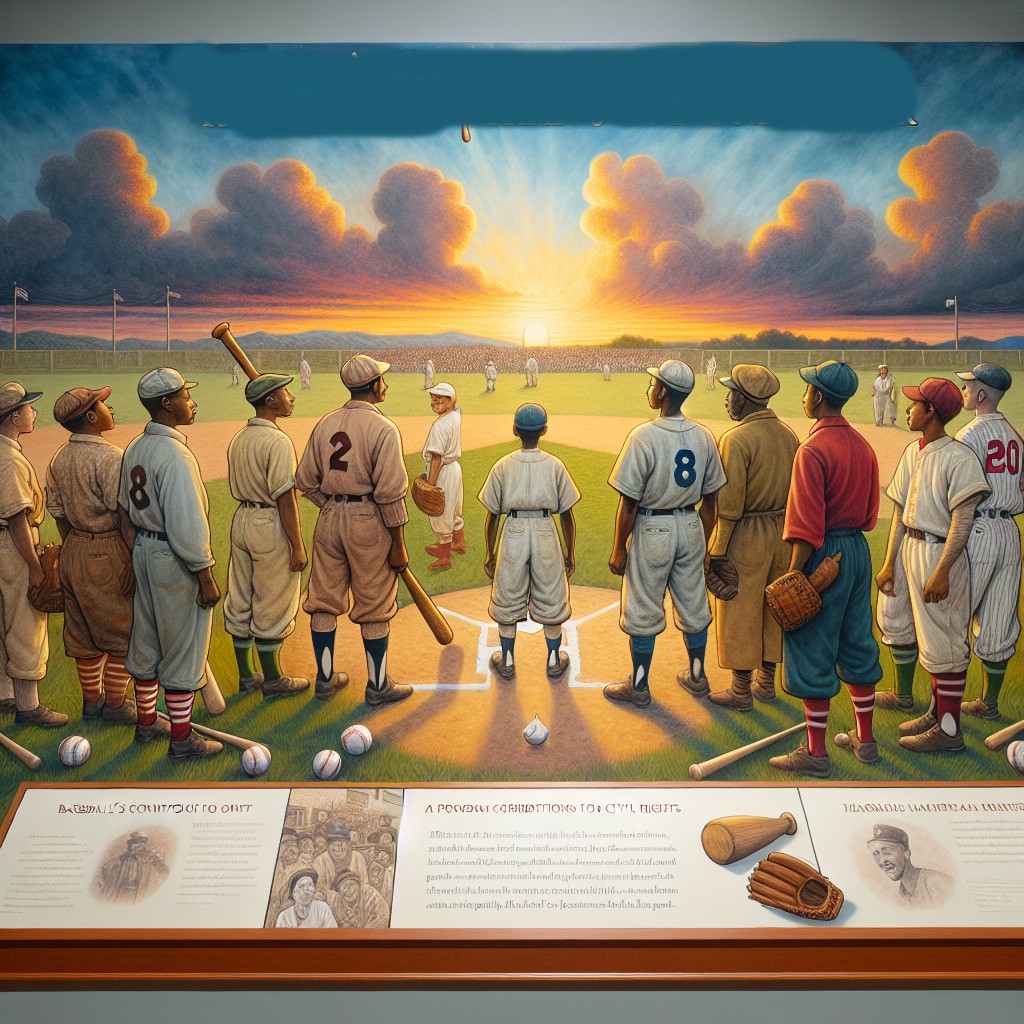
Baseball, often referred to as America’s pastime, has played a critical role in shaping society and reflecting social issues throughout history. This beloved sport has a deeply woven history with the civil rights movement in America. While many are familiar with Jackie Robinson breaking the baseball color line in 1947, the intersection of baseball and civil rights is far richer and more intricate. This article delves into the impact baseball has had beyond the well-known stories, highlighting the sport’s contributions to social change and its role as a platform for advocating equality.
Baseball’s Early Struggles with Race
In the early days, baseball was segregated, with talented African American players banned from Major League Baseball (MLB). Despite their exclusion from the major leagues, black players found success in the Negro Leagues, which celebrated their talents and laid groundwork for eventual inclusion. Founded in the early 20th century, the Negro Leagues were more than just a collection of teams; they were an institution that challenged societal norms and provided African Americans with a source of pride and cultural identity.
The Negro Leagues served as a beacon of hope and resilience. Players like Satchel Paige and Josh Gibson gained fame and admiration, breaking stereotypes and filling stadiums with people who came to witness their brilliance on the field. The success of the Negro Leagues not only demonstrated that African Americans could excel in sports, but also highlighted the talents that were being unjustly overlooked in the major leagues. This established a foundation for future breakthroughs in civil rights within and beyond the realm of sports.
Jackie Robinson and the Breaking of the Color Barrier
Jackie Robinson’s breaking of the color barrier in 1947 is perhaps the most recognized achievement in baseball’s contribution to civil rights. However, Robinson’s impact extended far beyond the baseball diamond. When Branch Rickey, an executive with the Brooklyn Dodgers, signed Robinson, the move was a calculated and courageous step towards racial equality. This decision was not just about integrating the Dodgers, but about shaping public perception and fostering social change.
Robinson endured immense racial hostility, both on and off the field. His ability to rise above such adversity with grace and exceptional talent became a national story that inspired millions. The courage he displayed and the success he achieved challenged the deeply ingrained stereotypes about African American capabilities and character. Robinson’s presence in MLB led to wider acceptance and respect for African Americans in diverse fields, by demonstrating the absurdity of racial segregation. Furthermore, it paved the way for more African American players, fueling integration across other sports and eventually aspects of society.
Baseball’s Influence on the Civil Rights Movement
The significance of baseball in the civil rights movement extended beyond the individual contributions of players like Jackie Robinson. The platform baseball provided was instrumental in spreading the message of equality and unity. In the 1950s and 1960s, several baseball players emerged as influential activists, utilizing their fame to champion civil rights causes.
Figures such as Hank Aaron and Curt Flood stood at the forefront of these efforts, often putting their careers at risk. Aaron, who would eventually break Babe Ruth’s home run record, faced considerable racial threats and hostility but remained steadfast in his pursuit of excellence and equality. His journey inspired countless others to pursue their dreams despite societal barriers. Meanwhile, Curt Flood’s challenge to baseball’s reserve clause set a precedent for player’s rights that transcended racial boundaries, impacting labor rights across all sports.
Players’ involvement in activism sent powerful messages to both fans and broader society, emphasizing the importance of civil rights and pushing for systemic change. The influence wielded by these athletes not only informed public opinion but also mobilized collective action towards social justice.
Women in Baseball and Gender Equality
Baseball’s contribution to equal rights isn’t limited to race; the sport has also had a significant impact on gender equality. While baseball has traditionally been a male-dominated sport, women have nonetheless made important contributions. During World War II, with many male players serving in the military, the All-American Girls Professional Baseball League (AAGPBL) emerged, offering women a rare chance to play professional baseball.
The success of the league demonstrated not only women’s capability to play at a high level but also shifted public perception of women in sports. Although the league disbanded in the 1950s, it laid vital groundwork for the women’s rights movement in sports, eventually leading to greater opportunities and recognition through legislation such as Title IX.
In contemporary baseball, female players, managers, and executives continue to break new ground, further solidifying the sport’s influence on gender equality in athletics and beyond. Women like Kim Ng, who became the first female general manager in Major League Baseball history, challenge the status quo and inspire future generations to strive for equal representation in sports.
Baseball and Cultural Diversity
Baseball has also served as a pioneer in welcoming cultural diversity, acting as a bridge between different communities and fostering inclusion. The MLB has embraced players from around the globe, notably from Latin America and Asia, contributing to a rich tapestry of cultural exchange within the sport.
Latino players like Roberto Clemente not only impressed with their athletic prowess but also served as cultural ambassadors, spotlighting the barriers faced by immigrant communities and advocating for cultural inclusion. Clemente was particularly vocal about issues of poverty and racial injustice, solidifying his legacy as both a baseball legend and a humanitarian.
The increasing presence of diverse cultures in baseball reflects broader societal trends towards inclusion and multiculturalism. By supporting diverse players on the field and bringing different communities into the sphere of American sports, baseball has reinforced the value of cultural diversity and mutual respect.
The Power of Baseball to Unite
Baseball’s power to unite people from various backgrounds cannot be overstated. As a sport that resonates deeply with American culture, baseball has the unique ability to transcend racial, social, and cultural barriers, fostering a sense of community and shared experience. The communal spirit of baseball is evident in local communities across the country, where people from all walks of life gather to cheer for their teams.
Major events such as the annual Jackie Robinson Day, where players across the league wear his iconic number 42, remind fans of the importance of inclusion and equality. This celebration is a testament to the lasting impact baseball has on promoting civil rights, ensuring that the lessons from the past continue to inform the present and future.
As we continue to grapple with issues of race and equality, baseball provides not only a reflection of societal progress but also a reminder of the ongoing journey towards justice. Through its history and continued evolution, baseball exemplifies the potential of sports to act as a powerful vehicle for social change, fostering hope and unity in the collective dream for equality.
Conclusion: Baseball’s Enduring Legacy
Baseball’s contributions to civil rights extend far beyond the remarkable legacy of Jackie Robinson. From the resilience and brilliance of Negro League players to current challenges and successes in race, gender, and cultural equity, baseball serves as a microcosm of societal change and the continuous struggle for justice. The sport’s role in advocating for equality is deeply intertwined with its history and has reinforced the message that barriers, whether racial, gender, or cultural, can and must be overcome.
As an enduring American tradition, baseball continues to reflect societal values and influence attitudes towards race, gender, and diversity. Its impact on civil rights highlights the power of sport to foster social progress, offering valuable lessons and inspiration to successive generations. By acknowledging this rich and multi-faceted history, baseball enthusiasts and historians alike can appreciate the sport’s profound influence on society and its unwavering commitment to the ideals of equality and fairness.
Frequently Asked Questions
1. How did baseball contribute to the civil rights movement beyond the integration of Jackie Robinson?
Baseball’s role in the civil rights movement extends far beyond Jackie Robinson’s breaking of the color barrier in 1947. After Robinson’s debut, other African American and Afro-Latino players such as Larry Doby, Satchel Paige, and Minnie Miñoso followed, each experiencing and confronting racial prejudice in their own ways. Their efforts on and off the field helped challenge segregation and promote racial equality. Baseball stadiums became some of the first integrated public spaces, setting a precedent for other sports and public institutions. Additionally, baseball games were often a site where racial tensions played out, forcing Americans to confront these issues directly every time they watched their favorite teams compete.
2. What were some key milestones in baseball that helped advance civil rights following Jackie Robinson’s debut?
Beyond Jackie Robinson, several crucial developments in baseball helped push forward the civil rights agenda. The inclusion of African American players into the All-Star games in the late 1940s and 1950s began to break down barriers. Players like Roy Campanella and Hank Aaron achieved great success, challenging stereotypes about what African Americans could accomplish. More than just their achievements, these players endured racist taunts and segregation, standing as symbols of resilience. Stadiums eventually integrated ahead of the courts, pushing the nation towards the desegregation of public facilities. The courage of these players and the gradual changes within baseball mirrored and supported the ongoing civil rights movement.
3. In what ways did African American baseball players contribute to the fight for civil rights off the field?
Many African American baseball players were active in the broader civil rights movement. Jackie Robinson, for example, became a vocal advocate for racial equality and civil rights, engaging in politics and working with various civil rights organizations. Similarly, Curt Flood’s challenge to baseball’s reserve clause was a pivotal act that gained the support of civil rights activists, as it touched on broader themes of labor rights and personal freedom. Engaging with influential leaders like Martin Luther King Jr. and leveraging their fame, these players helped bring national attention to the struggle for civil rights while also providing role models for young African Americans.
4. How did the integration of Major League Baseball impact Negro Leagues and other African American institutions?
The integration of Major League Baseball had a bittersweet impact on Negro Leagues and African American communities. On one hand, it was a triumph for civil rights, providing opportunities for black players to compete at the highest level. However, it also led to the decline of the Negro Leagues since many of its star players were recruited by the major leagues, and many African American fans began attending integrated games instead. This loss hurt black-owned businesses and social structures that had developed around the Negro Leagues. In a broader context, it demonstrated the complexity of integrating previously segregated institutions—a reminder of both progress and the cultural costs associated with it.
5. What role did fan support and community attitudes play in advancing racial equality through baseball?
Fan support and community attitudes have been crucial in advancing racial equality in baseball. The embrace of players like Jackie Robinson by both black and white fans demonstrated baseball’s potential as a unifying force. Fans sometimes pressured teams to sign black athletes, recognizing their talent and demanding change. Community support helped players withstand abusive treatment and empowered them to speak out against injustice. Baseball owners and league executives, responding to public opinion and evolving social norms, became more inclined to integrate teams. This pressure from the ground up was reflected in broader societal changes, underscoring the influence of public sentiment in driving civil rights progress within and beyond the sport.