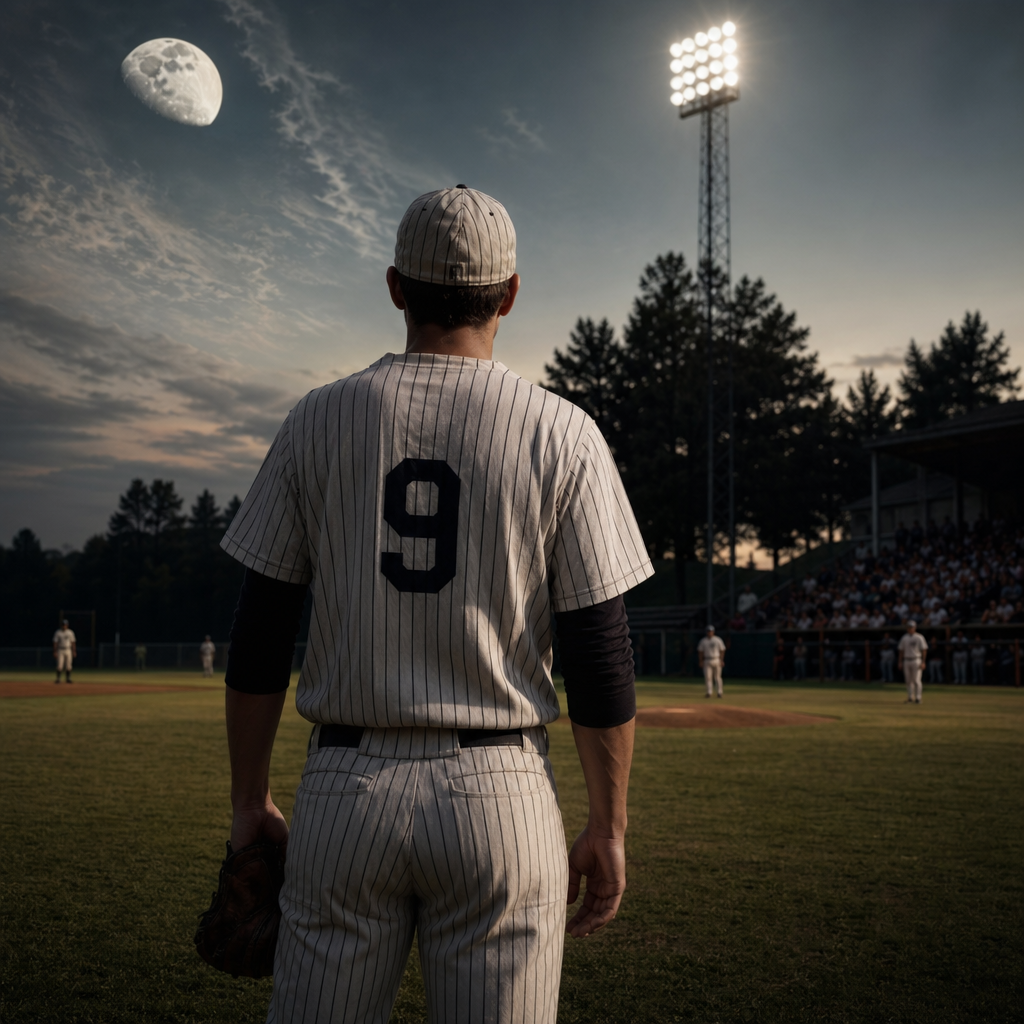
Baseball and the supernatural have met on screen for decades, creating a strange but durable corner of sports cinema where pennant races share space with ghosts, miracles, curses, and impossible second chances. In this hub article, “miscellaneous” does not mean minor; it refers to the broad cluster of films, themes, and storytelling devices that fall outside straightforward baseball realism yet remain central to how cinema imagines the game. I have worked through these films as both a baseball viewer and a film analyst, and the pattern is clear: when filmmakers want to talk about memory, regret, fate, belief, family, or national myth, baseball becomes an unusually effective stage. The diamond is orderly, ritualized, and ruled by numbers, so any supernatural intrusion feels vivid and meaningful. That contrast is exactly why these movies endure.
To define the subject clearly, supernatural baseball cinema includes ghost stories, angel narratives, magical interventions, prophetic visions, enchanted talent, time-bending fantasy, and curse-driven plots. Some films treat the uncanny literally, with visible spirits or divine messengers. Others leave room for ambiguity, presenting events that may be miracles, coincidences, or the emotional projections of characters under pressure. Either way, the supernatural element changes the stakes. A game-winning hit no longer represents only athletic success; it can symbolize reconciliation with the dead, release from guilt, restoration of a community, or faith in something larger than measurable skill. This is why the category matters within baseball in literature and film: it reveals how often the sport functions as cultural mythology rather than simple competition.
For readers exploring baseball in literature and film more broadly, this page serves as a hub for the unusual edge cases that connect sports movies to fantasy, folklore, religion, horror, and metaphysical drama. These films answer recurring questions directly: Why is baseball so often linked to ghosts? Why do miracle plots fit the sport better than they fit basketball or football? Why do cursed teams and haunted ballparks feel believable even to skeptical viewers? The answer lies in the game’s pace and symbolic density. Baseball allows pauses, conversations, signs, and inherited rituals. It also carries generational memory more visibly than most sports. Uniforms, parks, scorecards, and statistics make the past feel present, so cinema can easily invite the dead, the divine, or the impossible into the frame without breaking the audience’s emotional trust.
Another reason this subtopic deserves comprehensive treatment is that supernatural baseball films often reach viewers who do not usually follow baseball movies. Fantasy and afterlife stories widen the audience. Religious themes attract some viewers; child-centered miracle stories attract families; darker curse narratives interest horror fans; nostalgic ghost dramas appeal to prestige-film audiences. In practical terms, that means this miscellaneous hub connects multiple neighboring articles across the larger topic, including baseball and memory, baseball and religion, baseball and childhood, baseball and Americana, and baseball as national myth. If you are building a reading or viewing path through the field, these unusual films are not side notes. They are connective tissue, showing how baseball cinema absorbs broader cultural anxieties and hopes while preserving the recognizable sounds, spaces, and rhythms of the game.
Why baseball invites supernatural storytelling
Baseball is uniquely suited to supernatural cinema because its structure already feels ceremonial. Every game repeats a familiar sequence: lineup cards, first pitch, innings, dugout rituals, signs, mound visits, and the final recording of results. Filmmakers use that ritual quality as a gateway to metaphysical themes. In my experience reviewing these movies, the supernatural rarely appears just to create spectacle. It appears because baseball offers stillness. A batter can stand alone at the plate while the entire story pauses. A father and child can talk in the outfield at dusk. A ghost can emerge from corn, fog, or stadium light because the sport naturally allows moments of waiting. That waiting gives emotion room to accumulate.
There is also a historical reason. Baseball is deeply archival. Fans speak in dates, records, eras, and lineages. A team is never only its current roster; it is also its dead stars, old parks, legendary collapses, and inherited superstitions. Cinema turns that archival habit into plot. A haunting in a baseball film is usually not random. It is tied to unfinished history. The spirit wants justice, recognition, forgiveness, or one more chance to be seen. Even when the movie is light in tone, the supernatural device usually carries a serious idea: the past has claims on the present. That idea aligns perfectly with baseball culture, where old box scores still shape contemporary identity.
Ghosts, memory, and unfinished business
The most famous example is Field of Dreams (1989), which remains the defining baseball ghost film because it fuses family melodrama, rural fantasy, and national nostalgia with unusual confidence. The ghosts on the field are not horror figures. They are embodiments of lost possibility: banned players, interrupted careers, estranged fathers, and a vanished pastoral America. The supernatural premise works because it solves an emotional problem rather than a competitive one. Ray Kinsella does not build a field to win games. He builds it to answer a call he does not fully understand, and the answer turns out to involve grief, reconciliation, and belief. The famous final invitation to “have a catch” succeeds because the film spends its supernatural capital on emotional truth.
Other ghostly baseball narratives use similar machinery on smaller scales. Spirits in these films usually stand for memory made visible. A dead player can return to finish something left incomplete; a haunted park can preserve communal identity against commercial erasure; an apparition can guide a living character toward moral clarity. What matters is not whether the audience literally believes in ghosts. What matters is that baseball spaces feel capable of holding residue. Empty bleachers, old scoreboards, and sunset diamonds already look like places where time folds back on itself. That visual language allows cinema to stage mourning without heavy exposition.
These stories also reveal a key distinction within supernatural baseball movies: some ghosts demand action, while others offer permission. Action-driven ghost stories use mystery and quest structure. The living protagonist must investigate, travel, decode clues, or restore a broken bond. Permission-driven stories are gentler. The apparition allows a character to feel, remember, or forgive. Both forms are common because baseball audiences accept sentiment when it is grounded in place, ritual, and recognizable detail. A spectral shortstop is easier to accept when the seams on the ball, the dirt on the infield, and the cadence of the announcer all feel exact.
Angels, miracles, and divine intervention
If ghost stories in baseball cinema are about the claims of the past, angel stories are usually about hope under conditions of powerlessness. Angels in the Outfield is the clearest example. Its premise is openly miraculous, yet the emotional engine is earthly: a child wants stability, belonging, and evidence that despair is not permanent. The baseball team becomes the public arena where private longing gets translated into visible signs. This is an important pattern across miracle-based baseball films. The supernatural force often helps a team, but the real narrative target is not the standings. It is the restoration of trust, family, or communal morale.
These films succeed when they maintain limits. Miracles that solve everything become dramatically empty. The stronger entries establish rules, costs, or uncertainty. Sometimes divine help cannot alter every outcome. Sometimes it prompts effort rather than replacing it. Sometimes the miracle is less about winning than about changing how characters see one another. That restraint matters because baseball itself values earned results. Even fantasy-heavy narratives tend to preserve the game’s ethic of preparation, repetition, and composure. The miracle may open a door, but the player still has to step through it.
| Film or motif | Supernatural device | What it really dramatizes | Typical baseball function |
|---|---|---|---|
| Field of Dreams | Ghostly return of players | Reconciliation, nostalgia, unfinished grief | Baseball field as portal to family memory |
| Angels in the Outfield | Angelic intervention | Hope, belonging, child vulnerability | Team performance as sign of moral renewal |
| Cursed-team narratives | Hex, pact, or inherited bad luck | Collective anxiety, scapegoating, fatalism | Losing streak explained through folklore |
| Magical-talent stories | Enchanted ability or impossible gift | Wish fulfillment, identity, pressure of success | Instant transformation of a player’s value |
Religious imagery in these films also tends to be ecumenical and accessible. The language is broad, emphasizing faith, kindness, and perseverance rather than doctrine. That broadness helps the movies reach family audiences, but it also reflects a long-standing truth about baseball spectatorship: fans already speak in quasi-religious terms about luck, destiny, and redemption. The ballpark can resemble a sanctuary, complete with ritual gestures and communal recitation. Miracle cinema simply makes literal what fandom often implies metaphorically.
Curses, luck, and the folklore of losing
No unusual baseball subtopic is more culturally durable than the curse. Teams lose, fans suffer, and stories rush in to explain why failure feels bigger than bad roster construction or poor management. Cinema understands this instinct well. Curse narratives transform ordinary sporting disappointment into folklore, giving a franchise or community a mythic antagonist. The best-known real-world examples, such as the Curse of the Bambino or the Curse of the Billy Goat, shaped public imagination so powerfully that even nonfans absorbed them. Films and documentaries built around such ideas use the supernatural less as literal belief than as a language for collective frustration.
In narrative terms, a baseball curse does three jobs. First, it personalizes randomness. Instead of admitting that a ground ball took a bad hop or a front office misread a market, the story gives failure an agent. Second, it deepens time. A losing season becomes part of a multi-generational burden. Third, it binds fans together. Shared superstition produces community, and community is highly cinematic. One person muttering about a hex is eccentric; a whole stadium carrying inherited dread becomes drama. When filmmakers want to show how baseball organizes civic emotion, the curse is an efficient tool.
Still, the strongest curse stories acknowledge tradeoffs. Superstition can be comforting, but it can also excuse poor decisions and encourage magical thinking over accountability. Good baseball cinema often plays both sides. It enjoys the folklore while revealing the human errors beneath it. That balance keeps the narrative grounded. Even in overtly supernatural stories, baseball remains a game of execution, health, scouting, and chance. The curse matters because people believe in it, and belief changes behavior.
Childhood fantasy and enchanted talent
Several baseball films use supernatural premises to explore childhood desire: to be seen, to belong, to become powerful overnight, or to repair a damaged family through play. Rookie of the Year is not a ghost film, yet its impossible arm transformation belongs squarely in this hub because it treats baseball ability as magical gift and social disruption. The fantasy works for children because it externalizes a common dream. Suddenly the kid ignored at home or school becomes central in a major league environment. That premise lets filmmakers address adult institutions from a child’s point of view, often exposing vanity, greed, and immaturity among the supposed grown-ups.
What makes enchanted-talent baseball stories more than disposable wish fulfillment is the pressure they attach to the gift. Instant ability creates new problems: exploitation by owners or agents, media scrutiny, conflict with parents, isolation from peers, and confusion about identity. I have found that these films are most interesting when they show that magical talent does not automatically produce maturity. A child can throw 100 miles per hour and still need guidance, boundaries, and affection. The supernatural device therefore sharpens rather than avoids the basic coming-of-age question: who protects a young person whose value has suddenly become public?
This pattern connects directly to the wider baseball in literature and film topic because baseball has long served as a measuring device for American boyhood. Add a supernatural mechanism, and the sport becomes a laboratory for fantasies about growth, fairness, and reward. The child who becomes extraordinary overnight exposes the adult world’s priorities very quickly.
Why these films matter within the larger baseball canon
Supernatural baseball cinema matters because it preserves truths that realism alone often cannot carry. Realist sports films are good at process, competition, and labor. Supernatural films are better at inheritance, mourning, wonder, and moral imagination. Together they form a fuller picture of why baseball occupies such a large place in cultural storytelling. The unusual entries are especially valuable for a hub page because they connect outward to many adjacent areas of study: adaptation, folklore, religion in popular culture, childhood fantasy, national memory, stadium architecture, and fan superstition.
For anyone mapping the field, this miscellaneous cluster is the place to trace recurring symbols. Cornfields and empty parks suggest thresholds between eras. Scoreboards and radio calls authenticate the world before fantasy enters. Catching and throwing stand in for intimacy more often than hitting does, which is why reunion scenes so often involve tosses rather than home runs. Curses convert statistics into legend. Angels turn standings into moral weather. Ghosts let dead players and dead relatives return without forcing the film into pure horror. Across all of it, baseball remains recognizable. That is the secret of the subgenre. The supernatural never replaces the game; it clarifies what the game already means to people.
The key takeaway is simple: unusual baseball movies are not fringe curiosities but essential texts for understanding how cinema uses the sport to speak about life beyond the foul lines. They show that baseball on screen can hold grief, faith, folklore, childhood longing, and communal identity without losing its athletic core. If you are exploring baseball in literature and film, use this hub as your starting point for the strange and revealing corners of the canon, then follow those connections into the deeper articles that expand each theme.
Frequently Asked Questions
What does “supernatural baseball cinema” actually include?
In film terms, supernatural baseball cinema covers any story where the game intersects with forces that exceed ordinary realism. That can mean literal ghosts, angels, miracles, curses, prophetic visions, magical bargains, haunted ballparks, or forms of fate that seem too structured to be mere coincidence. The category is wider than many viewers first assume. It includes obvious fantasy premises, but it also reaches into movies where the supernatural is treated ambiguously, as something characters experience emotionally even if the film never fully explains it. In that sense, these films are not just about spectacle. They use the supernatural to ask what baseball already invites people to ask: whether luck is random, whether history lingers, whether failure can be redeemed, and whether the past ever really leaves the field.
That is why this corner of baseball cinema has remained durable for decades. Baseball is a sport unusually friendly to myth. Its pace allows memory, ritual, superstition, and storytelling to gather around it. A ghost in a baseball film rarely appears as pure horror; more often, it arrives as unfinished business, inherited longing, or a bridge between generations. Likewise, a miracle in a baseball movie is rarely only about winning. It often stands in for healing, belonging, forgiveness, or the restoration of faith. So when an article groups these films under a “miscellaneous” umbrella, that should not be mistaken for marginal status. The category is broad because the imaginative possibilities are broad. These films sit at the center of how cinema turns baseball from a sport into a cultural dreamscape.
Why do baseball movies pair so naturally with ghosts, miracles, and second chances?
Baseball lends itself to supernatural storytelling because the sport is already structured around waiting, repetition, memory, and return. Unlike faster sports that emphasize constant motion, baseball is built from pauses and resets. Every pitch renews possibility. Every inning reorganizes tension. Every season invites the language of destiny, curses, slumps, signs, and comebacks. Filmmakers can take those existing rhythms and push them a step further into the uncanny without breaking the audience’s sense of what baseball means. A ghostly visitation, a providential intervention, or an impossible comeback feels less like a violation of the form than an intensification of emotions the game already contains.
There is also a historical and cultural reason. Baseball has long been presented in American cinema as a repository of collective memory. It is a game tied to childhood, family lineage, regional identity, and nostalgia for vanished eras. Once a sport is associated with memory this strongly, it naturally becomes a space where the dead are imagined as present, where regrets can be revisited, and where redemption can occur symbolically even when it is impossible in ordinary life. Supernatural baseball films often use fantasy not to escape reality but to process loss and longing more directly. The miracle matters because someone needs hope. The ghost matters because someone has not finished grieving. The second chance matters because baseball, perhaps more than any other major sport in film, is comfortable treating failure as unfinished rather than final.
Are these films mainly sentimental, or do they have deeper themes beneath the fantasy?
They are often sentimental, but the strongest examples use sentiment as an entry point rather than an endpoint. On the surface, many supernatural baseball films can look warm, nostalgic, or crowd-pleasing. Yet beneath that emotional accessibility, they often engage serious themes: mortality, guilt, reconciliation, belief, national mythmaking, and the uneasy relationship between history and fantasy. A ghost story on a baseball diamond is rarely just a ghost story. It may be about a son trying to understand a father, a community trying to reconnect with its own past, or an athlete confronting the limits of talent, ambition, and control. Even overtly whimsical films often carry a surprising amount of philosophical weight because baseball itself is so bound up with ideas of time and legacy.
Another deeper theme is the tension between merit and grace. Conventional sports films celebrate discipline, teamwork, and earned success. Supernatural baseball films complicate that formula. They ask what happens when help arrives from beyond the normal order of things. Does a miracle cheapen achievement, or reveal that human striving was never enough on its own? Does a curse explain failure, or merely give characters a language for pain and bad luck? These questions let filmmakers explore the moral and emotional dimensions of competition in ways a purely realistic story may not. So yes, sentiment is often present, but when these films work well, it is connected to larger concerns about memory, justice, faith, and the human desire to be granted one more inning, one more conversation, one more chance to make meaning out of loss.
How do supernatural elements change the usual structure of a baseball movie?
In a traditional baseball film, the dramatic engine is usually visible and concrete: build the team, fix the flaw, survive the season, win the crucial game. Supernatural elements alter that structure by introducing a second layer of stakes that may be emotional, spiritual, or metaphysical. The protagonist is often trying to do more than win. They may be seeking reconciliation with the dead, relief from a curse, proof that faith is justified, or a way to repair a life that baseball alone cannot fix. This gives the story a richer dual movement: the on-field plot advances as expected, while the supernatural plot asks what the game symbolizes beyond the standings.
These elements also change tone and pacing. A realistic sports film tends to move toward physical preparation and external competition. A supernatural baseball film allows for detours into mystery, wonder, ritual, and revelation. The field can become sacred space, not just athletic space. A ballgame can function like a séance, a judgment, or a miracle play. As a result, the climax may still involve a dramatic inning or game, but its meaning has been transformed. The final out may resolve family grief. A home run may stand in for transcendence. A pennant race may become the backdrop for a spiritual test. This is why supernatural baseball cinema should not be dismissed as a novelty subgenre. It reshapes the familiar sports template into something more allegorical, where winning and losing matter, but never only in the box score sense.
Why does this “miscellaneous” group matter in the larger history of baseball films?
It matters because it reveals how expansive baseball cinema really is. If we only focus on realistic dramas, underdog stories, and biographical films, we miss a major part of how the game functions in the cinematic imagination. The so-called miscellaneous cluster shows that baseball is not confined to realism. It can host folklore, religious imagery, ghost narrative, magical realism, and moral fable without losing its identity. In fact, those modes often clarify what filmmakers and audiences find most meaningful about baseball: its rituals, its patience, its sense of haunted continuity, and its ability to connect private emotion to public spectacle.
This group also matters historically because it keeps resurfacing in different eras, each time reflecting contemporary anxieties and hopes. In one period, supernatural baseball stories may lean into nostalgia and reconciliation. In another, they may explore cynicism, broken institutions, or the longing for innocence in a more fractured culture. The details change, but the underlying attraction remains the same: baseball provides a familiar structure through which cinema can explore the extraordinary. That is why these films deserve serious attention rather than being treated as curiosities. They are central to understanding how movies transform baseball from a competitive pastime into a symbolic landscape where memory, belief, and impossible second chances can still feel plausible.